Showing posts with label Sonya Hartnett. Show all posts

Friday, 22 August 2014

Bronasbooks's War Book List

The recent centenary of the start of World War One has been felt and remembered around the world. Reading the stories of war is a perfect way to remember the sacrifices made by those who fought and died. 

There have been many, many books written about war and wars for both children and adults. Recently my friend Brona at Bronasbooks suggested a great list of war books intended for children. I've slightly modified it here.


As always the books I've read are in red.


World War One


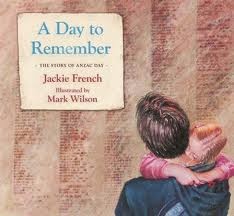
A Day To Remember - Jackie French and Mark Wilson (see my review)

A Rose For the ANZAC Boys - Jackie French
A Soldier, a Dog and a Boy - Libby Hathorn
ANZAC Biscuits - Phil Cummings & Owen Swan

And The Band Played Waltzing Matilda - Eric Bogle, Bruce Whatley (illustrator) (see my review)
Anzac Ted - Belinda Landsberry (see my review)
An ANZAC Tale - Ruth Starke & Mark Holfeld (see my review)
Biggles series - Captain WE Johns (see my review of The Camels are Coming)

Digger. The Dog Who Went to War - Mark Wilson (see my review)
Dont Forget Australia
 - Sally Murphy
Evan's Gallipoli - Kerry Greenwood
Fromelles - Carole Wilkinson
Gallipoli - Alan Tucker
In Flanders Field - Norman Jorgensen
Jack's Bugle - Krista Bell
Light Horse Boy - Dianne Wolfer


Light House Girl - Dianne Wolfer

Line of Fire - Barroux, Sarah Ardizzone (translator) (review coming soon)
Loyal Creatures - Morris Gleitzman (see my review)
Memorial - Gary Crew
My Father's War - Sophie Masson
My Mother's Eyes - Mark Wilson

One Minute's Silence - David Metzenthen & Michael Camilleri (see my review)
Private Peaceful - Michael Morpurgo (see my review)
Simpson and His Donkey - Mark Greenwood & Frané Lessac
Soldier Boy The True Story of Jim Martin the Youngest ANZAC - Anthony Hill

Stay Where You Are and then Leave - John Boyne
Tank Boys - Stephen Dando-Collins

The Red Poppy - David Hill & Fifi Colston
The Beach They Called Gallipoli - Jackie French & Bruce Whatley
The Silver Donkey - Sonya Hartnett
War Games - James Riordan
War Horse - Michael Morpurgo (see my review)
When We Were Two - Robert Newton


World War Two


Angels of Kokoda - David Mulligan
Boy in the Striped Pyjamas - John Boyne 
Carrie's War - Nina Bawden (see my review)
Children of the King - Sonya Hartnett 
(see my review)
Diary of a Young Girl - Anne Frank (see my review)
Forgotten Pearl - Belinda Murrell
Goodnight Mister Tom - Michelle Magorian
Hero on a Bicycle - Shirley Hughes


Heroes of Tobruk - David Mulligan
Hitler's Daughter - Jackie French (see my review)
I Am David - Ann Holm
Kokoda - Alan Tucker
Once - Morris Gleitzman (review coming soon)
Then - Morris Gleitzman
Now - Morris Gleitzman
After - Morris Gleitzman
Soon - Morris Gleitzman
Maybe - Morris Gleitzman
Pennies for Hitler - Jackie French
Photographs in the Mud - Dianne Wolfer & Brian Harrison-Lever (see my review)
The Bombing of Darwin - Alan Tucker
The Book Thief - Markus Zusak
The Boy at the Top of the Mountain - John Boyne
The Island on Bird Street - Uri Orlov (see my review)
The Silver Sword - Ian Serralier
The Wrong Boy - Suzy Zail


Other Wars


Amina - J L Powers
Caesar The War Dog - Stephen Dando-Collins
Emilio - Sophie Masson
Naveed - John Heffernan
Shahana - Roseanne Hawke
Vietnam Diary - Mark Wilson


Clearly war books is a vast topic, even those written for children. It is hard to keep up. This year the Children's Book Council of Australia published Mud and Blood and Tears. An Annotated List of Children's Books about War and Conflict. 


I expect that this list (which does not attempt to be exhaustive) will inevitably grow with time. Certainly there has been a flurry of books about WWI this year, and they will keep coming with the centenary of Anzac Day next year. I know that Jackie French and Bruce Whatley have a new book coming out in November- The Beach They Called Gallipoli. It's important that we remember their stories, and do not forget. 

Tuesday, 18 February 2014

Australian Women Writers Challenge 2013/2014

The end of the year is such a busy time I never got to doing a wrap up post for the 2013 Australian Women Writers Challenge- or to sign up for 2014!

So, let's get caught up.

I blogged 15 books by Australian Women Writers in 2013. Rather incredibly, or perhaps somewhat predictably, 3 of those 15 were by Jackie French. But then I am a little bit obsessed by her.


The Tommorrow Book

Ruby Red Shoes Goes to Paris

Lyrebird!
The Silver Brumby
Tanglewood
Thursday's Child
Picnic at Hanging Rock
Pearlie in Paris
Memoirs of a Suburban Girl
A Day to Remember
Hitler's Daughter
Have you seen Ally Queen?
Peeling the Onion
My Home Broome
Come Down, Cat!

It's interesting to look back at my year of reading Australian Women Writers. 

8 picture books. 
2 Paris books. 
2-4 nonfiction, depending on how you classify them. 

Hmmm, it seems I didn't manage to read any adult books last year! I'll have to change that this year. Although Picnic at Hanging Rock probably counts. 

I wonder how many I'll read in 2014? Hopefully at least 16. Allons-y!


Tuesday, 31 December 2013

Top Ten(ish) Books I Read in 2013 (A Year in Books 2013)


Top Ten Tuesday is a great weekly meme from the folks at The Broke and the Bookish

It's always fun to look back on the reading year, and ponder the best of the year. A tradition I started in 2011, and continued in 2012

This makes three Top Ten Tuesday posts in a row! A personal best effort. 

This year I gave 11 books 5 stars on goodreads. 


My year started with a bang. Possibly my favourite book of the year. Lois Lowry's The Giver


David Weisner's Flotsam was a reread, still worth each and every one of its 5 stars. 


Janet Hunt's E3 Call Home is a great bird book. It seems I've been meaning to do a post about this one all year. 


Susan Hill's Howard's End is on the Landing was a surprise package for me. It was fantastic. 


Jackie French made yet another appearance in my books of the year with A Day to Remember


It seems Graeme Simsion's The Rosie Project was a favourite for pretty much everyone who read it, I was no exception.


Joan Lindsay's Australian classic Picnic at Hanging Rock was everything I hoped it would be. 


It's always a pleasure to read Sonya Hartnett. This year I read her stunning Thursday's Child


I also love a lost cat story. Caroline Paul's Lost Cat


Patrick Ness's incredible, moving masterpiece, A Monster Calls. 


I read two books by David Walliams this year, Billionaire Boy was certainly my favourite. 


Rick Gekoski Tolkien's Gown another gem that remains unblogged, but certainly worth searching out. As I suspect are his other books. 


4 Aussie titles

2 picture books

5 nonfiction/memoir titles

7 female authors

5 male authors

Thursday, 5 September 2013

Thursday's Child


For some reason I was vaguely apprehensive approaching Thursday's Child. I'm not sure why. I know and respect Sonya Hartnett, and I've even seen a stage production of Thursday's Child a few years ago- it was an extraordinary piece of theatre, very moving. Perhaps it was the cover, which I don't think I like? I don't know. 


Any concerns I had were swept away in the first few pages as I was immersed in the world of the Flute family, primarily through the eyes of Harper Flute, who is 4 when we meet her. Her family eek out a marginal existence in rural Western Australia in the 1920s. Harper's father is a returned soldier and now supporting the family by trapping rabbits and selling the pelts. Da has been injured physically and mentally by the war, and now he drinks a bit more than he should, and we see the start of the Depression unfold through Harper's eyes. We see the day to day struggle to survive through very realistic words. 


This time, however, she hauled me to my feet and, with her free hand, slammed Da over the head. 'Don't you take your miseries out on a child,' she snarled. 'You're a coward,  you are, taking on like an infant. Do you think you're the only one living this life? You aren't. The children and I didn't ask for this. Get to your feet, you disgust me.'

We also see the subterranean world of Tin, Harper's younger brother, and the Thursday's Child of the title (Thursday's child has far to go), who takes to digging tunnels under the family house (always described as a shanty), spending more and more of his life underground. An impossible, improbable story that would be ridiculous in the hands of a lesser writer,  but Sonya Hartnett draws us effortlessly into the rather bizarre home life of the Flute familyEach time I picked up this book I found it compelling all over again, and was immediately drawn back into the Flute world.


Yet Tin's story isn't real. It can't be real, can it? But in Hartnett's hands I can easily suspend disbelief and not be worried by that too much. I generally don't like stories with magic realism elements, and I'm not sure it's that either. Thursday's Child somehow defies classification for me. I've read a few Sonya Hartnett books before, she has written for children and adults, and they often don't seem to be easily classified reads- it's almost like she creates her own genre, and that changes slightly with each new book. It's not all grim and depressing though, there are moments of great humour. 


I talked to him to keep him distracted, ....... and what would the baby be, a new boy or a new girl? We had two of each already, not counting Mam and Da, so things were pretty equal as they stood and it would be a hard blow to the side that came away the minority. I thought it was a shame that only babies could be born,whichever it turned out being. I could think of plenty of other things I would have preferred to get for nothing. 

Thursday's Child is such a powerful, moving story. Beautiful writing stopped me in my tracks on many, many pages. 


My heart is calm now, although it is an uneasy, fitful calm, like the sleep of an ailing person.

I should start a list of books that I mean to reread, and I should put Thursday's Child on that list. 

Sunday, 10 February 2013

Come Down, Cat


Sonya Hartnett is rather extraordinary. She publishes amazing books for adults and children, and won the Astrid Lingren Memorial Award in 2008. She buys and sells houses. Most recently she edited The Best Australian Stories 2012. She also writes the occasional picture book. 

I loved her first picture book, The Boy and the Toy. Here she teams up again with illustrator Lucia Masciullo. Sadly, I didn't love this book quite so much. Not that it's bad- it's not by any stretch.

Come Down, Cat is a simple tale. Young Nicholas is worried about his cat, who is up on the roof and won't come down even though it's nearly night time. He worries about all the "ghosts and monsters and creepy crawlies" that come out at night. "Won't you be frightened, cat?" Cats being cats of course the cat doesn't want to come down, until it it's good and ready. What will Nicholas do when it starts raining during the night?


Come Down, Cat was an Honour Book in the Children's Book Council of Australia Early Childhood Book of the Year 2012. The winner was The Runaway Hug- see my rather gushing review here.


Wednesday, 22 August 2012

Life in Ten Houses

I hadn't heard of Penguin Specials until I stumbled upon this ad in the Weekend Australian Magazine last week. 


A new series of ebooks designed to fill the quick read niche. I knew that I would immediately need to read Sonya Hartnett's Life in Ten Houses. I like her work, am interested in her writing, and am about to head off to Melbourne. YAY!

Very quickly it was sitting on my ipad, even though I'm not all that well acquainted with ebooks as yet. And of course, I picked up a few other Penguin Singles while I was there. They have a free sampler available, which looks like a good bet. I also bought Will Self's The Unbearable Lightness of Being a Prawn Cracker- who could resist such a title? and Bob Brown's One Person, One Value.

So even while each inidividual Single is cheap, they're not when you buy 3 at once. Actually I can't see the price now that I've bought it, but I think this 24 page morsel was $3.99. I'm not sure whether that represents value or not. I suspect I lean to the side of not. It was great to read, and if I thought most of the money went to the author I'd be quite happy with the price, but I can't imagine it does.


Life in Ten Houses is a meditation on the difference between a house and a home, and the influence of a house on a writer. Actually it's an interesting insight into Sonya Hartnett's world. Sonya is a proud Melburnian, and rightly so. Melbourne was named a UNESCO City of Literature in 2008. Only the second city in the world at that time to hold such an honour. The first was Edinburgh. The list now includes Iowa City, Dublin and Reykjavik. A third of Australia's writers live in Melbourne, and a third of our bookstores are open for business there!

Sonya Hartnett grew up in the eastern and northern suburbs of Melbourne, and she describes them as the "roof and walls and floor as well as the launching place of my imagination". She describes the many houses that she has lived in over the past 12 years. 10 addresses is too, too many in such a short time, but perhaps logically she loves "the packing, the regular reassessing of the worth of those objects that share my life".

Sonya is really on a quest for her Last House, the place she will live out her days, "which is less a specific building than some corner of the world that miraculously confers upon me a sense of eternal contentedness". I really like that conceptually, I'm not in my Last House. I wonder where it will be?

Particularly interesting were the sections where she discussed her writing. She discusses her writing process, her need to write, her anxieties. A decade ago she was "partially employed" by her writing and supplementing her income by working part-time at the Hill of Content bookshop, a door I'm bound to darken in the next fortnight. Thursday's Child was her cornerstone book, career changing, and yet inspired by "hours spent in idle observation of the ants that dug ceaselessly at the foundations of the house". Having seen a stage show adaptation of Thursday's Child that makes perfect sense.

Sonya Hartnett is typically categorised as a children's author. She did win the prestigious Astrid Lindgren Memorial Award in 2008. And yet she states that she has written three children's books of the 20 or so she has now published. She points out The Silver Donkey (2004) "the first of my children's novels", and The Children of the King (see my review), "the third of the children's novels". Sadly, she doesn't mention what she considers her second. The Midnight Zoo?

Somewhat humbly she claims to be "no social commentator", and then asserts

I am an examiner of the ancient subjects- friendship, nature, family; forgiveness, courage, loyalty- and in a world where jets fly into buildings and teenagers sew their lips together while politicians justify their inclination to lie, it's right to keep such themes alive. Indeed it was around this time that I began to consider writing more specifically for children: children's literature narrows the focus of those grand old subjects, distils them into their purest and most noble form.
I think that I'll wonder most about this question:
Do the books we need find us, or do we shape ourselves around the books we find?


Thursday, 9 August 2012

The Children of the King


Sonya Hartnett is a big name in Aussie writing. A bit of a powerhouse really. She's written quite a number of highly regarded books. She won the Astrid Lindgren Award in 2008. I've read a few of her books, but certainly not all. I always mean to read her latest book, but then get caught up and don't get to it. I was most jealous when my son's teacher started reading this book to his class for their daily read aloud book. I was even more thrilled when my son brought home a copy from the school library for me to read. Now the pressure was on. I had to read it out of maternal duty. And I'm glad I made the effort.

Although I thought The Children of the King started out a bit slowly (after the near heartstopping suspense of the first few pages). The story of two children, Cecily,12 and Jeremy, 14, siblings who are taken by their mother to live in their uncle's grand house, Heron Hall, to avoid the imminent threat of bombardment in London. Clearly we're in England in 1940, just before the start of the Blitz, although it's never really expressly stated, and I'm not sure that child readers would necessarily know that.

Jeremy and Cecily are clearly well off children. From the very start their are clues to their family fortune. "Her own suitcase was too fine to write on; it had a leather tag." They travel first class on the train. They have servants. Their uncle is called Peregrine. On their train journey they notice the many unaccompanied children who are also being sent out of London. Jeremy suggests that they too should take an evacuee as "it's the right thing to do." And so they arrive at Heron Hall with 10 year old May Bright in tow.

May isn't one to be cooped up inside despite the English weather, and quickly sets to exploring Heron Hall and the surrounding areas. She soon finds some mysterious ruins over the river. Peregrine tells them they are the ruins of Snow Castle, and that there is a terrible legend around the castle. "The tale is cruel. Unfit for childish ears." Of course the children immediately want to know the story. Peregrine does tell them over time, the story of a Duke from long ago and two missing children. I'm sure that if I'd paid more attention in high school history then I might have known who this story was about. Sonya Hartnett tells us who it is during this intriguing interview.

There are many, many passages about power and the horrors of war.

"Children have always borne the brunt of decisions made by adults," said Peregrine. "No child is responsible for the bombs that will fall on London tonight, but plenty will pay a dreadful price nonetheless."

Even more with writing that shimmers.

Dawn came early in those short weeks of summer. The sun rose limpid over the hills, pale and tired despite its youth. Its heatless light reached over miles of marsh, crept across streams and slunk over rocks, cast thin shadows from robins and shone dimly off dew, and finally crawled, with a daddy-longleg's fragility, up the walls of Heron Hall to Cecily's window, there to stare through the glass like a starved cat. Morning was here.