Showing posts with label Foodie's Reading Challenge. Show all posts

Wednesday, 24 September 2014

I Quit Sugar for Life


I'm doing Sugar Free September this month. I wasn't planning to. Actually I hadn't even heard about it before, but then a friend suggested it on Facebook because she was doing it, and after a brief hesitation I decided to do it too. A bit of acting in haste perhaps, and there has been a little bit of repenting at leisure. But it's been an interesting experiment, I've tried lots of new things this month, and it hasn't really been that hard (most days). Although I did have to miss the Best. Lamingtons. Ever.

I planned on getting I Quit Sugar out from hiding. I read it last year, and had modified a few things, learnt lots, but not really changed all that many behaviours. For the life of me I can't find it in the house, so I bought Sarah Wilson's new title I Quit Sugar for Life. It has a very similar feel to the original I Quit Sugar- very similar layout, font and vibe- which is not a bad thing. The content is quite different, and there are 148 new sugar free recipes to try.

I Quit Sugar helped people go through Sarah's 8 week sugar detox program. It's been wildly successful, and over 250, 000 people have done the 8 week program so far (the current one started today). I Quit Sugar for Life is designed to be the next stage. It's not as prescriptive as the first book, and I think could easily act as a standalone piece. I Quit Sugar for Life offers The I Quit Sugar Wellness Codes, a series of 9 mantras to help us live a sugar free, healthy life.

Keep on Keeping Off Sugar
Eat Fat and Protein
Ditch the Diets
Maximise Your Nutrition
Have a Morning Routine
Exercise Less
Cut Snacking
Shop Differently
Cook Differently

I really like what Sarah offers with these codes. They're not just about food, they're about lifestyle too. She cares about the environment, food wastage, getting us organised and healthy. And she's not afraid to speak her mind. She's a confirmed omnivore and not at all convinced about vegan diets, but gives suggestions for many other forms of modern eating- paleo, gluten free, vegetarian. Her suggestions are very creative, perhaps too much for some people, but she encourages us to get more vegetables into our diet every day with lots of great ideas- there must be something there for everyone I think.

There are plenty of delicious sounding recipes- Carrot Cake Porridge Whip, Paleo Choc-coco Muggin, Spiced Pumpkin Granola Bars, Festive Popcorn (flavoured with ras el hanout- one of my very favourite spice blends), Fennel Tarte Tatin, Vietnamese Chicken Curry. There are many suggestions too- the one that intrigues me the most (but I haven't tried yet) is to stave off snack attacks by eating a tablespoon of coconut oil. I'm not sure that I ready for that, but will give it a go- one day when I work up the courage.

I am still not intending to do sugar free for life, being sugar free for September is perhaps enough- but it's an interesting experience that I will extend somewhat in October, and I do enjoy thinking more about the food we eat and the life we live. News today that Sarah is hard at work on her next cookbook.

Foodies Read 2014!

australianwomenwriters.com

Monday, 30 June 2014

French Cookbooks

I always like to buy a cookbook or two on a visit to France. The recipes are always different to those that we get here, and I like to pretend that I can read them in French. Well I can a bit, usually enough to get through- with the occasional bit of googling. I've bought a soup cookbook before, this time I was enticed by some sweet titles.


CBS…. Swoon.
I should have bought this one

And Speculoos, but I can't buy it here,
it would only make me pine even more. 

Some I find really surprising

Lolly cookbooks? Really?

A Chupa Chup cookbook from the home of Haute Cuisine


How can that be?

I did buy a couple of Nutella cookbooks last visit,
but haven't used them yet


Dreaming of France is a wonderful Monday meme
from Paulita at An Accidental Blog
This post is linked to Weekend Cooking
a fabulous weekly meme at BethFishReads

Books on France, a great 2014 challenge
 from Emma at 
Words and Peace
Foodies Read 2014!

I'm too excited and starting a day early!

Monday, 14 April 2014

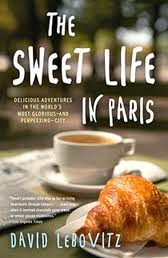
The Sweet Life in Paris


I'd been meaning to read this book for a while. I'm a great fan of David Lebovitz's blog, I have his Paris Pastry app on my phone, and it is called The Sweet Life in Paris, so it's a no-brainer for me really. A few weeks ago I ordered it online. And then it arrived a matter of minutes after we had spent 3 1/2 hours doing battle with the Singapore Air website and making multiple phone calls to them booking my next trip to Paris! What could I do? I had to put everything else aside and read it.

I had presumed that this book was about pastries in Paris, in the way of Sweet Paris, but it's much more broad ranging than that. A memoir, often with foodie highlights, but more a memoir of a transition from living in San Francisco in your native English speaking environment to living in Paris in a French speaking world. David Lebovitz decided to pack it all up and move to Paris after his partner died suddenly. He really took an astonishing leap into the void. He sold up his American life and moved to Paris with three suitcases. That takes some courage.

David moved into a tiny apartment in the Bastille, so small that he comes to realise that it is best to wash his Le Creusets in the bath instead of the sink. There are the requisite tales of French tradesmen and disastrous French language classes in short readable chapters with fabulous sounding recipes at the end.

Early on he spends three pages reinforcing the "two most important words in the French language." "Bonjour, monsieur" or "Bonjour, madame".

Whether you step into a shop, a restaurant, a cafe, or even an elevator, you need to say those words to anyone else in there with you. Enter the doctor's waiting room and everyone says their bonjours. Make sure to say them at the pharmacy, to the people who make you take off your belt at airport security, to the cashier who is about to deny you a refund for your used-once broken ice cream scoop, as well as to the gap-toothed vendor at the market who's moments away from short-changing you. 

On a first visit to France it is initially disconcerting to be greeted with a singsong "Bonjour, madame" as you walk into any new establishment, but after a while it is lovely. They will all say goodbye as you leave the shop too, such a welcome change from my experience of the English speaking world.

David has spent time working (for free) alongside the poissonières at the marche d'Aligre, learning to prepare all sorts of seafood, except squid (his aversion is really quite deep rooted), and also manning the counter of the very upmarket and very now chocolatier, Patrick Roger. What a great approach to a new life and a new city that is.

David feels that his understanding of the food, and allowing himself to adapt to the culture made a big difference to his transition.

I arrived knowing a fair amount about the pastries, cheeses, chocolates, and breads, which impressed the French, and I also soaked up as much as I could. More important, though, I learned to take the time to get to know the people, especially the vendors and merchants, who would patiently explain their wares to me. 

He now feels much more a part of the global community than if he had stayed in America.

I do my best to act like a Parisian: I smile only when I have something to actually be happy about, and I cut in line whenever I can. I've stopped eating vegetables almost entirely, and wine is my sole source of hydration.

There is a fascinating chapter about water, which as I've long suspected is rationed.

Random, fascinating facts.

It's rude to ask someone what they do, better to ask where are they from.

Paris has more tanning salons than boulangeries.

In a nation of readers, writers are revered in France.

Berthillon, makers of the best ice-cream in the world IMHO  serve tarte tatin with caramel ice cream at their tea salon (31 Rue Saint Louis en L'ile 75004) which is "over-the-top good". Next time I won't plan on walking past.

Parisians will eat a banana with a knife and fork.

The same word, les bourses, means both scrotum and stock exchange.


And what of the many recipes? I haven't tried any as yet, but I will be absolutely spoilt for choice when I start. Sweet or savoury. Dulce de Leche Brownies. Cheesecake. Spiced Nut Mix. Sweet and Sour Onions. Braised Turkey in Beaujolais Nouveau with Prunes. Chocolate Spice Bread (Pain d'Epices au Chocolat). Floating Islands (Ile Flottante). Or Salted Butter Caramel Sauce. Oh lordy! That could be the end of me. But I think I'll try the Lemon-Glazed Madeleines first.

In typical timing for me David Lebovitz has just published his next book, My Paris Kitchen, which apparently tells us that eating in Paris is fun again. Was it ever really not fun? Cleaning your teeth in Paris is fun. In another interview promoting his new book they discuss how Parisians are using influences from other cultures in their home cooking, and presume that this is new. I'm not so sure that it is all that new. On our first visit to Paris in 1998 I bought quite a few recipe magazines and there certainly many ethnic inspired recipes there. Perhaps it is more common now?


Books on France, a great 2014 challenge
 from Emma at 
Words and Peace

Dreaming of France is a wonderful Monday meme
from Paulita at An Accidental Blog

This post is linked to Weekend Cooking
a fabulous weekly meme at BethFishReads

Foodies Read 2014!

Friday, 27 September 2013

I Quit Sugar


Earlier this year I read David Gillespie's Sweet Poison. It was a fascinating read and helped reinforce the healthy eating that I've been doing all year anyway- initially it was in preparation for my planned extravagances in Paris, and now post Paris it is to repair those indulgences, and push the boundaries a little bit more.

Sugar certainly has become a hot topic this year. It's not just David Gillespie advising us to give it up. Everyone it seems is giving up sugar. I read about it every day on Facebook, it's filling the newspapers, and more and more bloggers extolling the virtues of giving up sugar. There was a great Catalyst program a few weeks ago about the dangers of sugar. It's said to be toxic, make us fat and stupid, give us cancer, and now make us look old (although that article if you actually read it says that diabetics look older), so it's certainly worth considering the sugar in our diets.

Sarah Wilson's book is a large part of this trend, so I was very interested to read it. I don't watch all that much tv so didn't know of Sarah Wilson before this book. I Quit Sugar started as many things do as a personal journey. Sarah had two thyroid disorders- Graves disease and Hashimotos thyroiditis, and had put on 12 kilograms that she couldn't shift. She tried cutting out fructose by way of added sugars and loved it, she lost the weight and felt much better. The book (initially an ebook), the website and now the online 8 week program grew out of her obvious enthusiasm for a sugar free life.

Sarah tells us that we were designed to eat 5-9 teaspoons of sugar a day. Five for women, nine for men. Yet our modern, western low-fat diet is giving us much more sugar than that. We are eating a kilo of sugar a week, when 150 years ago we ate basically no sugar. Sarah is actually urging us to cook at home, with a variety of nutritious whole foods- she advises loading up on vegetables, nuts, seeds, pulses, and healthy grains.


Plus there's a whole lot of coconut here- coconut is the new black it seems. I'm keen to find out more about this too. We've been told to avoid coconut for a long time too, it seems almost naughty to think about using it more.

I bought the book because I like cookbooks, I have an interest in learning about all this sugar stuff, and it's a pretty book too look at, and is loaded with lots of delicious looking recipes that I'd like to cook anyway. Summery quinoa tabboleh, coco-nutty granola, almond butter bark, a terrific range of pestos- coriander, kale, broccoli, basil. There are tips for basics such as poaching eggs, cooking quinoa, sprouting legumes and making your own nut butters. The IQS website has a great range of recipes too, some of which are in the book, some not.

But it all gets very confusing for me when looking at the dessert recipes and the whole sweetener debate. Table sugar of whatever variety is half glucose and half fructose, and it is this frucotse that the sugar quitting people are trying to avoid. The arguments linking sugar consumption and obesity certainly seems to make sense.

The quit sugar people I've come across so far aren't trying to banish all gustatory pleasures and don't appear to wish to subsist entirely on lentils and cabbage. So they use all manner of sugar replacements to make sweet treats. These sugar replacements are often quite high GI. A low GI diet makes logical sense to me, smoothing out blood sugar peaks, or at least it has in the past, and I'm not sure what to believe about all this anymore. The low GI people and the quitting sugar people are often at loggerheads about these issues. Quite openly and it can get a bit nasty at times. I know that both camps mean well, and are trying to get all of us to eat better, lose weight and be healthier, and I know that public debate about food and health is a good thing, but some consensus would be nice (it can get even more confusing) for the non-biochemists amongst us. It's a fascinating debate, and it will be interesting to see where it will go in the next few years.

I don't like that the quitting sugar philosophy can make some people anxious about eating fruit, but I think they're getting the wrong end of the stick. Sarah Wilson does suggest (temporarily) giving up fruit for the first six weeks of her program to help modify eating habits and lose the cravings most of us have for sweetness. She specifically warns against demonising fruit or any legitimately nutritious foods. She then reintroduces low-fructose fruits in week 6- kiwifruit, grapefruit, honeydew melon, blueberries and raspberries. She does advise avoiding high-fructose fruits such as grapes, apples, mangoes and bananas. However, the IQS program does quite rightly consign fruit juice to the same category as soft drinks.


I'm not sure that I'm ready to quit sugar all together, or that I will ever want to, but I Quit Sugar has made me more mindful of sugar in general and fructose in particular, and given me lots of interesting recipes to try.


This post is linked to Weekend Cooking
a fabulous weekly meme at Beth Fish Reads

Wednesday, 6 March 2013

Sweet Poison


It is perhaps somewhat contrary, or possibly even ridiculous to spend much of my time reading about and anticipating the sweet, sweet delights that I will encounter in Paris in a few months time, especially whilst all the while dieting and training for my planned extravagances, and then to read Sweet Poison.

Paris, My Sweet and Sweet Paris in particular fuelled my imagination. Sweet Poison helped to temper it somewhat (it won't spoil my trip by any stretch though, that ain't gunna happen). This book has been a megaseller. I know a number of men in particular who have read it and acted on the advice, often losing quite a bit of weight along the way. Since I was eating well anyway, I thought now was a good time to reinforce my new behaviours.

David Gillespie was a father of four when he learnt that there was a set of twins on the way. His brood was about to expand to six. An exciting time. But he was 40kg overweight, tired all the time, with no energy and bad sleeping habits. He knew it was time to change. He tried the Atkins diet which was popular at the time, but didn't like the diet itself or the fibre-free effects on his gut. So he looked around for another way. He combined his interest in Charles Darwin and human nutrition and metabolism, reading a vast array of medical and scientific writings. Chemically sugar is made of up of 50% fructose, and 50% glucose. David came to believe that fructose within sugar was making us fat. 

The early part of the book, indeed the first half, is an easy to read and rather engrossing primer on human nutrition and metabolism. There is a particularly fascinating section on the evolution of low carb diets. A century before Atkins there was an intriguing Victorian gent, undertaker and coffin maker William Banting, who suffered from the "oppression of corpulence", who with noted ENT surgeon Dr William Harvey, developed the first diet suggesting that people reduce their carbohydrate intake. In 1862 the foods that were thought to contain starch were bread, butter, milk, sugar, beer, pork and potatoes. Banting lost 26kg on this regime over the next year, and cured his deafness at the same time. William Banting was so pleased by his success that he wrote a booklet, A Letter on Corpulence, funding and publishing it himself, so he shouldn't be accused of profiteering. So successful was his diet that "to bant" became synonymous with dieting, and was included in the Oxford English Dictionary until 1963.

There is another fascinating section on the history of sugar. Sugar cane is native to Papua New Guinea, and the story of the progress of sugar around the world, and over time is particularly intriguing. The history of sugar encompasses slavery, taxation and the Napoleonic Wars.  Over the last nearly 1000 years the demand for sugar has escalated, and the price fallen dramatically.


Even though the price of sugar has plummeted, there was an even cheaper product waiting in the wings. In the 1960s and 70s sugar prices began to rise, and corn prices fell, and so high fructose corn syrup (HFCS) was born. The first commercial shipment took place in 1968 and within 20 years HFCS had replaced sugar as America's primary source of fructose. Forty two percent of  corn grown in the US now goes to makes HFCS. HFCS is still not widely used in Australia as we have a massive sugar cane industry, 85% of which is exported.

It is extraordinary to learn 60% "of the output from all those sugar growers, corn growers, multinational sugar corporations and grain buyers ends up in the carbonated soft drinks made by just three companies, Coca-Cola and PepsiCo in the United States and Cadbury Schweppes in the United Kingdom". Although perhaps not so surprising when you walk into your local supermarket and gaze at the whole aisle usually devoted to these products.

The centre of David Gillespie's arguments about fructose, and somewhat buried in the Biochemistry 101 chapter, is that fructose slips through the pancreas undetected, and so fructose doesn't elicit a biochemical response and no insulin is produced. Only the liver and the testes (if you own any) has the ability to take up and utilise fructose. Indeed, our livers take up fructose avidly, converting it to ATP (a major energy molecule) and then into circulating fatty acids. The calories from fructose are invisible to our bodies, and so don't help us to feel full.

Pulling all of this together, we have a universal theory for what has been observed in a multitude of studies in the last three decades. Fructose increases circulating fatty acids, particularly LDL cholesterol. Increased fatty acids lead directly to heart disease and stroke. Increased fatty-acid levels also reduce the effectiveness of insulin in clearing the blood of glucose. Increased blood glucose leads to type II diabetes and feeds cancer. Oestrogen reduces (to a degree) the effects of fatty acids an allows insulin to work well despite their presence and to eliminate them from the bloodstream. This results in pre-menopausal women having lower incidences of heart disease, stroke, diabetes and cancer. Fibre has a similar effect to that of oestrogen (so there is hope for men after all) in rendering insulin more effective and therefor lowering the risk of all of those diseases. If you must eat fructose, then either have plenty of oestrogen on hand or eat a lot of fibre (hang on- fructose plus fibre ..... that sounds like whole fruit).

David Gillespie lost his 40 kg of surplus weight, over almost 2 years, and without doing any particular exercise (he has interesting views on exercise too). He distills his advice down to 5 simple rules.

Don't drink sugar

Don't snack on sugar

Party foods are for parties

Be careful at breakfast

There is no such thing as good sugar

Yet, David is no wowser. He uses dextrose (pure glucose) as a sugar substitute. There is a Sweet Poison Quit Plan Cookbook in the pipeline, due out in April 2013, which looks very good. And beer and most wines (not dessert wines or sweet liquers) are ok to drink from the fructose perspective- although we all know that too much alcohol isn't a good thing either.

David Gillespie has quite a big web presence. The Sweet Poison website. His How Much Sugar website, which for a subscription fee, helps people sort out how much sugar is in common supermarket products- mainly for Australia and America. His blog, Raisin Hell (he's not afraid to express his opinions or speak out about what he believes. His latest book Toxic Oil has just been released.

And man is sugar topical! Since I started reading Sweet Poison, a major study was published linking sugar consumption and diabetic rates world wide. Mark Bittman came out swinging in the New York Times. The 2013 NH&MRC Dietary Guidelines have just been released and advise us to cut down on added sugar.

Foodies Read 2013 Challenge


This post is linked to Weekend Cooking, a fabulous weekly meme at Beth Fish Reads.

Monday, 4 February 2013

Sweet Paris


I knew when I first saw Sweet Paris in a shop before Christmas that I would buy it. I didn't know then that I would end up buying 3 copies! Paris research is painstaking.

Michael Paul is a New Zealander as it turns out. A lifestyle photographer based in London, Michael has been lucky to visit Paris many times, and done his fair share of eating his way around the city. Here he combines lovely photos of Paris and her sweet treats, with his picks for the best of the best, and even 22 recipes to recreate a little piece of Paris magic in your own kitchen. Rather surprisingly he suggests that Sweet Paris wasn't intended as a guide! I think it makes a rather excellent guide.


Organised in chapters such as The Chocolate Capital of the World, Patisserie and Salon de The Classics, Traditional Viennoiserie, Decadent Desserts, Ice Cream Gelato and Sorbet, and Confiserie Michael Paul takes us through the history and provenance of these famous delicacies, such as the quintessentially French croissant- so many of which have actually come from Austria and Italy, but then been refined, perfected, and taken to heart in France.

Since the introduction of sugar in French cuisine, the country's cooks have been conjuring up all manner of confiserie, and there is no doubt that other cultures have influenced them to a great extent. The petit four appears a very French invention but its origins are oriental. Calissons, which are traditional candy from Aix-en-Provence, came originally from Italy, nougat from Persia and dragees, sugared almonds, probably from Greece. 


As with everyone who has visited Paris more than once we all have wonderful memories of delicious treats eaten in extraordinary locations. And I'm happy to take his suggestions and broaden my range of experiences. I am now especially keen to try a Paris-Brest- I had not realised that the rather bizarre shape was styled on a bicycle tyre from the famed Paris Brest cycle race, a Chausson aux Pommes (an apple turnover), and glace marron (glace chestnuts) which I have eyed before but never had the time to eat- but who could not be won over by such gushing description as....


Who can resist those glazed crystallised chestnut confectioneries candied in sugar syrup when cavorting in the French capital? They're the height of indulgence: subtly sweet, rich, nutty, gooey morsels of vanillary delectation that come wrapped in that gorgeous gold paper you can't help licking to savour every drop of sticky deliciousness. 


He's almost channeling Nigella with that- and I'm in. Another new to me treat is the delectable looking meringues found at Au Merveilleux de Fred. Oh my. I can see my first visit to the 15th coming up.


Michael Paul's Top 10 Paris Greats

Pierre Herme
-macarons of course, the best patissier in Paris.

Patrick Roger
- the 'wild child' of chocolate, his favourite chocolatier in France.

Gerard Mulot
-patissier with wonderful selection of chocolates and confisserie.

Ble Sucre
-one of the best small neighbourhood patisseries, his madeleines have a cult following, his croissants are equally good.

Des Gateaux et du Pain
-patisserie and viennoiserie

Du Pain et des Idees
-beautiful old neighbourhood boulangerie- chausson aux pomme, banana pain au chocolat, pain aux raisin.

Pain de Sucre
-adventurous patisserie specialising in melt-in the-mouth marshmallows (guimauve), baba au rhum and pain d'epice is a must.

Poilane
- world renowned bakery with some of the best bread in Paris, also a fabulous selection of viennoiserie including a rustic, cinnamon apple tart to die for and their famous sable 'punition'.

A La Mere de Famille
-Paris's oldest and most beautiful confiserie and chocolatier- they do an amazing chocolate ice cream.

Carette
-patisserie and salon de the is a Paris institution. Place des Vosges not so crowded. The Trocadero location has a stunning view of the Eiffel Tower.


An exciting list as I've only darkened the doors of Pierre Herme and Poilane on my previous trips. So much to do....

Michael Paul has some rather opinionated views about chocolate in Paris. Foremost he calls Paris the Chocolate Capital of the World. His favourite maitres chocolatiers are Patrick Roger, Pierre Herme, Franck Kestener and Jacques Genin (who has sadly currently suspended making pastries to concentrate on chocolate and caramels). All of whom I look forward to trying.

True connoisseurs of chocolate focus on chocolate rather than chocolates- in other words, bars and not filled chocolates, or bonbons. They believe that the bar is the purest, most concentrated form of real chocolate, while bonbons fall into the realm of 'candy chocolate'. Purists talk of chocolate as though it was wine, and use the same flowery vocabulary- nutty, spicy, fruity, etc- to describe it. 

Just like my friend Hannah from Wayfaring Chocolate. Perhaps I'm beginning to understand.

I was rather pleased to see that on my first trip to Paris way back in 1998 I managed to eat what is still regarded as one of the best chocolate tarts (the chocolate silk tart from  La Maison du Chocolat) and the exceptional pate des fruits from Fauchon. Both experiences that I remember to this day. I can't wait to make some more lifelong memories later in the year.


Monday, 7 January 2013

Paris, My Sweet


Is it wrong to buy a book as a gift fully intending to read it yourself before you give it away? Probably. I'm sure it's wrong to blog about it before you do. So this post will have to wait a while, until after Christmas. Mind you, I do have a few good reasons for reading Paris, My Sweet- I need to make sure that it's a book my mother will like. Right? And also if I'm going to give it to my mother to read to get some ideas before our trip to Paris next this year, then I should know about those places too. Right? Right. Just so I know what she recommends.

It was a bit of a no-brainer that I would like this book actually. I first met Amy Thomas via her Sweet Freak blog, and then followed her God, I love Paris blog too. In the real world Amy got to move to Paris, to slip effortlessly into a job working on the Champs Elysee for Louis Vuitton, effectively transferred to Paris from New York. Her company helped her with paperwork, finding an apartment and even a French tutor. Naturally, I'm not jealous, not one bit.

Paris, My Sweet is a memoir of Amy's move from New York to Paris. The insecurities and uncertainties of swapping your mother tongue for a new, difficult and yet beguiling new language. Of moving to a new city in a new country where you don't really know anyone. Amy had been to Paris twice before, once in college, and once the year before for a week, which she had cleverly documented for a column in the New York Times on the best chocolate shops in Paris. Amy had spent her week riding Paris's Velib bikes to the sample the best delights of the city.

After moving to Paris Amy finds it hard to break into French society and ends up as most people do- living an expat lifestyle with other anglophones- American, Aussies and Brits- and never quite assimilating.

She and I still commiserated about how being an expat in Paris was like living inside a bubble. We could be seated at a dinner party, witnessing a confrontation on the Metro, shopping at a crowded street market- doing anything in the middle of this huge, international city- and remain utterly alone, trapped inside our heads. In your head, you could understand the voices; in the real world, words and conversations were just indecipherable background noise- beautiful, but meaningless all the same.


But more than that Paris, My Sweet is an homage to the wonderful cakes and pastries of Paris, surely the best in the world. Amy has certainly managed to eat her way around the city, and it's interesting to hear her opinions of the best of the best.

At the back of the book Amy lists her top 10 for Paris.

1. A good, old oozin' Nutella street crepe.

2. La Folie at Patisserie des Reves.

3. The insanely addictive Praluline from Pralulus Chocolatier in the Marais.

4. The sweet little strawberry Coeur from Coquelicot in Montmartre.

5. A chocolate eclair from Stohrer.

6. Angelina's stick-to-your-teeth chocolat chaud.


Also the day of my citron presse experiment
It's just straight lemon juice in a glass
Sometimes curiosity does kill the cat

7. Jean Paul Hevin's truffles are le mieux. And his mendiants. And his cakes.

8. The rice pudding at Chez l'Ami Jean.

9. The Plenitude Individuel from Pierre Herme.

10. An almond croissant from Boulangerie Julien.

I think I've just found myself a tour! I've only done Angelina's chocolat chaud. Twice. The first day was the weather was warm and it didn't bowl me over all that much. We returned for breakfast on a cool, rainy morning and I was completely won over by this amazing unctuous delight. It's extraordinary. I have been to JPH many, many times, but don't remember having the truffles before, I've certainly had his mendiants, and cakes, his macarons, and chocolates.  I'll be there several times at least next year, and looking forward to the truffles. The only one that will be harder to achieve is the meal at Chez l'Ami Jean I suspect.

Other top Paris tips from within the pages:

Ble Sucre has the best madeleines.

Nicolas Stohrer invented the baba au rhum. It would seem only fitting to try one.

Other chocolat chaud picks- Les Deux Magot, Jacques Genin, JPH.

La cuisine anglais has become quite popular- carrot cake from Rose Bakery in the 9th, cupcakes from Synie's Cupcakes in Saint Germain, Cupcakes and Co in the 11th, and Berko (Marais and Montmartre). Whilst on cupcakes, I'd never realised that the third series Sex and the City was essentially responsible for the world wide cup cake pandemic, and the meteoric rise of Magnolia Bakery in New York. Perhaps if I'd ever watched any episode of Sex in the City, maybe, I might know that.

And as for who makes the best of that Parisian sweet superstar of the moment, the macaron, Amy tells us that it is Pierre Herme or Laduree. I've certainly had macarons from Pierre Herme, I don't remember that I've had any from Laduree, another reason to return.

What I wasn't expecting was that so much of the book would be about the delicacies that abound in her native New York. Information that is less useful to me at the moment, but when I go to New York next I'll be certain to look up some of her suggestion there too.


Thursday, 13 December 2012

Foodies Read 2013


The Foodies Reading Challenge has been going for several years with the lovely Margot from Joyfully Retired at the helm. Next year Vicki from I'd Rather be Reading at the Beach will take over. 

I'm looking forward to participating in the Foodies Reading Challenge again next year. Even though I've been a bit slack this year I always have many food books on the reading horizon. Actually you could drop food from that sentence and it would still be correct too.

So many books qualify for the different categories- cookbooks, fiction, memoirs/biographies and nonfiction. 

I will try for the Pastry Chef level of 4-8 books. 

What will I read? Possibly

Amy Thomas- Paris My Sweet

Michael Pollan- In Defence of Food

Jane Paech- A Family in Paris

Pamela Druckerman- French Children Don't Throw Food

Michael Paul- Sweet Paris

Are you seeing a bit of a theme? I'm visiting France again next year, and looking forward to my visit very much, and I know I will love those books, and they will in turn enhance my holiday. What could be better?

Monday, 14 May 2012

Cleaving


After the huge international success of Julie/Julia project/blog/book/movie/all round phenomenon, Julie Powell makes the somewhat surprising decision to become an unpaid apprentice butcher for 6 months. I guess her new found financial status allowed her certain freedoms, and she can chase her dreams. This still seems an odd dream to chase.

Julie Powell is definitely a card carrying carnivore. She revels in eating meat, and doesn't shy away from the more confronting aspects of her newly chosen career. She begins working at Fleisher's, a wonderful butchers in upstate New York 2 hours from her home. She learns many skills in her time there, and describes them in minute, rather gory detail at times. While I do eat meat, I am becoming more squeamish as I get older. I don't like recognising anatomy in meat, I have trouble dismembering a chicken now, and lamb neck chops look too much like CT slices for comfort. Julie relishes in the anatomy in front of her. Whilst I'm not quite the squeamish, near vegetarian who will only eat skinless, boneless chicken breasts of her disdain, I can understand how someone can get there. 

After her 6 months of hard work, and after her left wrist has caused quite a bit of trouble- an author's carpal tunnel doesn't always take to 6 months of constant physical work, she decides to take up a butcher's tour of sorts. Not quite the world tour I would undertake, but a very interesting travelogue all the same. Buenos Aires to eat steak. The Ukraine to eat sausages. A Masai village in Tanzania to drink cow blood. Apparently cow blood and goat blood taste different. Goat blood is sweet, I expect that to be a knowledge I will never fully grasp myself.  

Cleaving though is about much more than meat. It is about love, marriage and infidelity. Julie has been having a long running affair. I became irritated by her constant ramblings and thoughts about her lover, D. He didn't sound all that nice to be honest, and her obsession with him, to the detriment of her decent, loving husband Eric was sad, and pitiful at times. It is only at the start of disc 5 that she wonders out loud why she isn't thinking or talking of Eric. Still, it's an amazingly frank and honest account of her life.

Julie is also obsessed with Buffy the Vampire Slayer. There are many quotes and references. Too many, I think. Perhaps that is just an overly curmudgeonly view because I totally missed the whole Buffy thing. I have friends who who similarly enraptured, although they don't insist on continuously referencing Buffy 10 years later, mercifully. Her family have a wonderful Christmas tradition of doing a giant jigsaw puzzle wherever they gather, that sounds such a clever, slightly old-fashioned idea for an indoor activity in cold weather that brings people together. It makes me wish that our Christmas was in winter so I could adopt it with my family, but the Australian Christmas has too many summer distractions to make it feasible.

I won this intriguing audio CD from the wonderful Margot for participating in the Foodies Reading Challenge last year. I'm so pleased and grateful that she sent it all the way to Australia for me to enjoy. I would never have come across it otherwise. Cleaving is well written, and the audiobook well read by Julie herself. I slipped the first disc into the player in the car as I left home for an unexpected solo trip. I'd never used an audiobook on a trip before, it was a wonderful driving companion. I don't plan to completely give up my collection of tragic 70s CDs for driving, but an audiobook makes a great change once in a while. I feel somewhat at a loss now that these 9 CDs are finished. 


Saturday, 12 November 2011

The Pedant in the Kitchen


I have a growing respect and admiration for Julian Barnes. We didn't get off to a good start because I read his England, England book first. And hated it so much I can't explain. The only reason I ever picked up another of his books was because I read and absolutely loved Gustave Flaubert's Madame Bovary. So I tentatively picked up Flaubert's Parrot. And loved it so much that I bought my own copy after I took the library copy back (I'd borrowed it expecting not to like it, and gave myself permission to stop reading it within the first few pages if I hated it- and I always make myself push on!) Anyway, I Absolutely Loved Flaubert's Parrot. And so I started to hope that perhaps England, England was an aberration.

Somewhere along the way I accumulated The Pedant in the Kitchen, and in an idle moment last night I picked it up. I've had a wonderful break in my scheduled reading over the past 10 days and have actually been able to pick up books on a whim! I've been very keen to read his recent Booker winner The Sense of an Ending, but have remained strong and not bought it yet.

The Pedant in the Kitchen appears to be a collection of 17 newspaper columns about Barnes' relative OCD nature  in the kitchen. He starts off telling us rather matter of factly that he is a late-onset cook. He didn't learn techniques and measurements at his mother's side as a young child. It was only as an adult, in his twenties that Julian was forced to try and prepare his own meals. With some initial disappointments of course. I think most of us go through that stage really. Wondering how your mother did very simple things, when it had just always appeared in a perfect form previously.

Julian isn't without ambition or hope in his cooking efforts though. He uses cookbooks, and relatively complicated ones at that and comes to take on some rather challenging dishes. Chocolate Nemesis from the first River Cafe Cookbook. A smoked haddock souffle from Margaret Costa's Four Seasons Cookery Book. Autumn Pudding (apparently much superior to Summer Pudding- with a mix of elderberries, blackberries and crab apples) from Susan Campbell's English Cookery New and Old. Jane Grigson's Salmon in Pastry with a Herb Sauce.

Julian wants things to be extremely precise whilst creating his haddock souffle. "Why should a cookbook be less precise than a manual of surgery?" He is an "anxious pedant" in the kitchen. Should that tablespoon of currants be heaped or rounded? In truth, I'm sure it matters not. I don't think Julian has ever truly heard, and certainly hasn't internalised the wisdom conveyed in the phrase "we're not building a piano".

I adhere to gas marks and cooking times. I trust instruments rather than myself. I doubt I shall ever test whether a chunk of meat is done by prodding it with my forefinger. The only liberty I take with a recipe is to increase the quantity of an ingredient of which I particularly approve. 
I think anxiety and lack of self confidence is the key here. You should never trust instruments more than your own judgement. In the kitchen, or in surgery as it turns out.

When not obsessed about minor details in the kitchen Julian takes us rather far and wide. The trial brought about by Oscar Wilde against the Marquess of Queensberry for criminal libel. Gustave Flaubert apparently not only admired camels in Egypt on his travels but he also ate some. However, his favourite delicacies were mandarins and oysters. And Mrs Beeton died at the unfortunately young age of 28, and so was not the dowager housekeeper we all imagine.

Julian has some interesting and useful thoughts on cookbooks, which I think I will leave for another post.


This post is linked to Weekend Cooking, a fabulous weekly meme at Beth Fish Reads.