I came across Outside on the CBCA Shortlist this year, and was intrigued. The cover looked so pretty, and I had just come across illustrator Rita Voutila on another shortlisted work, The Stone Lion (see my review). Also, Libby Hathorn is a big name in Australian children's books, and I've only read a few of her less well known books.
Outside is an ode to the wonders of playing outside, the adventures that can be had, the sights, the smells, the fun. All the simple joys of playing outside, of spending time outside told in a repetitive, cumulative text.
The illustrations are dazzling. Almost kaleidoscopic. With a kind of Alice in Wonderland vibe. So pretty. I do wonder though if digital illustrations are ironic in a book extolling the virtues of being outside? Although I guess if they were drawn or painted these would have been created inside too.
The thing about being the mother of a son and the aunt of nephews is that you don't really get to buy books written primarily for girls. And The Billie B Brown series is fairly aimed at girls. I hadn't read any of the Billie books, but was keen to read one before I saw Sally Rippin speak at the Sydney Writer's Festival Children's Festival of Moving Stories recently, especially as I learnt that she is our highest selling female author, and our fourth most read children's author. And I hadn't really heard of her! But of course now that I'm paying attention, I've seen young girls excitedly plucking Billie B Brown books off shelves to buy them.
The Billie B Brown books are perfect for emerging readers. A simple but fun story on 42 pages with large font and illustrations make them very easy to read. Billie B is a bit of a tom boy, her best friend Jack is absent from this story (the second in the series) as Billie B goes to the beach with her parents.
Billie B is good at lots of things. She is good at the monkey bars and good at making cubbies. She is good at soccer and she is good at midnight feasts. But the thing that Billie B is best at is coming up with ideas.
Author Sally Rippin is actually an illustrator as well, but the Billie B Brown books are illustrated by NZ illustrator Aki Fukuoka. There's at least 20 books in the series, and another series featuring Billie for slightly older readers, the Billie B Mysteries.
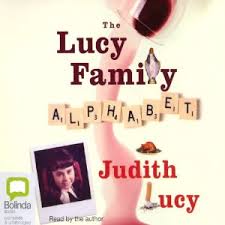
I've been keen to read The Lucy Family Alphabet since it came out way back in 2008 but I'd never managed it, so I was thrilled to find the audiobook sitting on the shelves of my local library a few weeks ago. It seemed a perfect antidote to my recent harrowing experience of driving around listening to Les Miserables (see my review). In fact I've been meaning to read memoirs written by comedians for some time. It seems a genre worth pursuing. It stands to reason that they're a funny and insightful group of people and so their books should be funny and insightful too. Presented as an alphabet, the book starts with A for Adoption, and the rather harrowing story of how Judith came to know at age 25 that she was adopted during the Worst Christmas Ever. Which is a big call given the average Lucy family Christmas. Judith describes the most common reaction from her friends.
"Oh my God, you must be so relieved."
Judith had a rather unconventional childhood in suburban Perth with her adoptive Irish Catholic parents so that we end up with fun chapters like M is for Maggots followed by M is for Makeup.
Our view of normal wasn't everyone else's.
Judith clearly sees her family in their warts and all state, but her genuine love and affection for them all shines through. It was sad to hear about her brother Niall's shrine to smoking in C is for Cigarettes knowing that Niall would later die of lung cancer. Judith deals with the deaths of her parents in her inimitable style.
You know you're having a good day when you're relieved when a hearse arrives.
My respect and admiration for Judith grew when she recounted under P is for Pets how she longed for a Siamese cat after reading The Incredible Journey (see my review) when she was 8, and then named her new kitty Tao after the cat in the book. Of course Judith's Tao is nothing like the one in the book... Listening to The Lucy Family Alphabet was a bit like driving around with Judith delivering a soliloquy in my car. It was fabulous. And indeed a great change from Les Mis. I was able to drive around chortling, and possibly snorting at times instead of crying. Highly recommended.
Don't judge a book by it's cover they say. Then why do publishers work so hard on creating delectable covers and silver edged pages? To tempt impulsive people like me, that's why. I saw this pretty little thing in the shops recently and snaffled it immediately. Given that I think I've never seen a single episode of Sex and the City, nor read the books and clearly live under some kind of unfashionable rock I had no idea who Megan Hess was (hint she's a very talented Australian fashion illustrator). Of course even I have heard of Coco Chanel but sadly I have never bought a single Chanel item- although perhaps I need to fix that oversight now? I think I just might.
Coco Chanel is presented in three sections. The Woman. The Brand. The Icon. There is a definite air of legend about the woman of course. It's fascinating to read her back story, and incredible that an illegitimate girl born in 19th century rural France would become such an icon of fashion and elegance redefining the 20th century and having a lasting legacy even now. Is it true that the beige, black and white of the nun's habits of the orphanage where she lived after her mother died when she was twelve would become the cornerstones of the "simple palate" that would define the Chanel look? Actually I didn't know that Chanel used a rather restricted palate of black, white, beige, gold and red. Although I guess that's how you get to be classy.
And Coco Chanel was classy. She liked to pop round to Angelina's each day for a chocolat chaud. Well, why wouldn't you? And as there was no bed in her private apartment above her studio at 31 rue Cambon she maintained a suite at the Ritz. Where she would die in 1971. Stylish to the end really.
I learnt so much about Coco the woman and Chanel the brand. The iconic quilted handbag, recognisable even to me is called a 2.55. Rather annoyingly the book didn't tell me why it had such an odd name, but an easy google search tells me it was because it was released in February 1955. Ah. So obvious when you know. The linked C logo was created in 1921 for Chanel No 5, and camellias have been associated with Chanel since 1933. And that instantly recognisable tweed suit worn by everyone including Marge Simpson dates from 1925.
Most fascinating was that Coco Chanel closed up shop for 14 years! She closed her business with the declaration of war in 1939. "This is no time for fashion". She toughed out the war at the Ritz with her German officer lover. She then fled to Switzerland when Paris was liberated in 1944. She wasn't to resume her fashion activities for another decade.
Chanel never sketched her clothing like other designers, instead she cut straight into them. She would simply throw cloth onto a mannequin, cutting the shapeless mass of fabric until her desired silhouette emerged. Even into her old age, a pair of silver-plated scissors permanently dangled from Chanel's neck so she could make alterations as she made her way around the cutting-room floor.
While Chanel's story is interesting the standout is Megan Hess's wondrous illustrations. Megan has an iconic style all of her own.
One of the handy things about having a teenager about the house is that occasionally you find Books You've Never Heard of But Just Have to Read lying under a stack of stuff on your own coffee table. Turns out Master Wicker read Photographs in the Mud last term for English. I've been meaning to read Dianne Wolfer's Light Horse Boy for some time now, but haven't got there. Happily this book fell into my hands.
Photographs in the Mud tells the story of two soldiers each preparing to fight on the Kokoda Track in World War Two. Jack is Australian and leaves behind his pregnant wife to join the Australian forces heading north to New Guinea.
Hoshi is a soldier in the Japanese Imperial Army. He is travelling south towards Port Moresby on the Kokoda Track. He has left his wife and infant daughter at home.
Both men want the war to end. But both men must keep fighting in the jungle of New Guinea battling the terrible conditions as well as the opposing forces.
Noone wins in this powerful tale beautifully illustrated by Brian Harrison-Lever. I do love pretty endpapers...
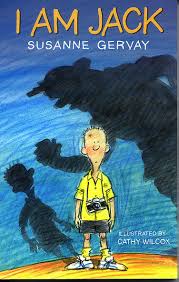
I've been meaning to read I am Jack for some time now, and was pleased to have the chance recently. I think I actually found out about the book because of the theatrical adaptation by Monkey Baa, Australia's best theatrical company for young audiences. I have already seen their productions of Thursday's Child and Pete the Sheep.
I Am Jack, the book, was written back in 2000, and the stage adaptation has been touring since 2008- and is still touring- I saw it a few weeks ago. The Australian tour continues until September 2015, and then the production will be touring America in October and November 2015.
Susanne Gervay wrote I Am Jack after her own son Jack was bullied as a child. Jack is 11 years old. He lives with his mother and sister in a third story flat above a fruit and veg shop. Jack's Mum works long hours at the local supermarket to make ends meet, and her new partner Rob stays 4 nights a week.
Jack is being bullied at school by the thuggish George Hamel. George starts calling Jack Bum Head. Soon pretty much all of the kids are calling Jack Bum Head too. Jack's world falls in on itself. His friends won't play with him any more. He's lonely and the school playground has become a minefield. Jack takes refuge in the school library at lunchtime. He tries to talk to his mother but she is always busy and he doesn't know what else to do.
I wanted to tell Mr Angelou why I didn't want to go into the change rooms, why I was late, why my school trousers were torn, why I missed school, why I didn't answer any questions in class .... I couldn't. I feel breathless. It really hurt when they called Mum names. When they said my father left because of me. And I just took it, like a coward.
It's probably no surprise that Jack does overcome his difficulties with George Hamel by the end of the book. His bargain loving Nanna reminds him
'You know you're never alone when you have people who love you.'
and Jack releases the hold George has over him.
It makes George Hamel seem stupid. It makes the kids who followed him seem like that too. It makes me wonder why I let them bully me.
Bullying in schools has long been an important topic, at least one in four Australian children are bullied at some time, and the advent of cyber bullying has made it even easier. The Australian government has a successful Bullying No Way! website.
I hadn't heard of Sister Heart when I picked it up recently at my local book shop. I'd heard of Sally Morgan of course. Indeed I've been meaning to read her seminal book My Place for probably decades now. I know that I've boorrowed it from the library on occasion, and still not managed to read it. So of course I was sorely tempted by a new pretty hardback- even better, a verse novel for children. I still can't quite believe that I like verse novels now, and even actively seek them out. Thanks to Steven Herrick for that. You never know one day I might get mature enough to read poetry...
Sister Heart may have sat unread in my humungous TBR were it not for Lisa at ANZLitlovers running her Indigenous Literature Week last week. The timing was too good to pass up.
Sister Heart is the tale of a young girl forcibly removed from her family, from her country.
I hate the bully policeman for snatching me from the station when Mum was working at the out-camp
This young girl is taken by boat to her new home far away, although it is not a home based on family, it is the cruel, rather inhospitable home of institutional care with corporal punishment and stinky soup, where she is left alone and bewildered, until she is befriended by another girl Janey.
I breathe deeperpretend I am biggertaller olderI walk like I'm not afraidlike I am brave
There are many things we don't know about this young girl. We don't know where she is from really, although she is referred to as a norwester, implying that she is from remote North Western West Australia. We don't know her real name. She is give the name Annie by the Reverend who travels with her, but she already has two other names.
I already have an english name Lots of people on the station have english names Boss won't say language names but I have one
My language name is the name Mum whispers when I'm sick The name she croons when she strokes my hair
Annie struggles with many things at her new home. She misses her home, her family, her country. She also struggles with English.
There is too much english in this placeenglish hurts my headenglish is hard on my tongueenglish is missing good wordsenglish is lonely
Annie is lonely too and for a while she loses her voice too.
SometimesI feel my voicerattling inside melike a trapped thingtrying to get out
I'm certainly glad to have heard Annie's voice. Stories of the Stolen Generations are powerful and important to remember, these forced removals of children still affect families now. After all they were official Australian government policy into the 1960s and 70s. You can listen to Sally Morgan talk about Sister Heart on Radio National. It's a fascinating background to the book. In Western Australia the Aborigines Act of 1905 made the Chief Protector of Aborigines the legal guardian of all Aboriginal children under 16 years of age, and so he had the power to move any of them at any time. Sally Morgan dreamt the first page of Sister Heart, and feels her great grandmother gave the story. See the Teaching Notes from Fremantle Press. P.S. I can't fix the formatting of some of the poetry. I have tried multiple times, it can't be corrected. Sorry.
I fell in love with Martine Murray back in 2011 when I read her two absolutely gorgeous books about Cedar B. Hartley. The Slightly True Story of Cedar B. Hartley (see my review) and The Slightly Bruised Glory of Cedar B. Hartley (see my review). Both quirky, delicious, delightful reads. I fully intended reading more of Martine Murray and think that I've borrowed another book from the library a couple of times, but never got to reading it. And then this week I heard that she had just released a new book- I was at the book shop rather quickly. And it had to be read immediately.
Molly and Pim and the Millions of Stars is yet another quirky, delightful read. Molly lives with her mother in rather unusual circumstances. Molly's mother is a hippy at the very least, a healer, vegetarian, loving, possibly bordering on a witch like creature going out to collect wild herbs at dawn when the vibrations are best to make her potions. Molly and her mother live in an unusual house.
Molly's house might have looked like a normal house from the outside, but on the inside it was quite different. As soon as you walked in, instead of a pleasantly regular feeling, there was an airy, open space with not one proper corner or straight line. Scatterings of large brightly patterned cushions, Persian carpets, billowy curtains, and low-lying beds covered in sequinned rugs made the room feel like a gypsy caravan.
Of course Molly is a bit embarrassed by her mother's herb collecting and other slightly eccentric activities and she longs to have a normal childhood existence, like her best friend Ellen who lives in a normal house with her family and goes to pony club on Saturday mornings.
Molly blocked her ears with her hands and imagined that her mama was just like Ellen's mother who drove a nice clean car and gave Ellen muesli bars in plastic wrappers and let her watch whatever she liked on television.
Molly's mother is wise, but one average Saturday she makes a terrible mistake and Molly is left alone to look after herself. She must try to keep out of the way of the interfering, meddlesome neighbours, the Grimshaw's.
The neighbours were staunch, zipped-up, sneering people, who glanced away when you went near them, but were always peering over fences and squinting into everyone else's lives.
Molly turns to Pim a rather odd boy in her class for help to solve her problem. Molly and Pim and the Millions of Stars is eccentric and a bit hippy too, illustrated with Molly's drawings of herbs. It is however an enchanting, beguiling and whimsical story that is certain to delight young readers.
This video says that it is 10 years since Martine Murray's last book! Martine worries that modern kids aren't imaginatively engaging with nature, and Molly and Pim and the Millions of Stars is a response to that, and encouragement to kids to get out there amongst life and nature. I hope Martine Murray's new generation of readers will look back to her other reads, there is much delight in store.
It's not all that often that I'm up to date with new releases! But I was keen to read Risk after an enthusiastic recommendation from my local bookseller. It pays to know those in the know. Fifteen year olds Taylor Gray and Sierra Carson-Mills have been best friends since they can remember. Their mothers were friends long before they had children and their families are intertwined ...
... our mums are best friends. They grew up together, did nursing together, they got married at the same time and our dads were mates long before that. They even decided to have babies at the same time, but Mum didn't fall pregnant.
Risk is a totally modern cautionary tale of young girls looking to have fun and to meet boys online. Taylor and Sierra both chat with a cute guy on a chat website. Sierra goes to meet him and everyone's life is changed forever when she doesn't come back when she said she would. It's hard to say more about the story without significant spoilers. It's all set in Melbourne as are so many books it seems- I'm beginning to wonder if more books are set in Melbourne than in Sydney? Melbourne is our only UNESCO City of Literature after all. Risk is the debut novel for Fleur Ferriswho wrote it in a frantic 35 days, rising at 4am before her kids were up and while her day job is running a rice farm! And I think I'm tired... Risk is exciting and fast paced and Fleur's years as a police officer and paramedic give the story and writing great authenticity. Topical and compelling, I suspect that Risk will feature in the CBCA Awards next year.
Margaret Wild features in the CBCA Award lists each and every year it seems. She is rather prolific, having written over 70 books, and is one of Australia's best writers for young people. I've read quite a few of her books and shared some of them here. The Dream of the Thylacine. The Treasure Box. Tanglewood. This years nominated book is The Stone Lion, illustrated by Ritva Voutila who is a new name to me, although she is an accomplished illustrator and artist who has been illustrating children's books for over 20 years. Ritva has two books included in the Picture Book of the Year Award this year- The Stone Lion which was shortlisted, and Outside by Libby Hathorn which is an Honour Book.
The Stone Lion is a beautiful picture book. A story of sadness and joy, despair and hope. The stone lion sits atop a pedestal outside a library. He longs to be alive so he can stroll through the city streets and run through the park opposite his library.
One snowy night, a small homeless girl Sara brings her baby brother to the lion. Sara is freezing and giving up hope.
Sara and the baby will become cold and hard, he thought, unable to walk or jump or feel, Just like me.
The lion wants to protect Sara and the baby, to take them into the warm library.
Ritva Voutila has created beautiful warm pastel illustrations that have a European feel with stone lions, snowy nights and robins. I expected to see an Eiffel Tower on each page. The illustrations have a Depression-era feel to them.
Gorgeous Endpapers
The winners of the 2015 Children's Book Council of Australia Awards will be announced tomorrow.
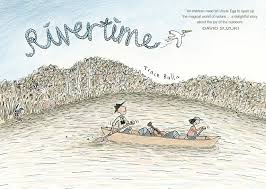
Rivertime is the latest book in my quest to read as many of the CBCA 2015 Shortlist as I can before the winners announcement next week. As usual my reading eyes are bigger than my reading stomach. Rivertime made two shortlists - Picture Book of the Year and the Crichton Award for New Illustrators. It has already won the Readings Prize 2015 and the Environment Award for Children's Literature Picture Fiction. And David Suzuki noless wrote the blurb for the cover.
Rivertime is a first book for author illustrator Trace Balla. It is a gentle, beguiling story inspired by Trace's own 2012 kayaking trip on the Glenelg River in Western Victoria. In Rivertime 10 year old city boy Clancy is taken on a kayaking trip by his uncle. Clancy is not overwhelmed at the prospect of going without all his modern playthings- there will be no computer, no music, no games on the river.
Soon Clancy is enjoying spending time in the great outdoors. Seeing our amazing birds and animals and living life at a slower pace. Written in a pictorial diary format we travel the river with Clancy and Uncle Egg. It's quirky from the very start.
Rivertime is a gentle meandering of a story about taking time to notice the beauty of the world around us.
It seems there are many books written about children's fears and concerns. So much so that there are quite a few lists about them out there too. One from Readings. Or Kids Book Review. Don't Think About Purple Elephants is a great addition to this topic.
Some child are born confident, plucky and happy-go-lucky. Others are born worriers. Sophie is usually a normal, confident girl enjoying her school, her family and her friends. She has a safe life, with a supportive loving family. But at bedtime the worries start to crowd in.
Sophie's worries aren't huge, they aren't life and death, but they are enough to stop her getting to sleep and can disturb her enjoyment of the next day.
Thankfully her mother is very clever and she, and some purple elephants, help ease the burden of Sophie's anxiety. It is all beautifully illustrated by Gwynneth Jones. Don't Think About Purple Elephants was inspired by Susan Whelan's daughters struggles with bedtime anxiety when she was seven.
I came across Don't Think About Purple Elephants back in March because it was launched at the Newcastle Writers Festival. It was a great festival and I saw many wonderful sessions. So many in fact that I didn't get the chance to go to the launch. But I did make sure to buy a signed copy, which I will now donate to my local library. Thankfully author Susan Whelan blogged about the launch.
I've followed Nikki Gemmell's career for some time. From the 90s when she read me my news on JJJ (back when I was almost young enough to listen to a youth broadcaster) I started reading her writing from her first novel Shiver in 1997 when I was drawn in by the Antarctic story line. I then read Cleave and The Bride Stripped Bare, her publishing sensation, initially published as Anonymous. Two years ago Nikki Gemmell, now a mother of four, rebranded herself as N.J. Gemmell and started writing for children with The Kensington Reptilarium and The Icicle Illuminarium, neither of which I've had time to read despite meaning to. And now I see that the third book in that series, The Luna Laboratorium is on the way in October. Last week I found Coco Banjo is Having a Yay Day in the shops and picked it up immediately. Coco Banjo is aimed at younger readers (6+) than her other books and I knew that I could slip it into my busy schedule. N.J. has turned illustrator designer here too and she's done a great job.
Coco Banjo will be a welcome addition to the modern graphic style novel for young (probably girl) readers. The Wimpy Kid series led the charge, and has been wildly popular in Australia, but it's great to see so many wonderful Australian stories added to the genre such as Andy Griffith's Treestory books, and Anh Do's WeirDo series. Coco Banjo is a student at Banksia Bay Public School. She has a lovely teacher, Miss Bonkiss (I like what she's done there), and a mean principal, Miss Trample, much in the Miss Trunchbull style of principal. Coco is a seemingly normal Australian girl, but her mother is a world famous fashion stylist and is away much of the time. Coco lives on an island in Sydney Harbour by herself.
It reminded me of an inverted treehouse for girls. Coco Banjo is Having a Yay Day is the story of just one day. Coco's Yay Day involves not going to school, staying home painting her toe nails, eating lollies and riding her dolphin. As you do. I could do with a Yay Day myself.
Coco's best friend is N (Narianna), and the mean alpha girl is called Belle. While the school may be typical, with it's bush tucker garden, maths lessons, boring assemblies and looming exams for selective high schools, the kids are modern- they take selfies and have instagram accounts. Random House have provided a great Teacher's Resource where N.J. Gemmell sets out her aims in writing Coco Banjo. She wanted to reflect life in a typical Australian primary school, for parents to have a giggle of recognition, for Coco to be a positive role model and to empower young girls. I think she has achieved all this and more. Coco Banjo ultimately is a story of friendship and loyalty peppered with dresses, tap dancing penguins and school life. Better yet, Coco Banjo is fun.
I picked up Anzac Ted from a display at my local library a while ago. I'd not heard of it before but was interested in the many books that have been written about the Centenary of Gallipoli, and it has an appealing cover. It has an appealing inside too.
Anzac Ted is told in a somewhat unexpected rhyme for a war story.
Anzac Ted's a scary bear
and I can tell you why.
He's missing bits, his tummy splits,
he only has one eye.
Anzac Ted is the beloved toy of a young boy, but he's more than that- he's a bear with a history. He belonged to the boys grandfather, and Ted was indeed an Anzac who went to war with Grandpa Jack. The other children in the boy's class can't understand Anzac Ted's importance, they can't see beyond the exterior to see his significance, importance and truth.
She's done a great job with the illustrations for Anzac Ted- particularly the sepia toned war time ones.
Anzac Ted is the second book that I've read recently from the newish published of children's picture books, EK Books. The first being Don't Think About Purple Elephants (review coming soonish). I think they're off to a flying start, and fulfilling their mission to publish outstanding stories with meaningful ideas as their essence. I will look forward to reading more of their books.