Showing posts with label Carnegie Medal. Show all posts

Saturday, 6 May 2017

Maggot Moon


I picked up the audiobook of Maggot Moon from my library recently. I was looking for an audiobook for a road trip that Master Wicker wouldn't hate. I'd never heard of Maggot Moon particularly, although I've had a growing awareness of Sally Gardner for some time, never really hearing about her properly, but aware of her oeuvre, that it's very well regarded and that she covers a rather vast subject range.


So I didn't know what was coming when I popped the first disc of Maggot Moon into my car CD player. Oh. My God. It's so good. It's extraordinary actually. The young narrator Robert Madge did a particularly amazing job. He absolutely inhabits Standish Treadwell.


Before Hector came to this school, I hated it. I believed it was invented just so the bullies, with brains the size of dried-up dog turds, could beat the shit out of kids like me. A kid with different-coloured eyes: one blue eye, one brown, and the dubious honour of being the only boy in the whole of his class of fifteen-year-old who couldn't spell, couldn't write. 

It is 1956 and Standish Treadwell is 15, born into an impoverished and repressed neighbourhood in Sector 7 of the Motherland. Standish lives with his grandfather as his parents have left a few years before. People disappear frequently in Sector 7 and all evidence of their life disappears along with them. Standish and his grandfather have a marginal existence with little food, and many rats in the cellar. 


I tell you this for a bagful of humbugs, it was eerily deserted under this houses. All we could hear down there was the conversation of rats. A very stubborn thing is your common brown rat. I often wondered how it was the rats became fat when we were so very lean. 

The Motherland is a brutal regime and is out to impress the Evil Empires of the world by sending a manned rocket to the moon. It's hard to say much more about the story without spoilers. While I'm not a fan of allegory on the whole, and although Maggot Moon is clearly allegorical it's brilliance is such that I plainly saw that and just didn't care. 


Maggot Moon is not a gentle story by any means, it is actually quite violent, quite shockingly violent. But it is unbelievably gripping. I paid attention intently. And then I listened to it again. And again. Even now after I've finished listening to the book five or six times, I can't get it out of my head.


So much so that I googled about it quite a bit. 


Sally Gardner is dyslexic and she didn't read til she was 14 because of it. D'oh of course Standish is dyslexic. Rather embarrassingly I didn't form that word in my mind while listening to Maggot Moon, I just accepted Standish and didn't label him. But it's pretty obvious now. Sally Gardner has become a dyslexia campaigner and spokesperson. Jackie French is one of my favourite writers, and is also dyslexic. I'm not sure whether that has any significance or not.  


I also borrowed the physical book from my library because I was intrigued as to how it would look. It's fabulous. Illustrated with rats and maggots that make a great animation as you flip through (in parts).  Told in 100 short chapters it would be a lightning fast read. I think I'll read the book sometime. Maybe in a few months. 

And Master Wicker? He thought it didn't suck. High praise indeed. 


I will be reading Sally Gardner's work again sometime very soon. I'm totally intrigued. What a talent she has. What an imagination. 

Wednesday, 20 January 2016

One


I'm not really sure why I became so desperate to read One, a book I hadn't really heard of all that much. I did see it on a number of end of year lists out of Britain. Actually I do think this one from the Guardian may have tipped me over the edge. Various authors recommended it- including Katherine Rundell (who is high on my To Read radar herself, and who had many recommendations of her latest The Wolf Wilder on the list). Who can go past this:

Mine is One, by Sarah Crossan. It's a book that shouldn't be possible- a blank verse novel about conjoined twins that never once dips into sentimentality- but Sarah Crossan makes it look so easy. It's a book about love, and courage, and I adored it.
I've come so far in my Verse Novel Journey that this was an added incentive, and soon it was landing on my doorstep. Perhaps because it featured so much on an English list I thought it was an English book. But it most definitely isn't. One is set in Hoboken, New Jersey. I see now that Sarah Crossan was born in Dublin, and currently lives in England, but she did live in New York while working as an English teacher before she became a full time writer. I believe that her other books are set in the UK, I wonder why One is set in America then?

Grace and Tippi are 16 year old conjoined twins who have been homeschooled to hide them from society's prying, and often cruel, eyes. But now the family circumstances have changed and the girls need to go to school for the first time. Hoping that it won't be terrible, hoping to make friends, even perhaps hoping to find love. 


'Are you kidding?
You are normal.
And normal is good.
Normal is my goal,'
I tell him.
The story was always relatable even though unusual, and the characters, especially Grace and Tippi were well written, our narrator Grace was clearly her own persona, and different from her sister. There were just too many issues for my liking. Everyone in the twins immediate family had major stuff going on. So did their friends. While perhaps we all do have our own stuff, it just seemed a bit much at times. One is not Sarah Crossan's first novel in verse, it seems that The Weight of Water was also a verse novel, she also writes in prose. She started One in prose, but it wasn't working, even after 30,000 words, until she swapped to verse. 

Conjoined twins are a rare phenomenon, and not something I've thought about all that often. Every now and then a set of twins will come to prominence as efforts are made to separate them, although sometimes this is not possible of course. I've never thought about what it would be like to be conjoined. I don't think it's something that is actually all that easy to imagine but One gives us some small insight into the internal world of conjoined twins. And even the ethics of it all. 


Gorgeous people strut down catwalks
in dresses made of string
loll half naked on sandy beaches
and no one seems to mind
that they do this for money
no one finds it
distasteful
at all. 
But when Tippi and I consider cashing in on our
 bodies,
everyone frowns.

In an Author's Note at the back of the book Sarah Crossan says that she modelled the physiology of Grace and Tippi on the bodies of Masha and Dasha Krivoshlyapova, particularly tragic Russian conjoined twins, taken from their mother in 1950 Russia, who were to live a tragic life and die of alcoholism. Although, Sarah tells us


It might be astounding to a singleton, but conjoined twins do not see themselves or their lives as tragedies. 
Grace tells us too. 


It really isn't so bad.
It's how it's always been. 
Two of Sarah's previous books The Weight of Water and Apple and Rain were nominated for The Carnegie Medal. Clearly she is an author to explore.

Update June 2016 One has won the 2016 Carnegie Medal.

Wednesday, 9 September 2015

Ash Road


Ash Road is a fabulous read. However, I let myself be a bit put off by the daggy old cover of my edition and I initially wasn't sure that I was going to like it, but it's such a great story- both a compelling adventure with action waiting to boil over, and a clever and nuanced character study. I did like the rather 1970 recommendation at the start. "For readers over 10, especially boys."


Ash Road is the story of a few short hours in a baking hot summer. Three 15 year old boys convince their parents to let them go camping alone for the first time. 


They had escaped from the city for a glorious week of freedom in the bush. They had never done it before. They had planned it for months. At first their parents had said no, firmly no, but the boys had nagged and nagged. 

Things go awry very quickly. On their very first night one of the boys has inadvertently started a fire, while making coffee- I knew it was an evil substance. The first chapter, The North Wind, deals with the boys starting their trip and the start of the fire. The action then moves to Ash Road in Chapter 2, a rural community some distance away, but which will come under threat from the flames. We then don't see the three boys again for some time, but meet the residents of this rural road. 


At first there were quite a few characters to get sorted, and it took me a while to get them all straight. I loved how Grandpa Tanner was introduced:


It was early for Grandpa Tanner to be out of bed. There had been a time when he had been up around dawn almost every day, but there was no need for that now. His family had long since grown up and gone away; his wife Marjorie had been dead for so many years; the relentless bush had reclaimed his once splendid farm; dogwood scrub and blackberries had choked his fruit trees; sorrel and couch grass had overrun his garden; there was no cow to milk or hens to feed. 

Grandpa Tanner's actions late in the book moved me to tears, and will stay with me for a long time. 


Ivan Southall does an incredible job of building the atmosphere and tension of that fateful morning. His descriptions of the progress of the coming fire are wonderful. 


And he was frightened of the sky. It was so threatening, so ugly, so unlike anything he had ever seen. It was a hot brown mantle over the earth with pieces breaking off it, little black pieces of ash; an oppressive mantle that did not prevent the penetration of the sun's heat but imprisoned it, added to it, and magnified the hostility of the day. 


Every Australian has their own experiences with and memories of bushfire. Thankfully my experiences have been more from the tv news, and much less close than those of the residents of Ash Road. Although we've all smelt smoke from bushfires, and I remember ash raining down in my inner city backyard in Sydney when fires ringed the city. There have been many terrible fires in recent years that we seem to have a collective consciousness regarding fire, so much so, that early on when some of the residents of Ash Road doubt that they could ever be threatened by fire, it seems a bit incredulous to a modern reader. Also, by a variety of circumstance the children of Ash Road are left essentially on their own to deal with the oncoming inferno. It's not quite a scenario that I think would play out now, but it makes for compelling reading.


It's a shame that Ivan Southall has become somewhat of a forgotten Australian writer. He had a rather successful career winning the Children's Book Council of Australia Book of the Year four times between 1966 and 1976. And he still remains the only Australian author to win the Carnegie Medal (for Josh way back in 1971)! Surely we're overdue for the next Carnegie winner? Text Publishing have included three Southall titles in the their Text Classics series- Ash Road, Hills End and To The Wild Sky so these amazing stories are available to a whole new generation of readers. I certainly hope many modern readers find their way to this very Australian story. 


The Text Classics edition has a great Introduction by Maurice Saxby. We learn that three years before the publication of Ash Road Ivan Southall's family and their home to the east of Melbourne were threatened by a bush fire. This first hand experience is very obvious in the writing. Maurice Saxby also tells us that "Ash Road may be the most emotionally tense of Southall's early novels".

274/1001

Tuesday, 30 June 2015

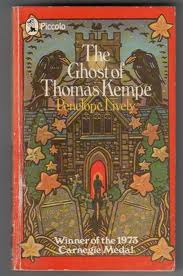
The Ghost of Thomas Kempe


I really enjoyed The Ghost of Thomas Kempe even though I wasn't expecting to. I let a daggy old mid 1970s cover put me off I guess ... I should have known better. Penelope Lively is known as both a writer for adults and children. I've read her most famous adult book Moon Tiger, and remember liking it but not much more than that.

The Ghost of Thomas Kempe is indeed a ghost story- perhaps the subject matter put me off a little too? I kind of outgrew ghost stories a few decades ago. But this is a delightful, well written ghost story with a delightful English village setting with marvellous village characters.

Ten year old James Harrison and his family have just moved to Ledsham in Oxfordshire, and into an old house.

It was a very old place, half way between a village and a small town, and had, somehow, the air of being dwarfed by the present. New housing estates were mushrooming now on two sides of it, but the centre remained as it must always have been with the houses and streets a size smaller than the houses and streets of a modern town. 

James' parents have converted the disused, locked attic into a bedroom for young James. And this is where the trouble starts. There is a wonderful sense of spookiness and foreboding from the start.

In the room, there was a gathering of air: it bunched and compressed into little winds that nosed the mounds of wallpaper, rustled them, and set the windows faintly rattling. Then it subsided, and the room was quiet: empty. 

But The Ghost of Thomas Kempe has much more substance than a mere ghost story. It is a wonderful contemplation of family, community, time and memory. James has just moved to a new town, he doesn't always get along with his sister, his mother makes cauliflower cheese for dinner and he is forever getting into trouble and despairs of ever receiving dessert or pocket money again. And apparently it's quite difficult to get anyone to believe that your house and village are inhabited by a note writing poltergeist.

'If you think I've made it all up,' said James icily, 'you've got another think coming. Who wants all their pocket money stopped and no pudding and everybody getting in a bad temper with you?'

Penelope Lively is a wonderful writer. While on the face of it she seems a most English of writers, she was born in Egypt to English expat parents and did not attend any sort of school until she was 12. The Ghost of Thomas Kempe was her first big success. It won the Carnegie Medal in 1973.


268/1001

Thursday, 16 May 2013

A Monster Calls


I must be one of the last people on earth to read this book. It was certainly one of the big books of 2011/2012. I'd seen the striking cover around and about a lot. I'd seen many, many bloggers reading it. People on Goodreads reading it. And it won awards. Lots of awards. Big awards too. The Carnegie Medal. The Kate Greenaway Prize. The British Children's Book of the Year Award. The Red House Children's Book Award.

Still, I didn't really know anything much about the book. I hadn't read Patrick Ness before but had at least seen his books in the shops, and had never even heard of Siobhan Dowd. I was glad to take advantage of a little free time to get to a book from the TBR. I think A Monster Calls is a good book to go into with as little knowledge as possible. So if you haven't read it yet, and are inclined to, don't read much further, and go find yourself a copy.

A Monster Calls gets off to an electrifying start.


The monster showed up just after midnight. As they do.
Conor was awake when it came.    
He'd had a nightmare. Well, not a nightmare. The nightmare. The one he'd been having a lot lately. The one with the darkness and the wind and the screaming. The one with the hands slipping from his grasp, no matter how hard he tried to hold on. The one that always ended with-

A Monster Calls is the moving story of 13 year old Conor O'Malley, bullied at school, lonely, his Dad has moved to America and started a new family, and his mother is battling a serious illness. Is his visiting monster there to help or to hurt Conor? The monster begins to tell Conor three stories in a rather Dickensian A Christmas Carol kind of way.


The Second Tale
 One hundred and fifty years ago, the monster began, this country had become a place of industry. Factories grew on the landscape like weeds. Trees fell, fields were up-ended, rivers blackened. The sky choked on smoke and ash, and the people did, too, spending their days coughing and itching, their eyes turned forever towards the ground. Villages grew into towns, towns into cities. And people began to live on the earth rather than within it.


From Jim Kay's excellent website
Award winning author Patrick Ness was asked to write A Monster Calls based on an idea by Siobhan Dowd. Sadly Siobhan wasn't able to write the story herself as she died from breast cancer at a mere 47 in 2007.

Stunning illustrations by Jim Kay really help build the story, and it's fitting that he won the Kate Greenaway Medal for them. The back flyleaf tells us Jim Kay used everything "from beetles to breadboards to create interesting marks and textures". The Guardian had an interesting piece on how Patrick Ness and Jim Kay worked on the book together, but without ever meeting. 

I read much of this book sitting as a passenger in a car (with Eurovision blaring as ever), still I was transported into Conor's world, and cried heartily at the end. A tribute to the powerful storytelling and illustrative powers of Patrick Ness and Jim Kay. 

Sunday, 24 February 2013

The Changeover


I was really looking forward to this book. Margaret Mahy is a legendary New Zealand author, who sadly died last year, and I hadn't really read much of her work- the occasional picture book, but not any of her longer books. I married a kiwi, and am a frequent visitor there, so naturally I'm interested in their book culture, and feel a sort of antipodean allegiance I guess, and have an expectation that I will like their books, and generally I do. So, I was quite disappointed with myself that I didn't enjoy The Changeover more.


The Changeover, which is sometimes subtitled A Supernatural Romance, won The Carnegie Medal in 1984. It is the story of 14 year old Laura, a schoolgirl in suburban Christchurch, who lives with her mother Kate, the manager of a local bookstore, and her 3 year old brother Jacko. Laura goes  to rather extraordinary lengths to save her young brother Jacko from sinister forces that threaten his life.


It was clearly well written, and I could see the cleverness of the author in the prose, but I just didn't like the story. 

Laura like to hear Jacko praised, but the man leaned forward as he spoke and his dreadful smell struck her like a blow- a smell that brought to mind mildew, wet mattresses, unopened rooms, stale sweat, dreary books full of damp pages and pathetic misinformation, the very smell- she thought she had it now- of rotting time.

I was never fully captivated by Laura's battle to save Jacko from the rather creepy Carmody Braque. There are great themes- love, family, cruelty, revenge, justice, teenage years and early yearnings. Even so I wasn't fully engaged.  Clearly, I'm a bit out on a limb here. Googling around there is much love for this book- it seems everyone else gets it, and loves it. Ah well. We can't all be the same, can we?


201/1001

Friday, 2 November 2012

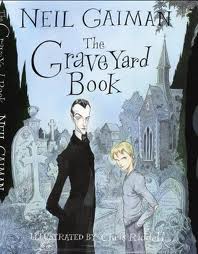
The Graveyard Book


Australians don't tend to celebrate Halloween, and old Scrooge me likes it that way. It isn't our holiday. We don't need it. Supermarkets are trying to flog more Halloween themed stuff each year. We've even had people knock on our front door occasionally over the past few years in an attempt at trick or treating. It can't be much fun to go trick or treating where noone wants you to come, or is prepared for you to come. Although last year I did enjoy a glimpse of pre-Halloween in Texas. Despite my grumblings Neil Gaiman's The Graveyard Book was a perfect read for the Halloween season.

I haven't read all that much Neil Gaiman as yet. Coraline. Wolves in the Walls. Both excellent and intriguing. But I'm becoming increasingly aware of him. His output is rather vast, and in a broad range of disciplines. The Graveyard Book is one of his more recent works, published in 2008, and sweeping awards the world over in 2009 and 2010, most famously winning both the Newbery and Carnegie Medals. 

The Graveyard Book has perhaps the most captivating, spine chilling opening of any book I've ever read. Big Call. I know. 


There was a hand in the darkness, and it held a knife. The knife had a handle of polished black bone, and a blade finer and sharper than any razor. If it sliced you, you might not even know you had been cut, not immediately.
 The knife had done almost everything it was brought to that house to do, and both the blade and the handle were wet. 
The street door was still open, just a little, where the knife and the man who held it had slipped in, and wisps of night-time mist slithered and twined into the house through the open door. 
The man Jack paused on the landing. With his left hand he pulled a large white handkerchief from the pocket of his black coat, and with it he wiped off the knife and his gloved right hand which had been holding it; then he put the handkerchief away. The hunt was almost over. He had left the woman in her bed, the man on the bedroom floor, the older child in her brightly coloured bedroom, surrounded by toys and half-finished models. That only left the little one, a baby barely a toddler, to take care of. One more and his task would be done.

Wow. I dare you to stop reading. You can't. You're immediately drawn into this world. Why would the man Jack want this family dead? What happens to the toddler? The toddler survives of course, to become that childrens book hero of old, the orphan. He is taken in and protected by the ghosts and spirits of the local graveyard, in a modern, macabre riff on the famous it takes a village to raise a child, here it takes a graveyard to raise a child. 


"I love what the first three pages of The Graveyard Book do to people's heads," said Gaiman. "I love reading the upset reviews from people who read those first few pages and say, 'Oh my God, it's like a slasher movie with all the murders and blood' and I think, 'No, you did that. I just had a man walking round with a knife and you killed all those people in your head. It says more about you than anything I wrote on the page.'"


Neil Gaiman has said that The Graveyard Book was the book that took him longest to write. 25 years ago he noticed how comfortable his young son was riding his bike around a local graveyard. Rather incredibly, he had the idea then, wrote a page, but realised that it was a much better book than he was a writer. He put his idea aside for 20 years, while he became that better writer, and then he wrote it (starting at Chapter 4). I'm very glad that he did. 

The Graveyard Book is a wonderful read, dark, funny and wise. Full of wonderful words like flibbertigibbet and ululation. I'm planning to use this as the next read aloud book with my son. So he gets to hear it, and I get to read it again. 


The French cover


Writing this post, brought to mind my tally of the Top 100 Children's Novels List. I've made some progress, but am still only at 34/100.

192/1001

Monday, 1 October 2012

Watership Down


Somehow I didn't read this book in the 70s. I don't know how. It was certainly famous enough. I can't even think about the book, without the song flooding my consciousness. Perhaps a book about bunnies wasn't appealing enough to my teenage self?

So I was intrigued to start reading it recently. And feeling some pressure to love it I must say. Of my 12 friends on goodreads who have read Watership Down, 9 gave it 5 stars, the other three gave it 4 stars. It seems it is  a well loved book.

I was surprised to see it start with a rather bloody quote from Aeschylus' Agamemnon. Each chapter starts with a rather suprising quote actually- Greek plays, classic poems, Napoleon quoted in French. Shakespeare. Cosi fan Tutte in Italian. No dumbing it down for the kids there.

Most chapters are a mere few pages, making it easy to sneak in an extra chapter whenever you have a free couple of minutes during the day. A great way to make quick progress on what is a rather thick book. Watership Down was originally created as stories for Richard Adams' young daughters to pass the time during long car trips. The family were driving to Stratford-upon-Avon to see Judi Dench in Twelfth Night, when his daughters clamored for a new story, and their father began telling them a story about two rabbit brothers, Hazel and Fiver.

The book starts with immediate action, young Fiver senses a distressing premonition of danger for the warren.

But it's not exactly danger that I seem to feel about the place. It's- oh, I don't know- something oppressive, like thunder: I can't tell you what but it worries me.

Fiver's sense of impending doom drives an all male band of rabbits from their home at Sandleford Warren. They risk life and limb in their search for a suitable place to establish a new warren, and then attract some does to join them. I did wonder if the two other warrens that our band come into contact with, the odd group at Cowslip's warren who appear to have sold out, and the rather regimented life at Efrafra under the tyrannical General Woundwort were allergorical for a larger socio-political view. It was the early 70s after all. But no. Richard Adams denies that outright. He was just telling a story. With goodies and baddies, who just happened to be rabbits.

I enjoyed my time with Hazel and Bigwig and Fiver. I learnt quite a bit about rabbits along the way. Much of it makes sense if you think about it. They spend half their life underground. In burrows generally dug by does. Rather astonishingly in an overcrowded warren expectant mothers may actually resorb their litter if they are too stressed.

It's changed my life to learn that rabbits pass two kinds of poo. There were multiple references to particular rabbits eating pellets, which I passed over initially, but then wondered how wild rabbits could actually be eating pellets. Turns out it wasn't the pellets I was thinking of at all. Not manufactured food pellets, after all, that can't be. Rabbits pass two kinds of poo! Which makes no sense at all, but it's true. The hard droppings that we're probably all familiar with and soft viscous pellets that they reingest almost immediately, and I've never seen or heard of before. Happily for the rabbits they swallow these pellets without chewing.

It's hard to imagine how one tube of gut can produce two different sorts of poo. Like much of life it seems it's all in the timing. Food that enters the caecum (the first part of the large bowel) in the morning, undergoes little further processing and is then covered by a special mucus. These are called soft or night pellets, or caecotrophes if you want to be fancy. Food that enters the caecum at other times of day is processed differently- most of the water is extracted and the typical hard rabbit poos form. From the diagrams I found it seems that rabbit caecums are more of a sidestreet than it is in a human intestine. A fact of anatomy for which I for one shall remain eternally grateful.

Picture source
I really enjoyed this glimpse of the bucolic English countryside- so many plants, which of course would be vitally important to rabbits, and they would know all the names (if they spoke I guess). They have such wonderful names in English. Figwort. Fleabane. Pimpernel. Speedwell. Heartsease. Persicary.

The real Berkshire setting

And maybe, just maybe, I'll name my next dog Rowsby Woof. Or Fairy Wogdog.

Read as part of my ongoing quest to read 1001 Childrens Books You Must Read Before You Grow Up.

Monday, 16 January 2012

Tom's Midnight Garden


Tom's Midnight Garden is an enduring English classic published in 1959, and immediately popular and lauded. It won the Carnegie Medal in 1959, and in 2007 was voted in the Top Ten Carnegie Medallists in a  public vote to celebrate the 70th anniversary of the Medal. 

In some ways it starts off as many classic children's stories do by taking a child away from their home, and removing the normal parental supervision. Typically, this is done by orphaning children and sending them to live with cold, uncaring or mean guardians. Here, Tom is sent to live with his aunt and uncle for a while. He hasn't been orphaned, but is merely being placed in quarantine as his brother Peter has come down with measles. Tom tries to explore his new world, but there isn't really that much there. His kindly aunt and uncle live in a flat in an old large house that has been converted into flats, with a small back yard that is only used to store dustbins and parked cars. 

There is nothing to do, and Tom quickly becomes bored, for he is not unwell, just quarantined and marooned. He quickly finds that the clock in the main hall doesn't work as it should, and one night it strikes 13 and he goes to investigate. He soon finds his midnight garden. A garden that only exists at night. 

Tom finds a magic garden out the back door, in just the same way that the Pevensie children find Narnia in the back of the wardrobe. The garden is only there at night, in the day it's replaced by the boring back yard full of dustbins. And just like in Narnia time doesn't move in the easy linear way that we ordinarily expect. Tom meets a young girl called Hatty, orphaned, living with her aunt in a rather Jane Eyre existence, and not really included in games by her older male cousins. Hatty spends a lot of time in the garden. She is the only person who can see Tom, and so they become friends and companions. Tom's nocturnal adventures make his boring days worthwhile, so much so that he doesn't want to return home when the time comes. 

Philippa Pearce was inspired to write Tom's Midnight Garden by the memories of her own childhood home. After her father retired the family home was to be sold and Philippa "imagined the possibility of it being converted into flats and its garden lost forever. Pearce wanted to recreate and 'preserve' the house and its garden as it was when her grandfather was alive."

We certainly get a sense of the workings of a Victorian house. Abel the gardener is always busy at work in the garden, the maid, Susan in the house. The garden is more than ornamental- it is a working garden, there are asparagus beds, gooseberry wires, hot houses with rather complicated plumbing

I certainly enjoyed visiting the midnight garden with Tom, but wasn't blown away by the book overall. I did learn lots of things from the book, and enjoyed that aspect of it very much. Ely Cathedral is mentioned several times. I'd never heard of it, but it looks quite magnificent and I know I'd love to visit. At one stage Tom researches clothing history so he can try to work out when Hatty lived, and he discovered that the Duke of Wellington had caused a sensation by wearing trousers in the early nineteenth century. And in a beautiful moment of synchronicity, I had just learnt about the Duke of Wellington and his scandalous trousers being refused entry to Almack's on QI the night before I read about it with Tom! I love that sort of thing. And I love this little insight into 1950s women in Britain:

On Friday morning, in the peaceful hour before the others were awake, Aunt Gwen leaned out of bed, boiled the electric kettle and made an early pot of tea. 

Really? Is it normal to keep tea making things within easy reach of the bed?