I do enjoy Alain de Botton's work whenever I get the time to appreciate it. I very much enjoyed The Art of Travel a few years ago. I was sold on How Proust Can Change Your Life from the time I first saw the front cover, and given that it was first published in 1997 that was some time ago. I bought the book a few years ago but it has sat on my shelf patiently waiting its turn although occasionally I would glimpse that lovely cover and hope to read it sooner.
Happily a couple of recent(ish) events conspired to get me there. My friend Lisa at ANZLitlovers read it in March last year, and I read her review eagerly. And then it came time for Paris in July 2016 and it seemed the perfect time to pop the audiobook in the car CD player. Sadly I've long ago run out of July, and 2016, for the review. Indeed it's nearly time for Paris in July again. Ah, c'est la vie.
Happily a couple of recent(ish) events conspired to get me there. My friend Lisa at ANZLitlovers read it in March last year, and I read her review eagerly. And then it came time for Paris in July 2016 and it seemed the perfect time to pop the audiobook in the car CD player. Sadly I've long ago run out of July, and 2016, for the review. Indeed it's nearly time for Paris in July again. Ah, c'est la vie.
How Proust Can Change Your Life is told in a series of nine lessons.
How to Love Life Today
How to Read for Yourself
How to Take Your Time
How to Suffer Successfully
How to Express Your Emotions
How to Be a Good Friend
How to Open Your Eyes
How to Be Happy in Love
How to Put Books Down
On one level it is a biography of Proust in some detail- his habits, his prodigious tipping, the precarious state of his health. I don't think I ever knew that Proust was self-published!
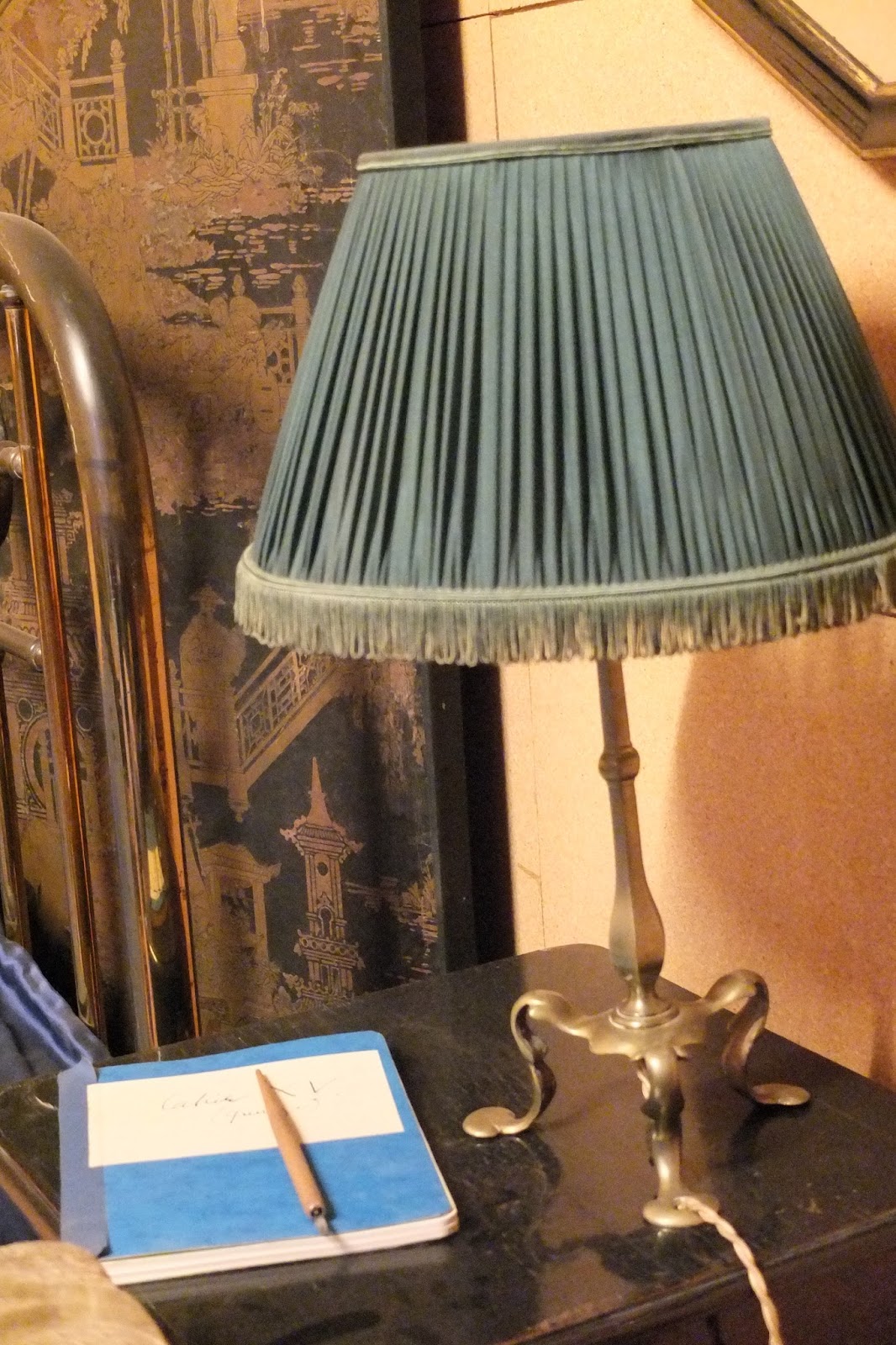
I haven't read Proust. Well, I did try to once but didn't get beyond the initial 30 pages of the narrator falling asleep, but I have an increasing fascination with him and his work. I want to give it a red hot try at some stage, but until now I'll read about him, and think about him. I've stalked him in his room.
I couldn't help but wonder what the modern diagnoses for poor old Marcel may have been. He had such problems with his skin, his digestion, his asthma.
Proust frequently has to suffer distressing insinuations that he is not as sick as he suggests. At the outbreak of the First World War the medical army board call him up for an examination. Though the man has been lying in bed more or less continuously since 1903, he is terrified that the severity of his illness will not be appropriately considered, and that he will be made to fight in the trenches.
Alain and Marcel also had some helpful suggestions for Reconsidering My Life. Alain de Botton suggests that n'allez pas trop vite could well be a Proustian slogan. Don't go too fast. Wise words I'm sure, but is that even possible in the modern world of a single working mother?
Proust famously did not realise the nature of what he was trying to write until he had begun to write it. When the first volume of The Search of Lost Time was published in 1913, there was no thought of the work assuming the gargantuan proportions that it eventually did; Proust projected that it would be a trilogy [Swann's Way, The Guermantes Way, Time Regained], and even hoped the last two parts would fit in a single volume.
However, the First World War radically altered the plans by delaying the publication of the succeeding volume by four years, during which time Proust discovered a host of new things he wanted to say, and realised that he would require a further four volumes to say it. The original five hundred thousand words expanded to more than a million and a quarter.
None of which is surprising in the least when you see the pictures that Alain has included of the rewritten manuscripts and the revisions and comments that Marcel poured onto every square millimetre available of the publishers proofs.
 |
| Picture source From the internet, not from the book |
Chapter 7 How to Open Your Eyes, was my favourite chapter, about what would now be labelled gratitude, and of seeing the beauty in the quotidian. Proust recommended studying the works of Jean-Baptiste Chardin in order to see the beauty in everyday objects. "Chardin's paintings succeeded in being extraordinarily beguiling and evocative."
 |
| The Silver Goblet Jean-Baptiste Siméon Chardin Musée du Louvre |
Why don't we appreciate things more widely? The problem goes beyond inattention or laziness. It may also stem from insufficient exposure to images of beauty, which are close enough to our own world in order to guide and inspire us.While I do seem to prefer non-fiction audio books to fiction, the audio format does leave the listener without illustrations, or the rather intriguing layout of the book form of How Proust Can Change Your Life. A layout that I really wasn't expecting from de Botton.

Fascinating titbits
Marcel's surgeon brother (gynaecologist, urologist and general surgeon) Robert Proust did indeed introduce radical prostatectomy via a perineal approach in 1901, a "proustatectomy".
Proust spent lots of time at the Ritz entertaining, and was a legendary tipper
Though he was well catered for at home, and had a maid adept at preparing wholesome meals, and a dining room in which to give dinner parties, Proust repeatedly ate out and entertained at the Ritz in the Place Vendôme, where he would order sumptuous meals for friends, add a two hundred percent service charge to the bill and drink champagne from fluted glasses.I can't express my relief that I've finally finished this post. I finished listening to the audiobook last August I think. This post has been an albatross around my neck. Now lifted. I can move on.
 |
| Dreaming of France is a wonderful Monday meme from Paulita at An Accidental Blog |