Showing posts with label Reconsidering My Life. Show all posts

Wednesday, 16 October 2019

No One is Too Small to Make a Difference


The book of the year? Maybe. Certainly one of the most important ones. Climate change is the issue of our time. Right here, right now. 


It really is extraordinary that it has taken a diminutive schoolgirl from Sweden to mobilise the world. Not into taking action mind you, we haven't managed that as yet, but we have seen global passion and protest that I think is unprecendented. As well it should be. 

I want you to act as if our house is on fire.
Because it is. 
No One is Too Small to Make a Difference is a small book. Almost a pamphlet. Some have criticised the book to say that it is repetitive. Which is to miss the point entirely. It is a collection of 11 speeches written and delivered by Greta Thunberg from September 2018 to April 2019. Some of these speeches have been delivered to a variety of rather distinguished audiences, the British Houses of Parliament, the European Parliament and the World Economic Forum. Others have been delivered to rallies, and even a Facebook post. 

I really had no idea where Greta Thunberg had sprung from. Yes, I'd heard about her rise to prominence in the past few months, but it was fascinating to read it from her perspective in I'm Too Young to Do This, a Facebook post from 2 February 2019. Greta won a newspaper writing contest about climate change in early 2018, and after that she came into contact with activists and groups. She liked the idea of a school strike, but no-one else was interested. 
But since I am not that good at socializing I did this instead. I was so frustrated that nothing was being done about the climate crisis, and I felt like I had to do something, anything. And sometimes NOT doing things- like just sitting down outside parliament - speaks much louder than doing things. Just like a whisper is sometimes louder than shouting. 
She posted her initial School Strike on Instagram and Twitter, it went viral, and that, as they say, is history. Greta's sense of urgency is one of the most striking things.

We are about to sacrifice our civilisation for the opportunity of a very small number of people to continue to make enormous amounts of money. We are about to sacrifice the biosphere so that rich people in countries like mine can live in luxury. But it is the sufferings of the many which pay for the luxuries of the few. 
So is her determination to make a difference. 
The climate crisis is both the easiest and the hardest issue we have ever faced. The easiest because we know what we must do. We must stop the emissions of greenhouse gases. The hardest because our current economics are still totally dependent on burning fossil fuels, and thereby destroying ecosystems in order to create everlasting economic growth. 

It is sobering to read that "we are failing but have not yet failed".

It's fascinating to ponder why (mainly) men are so threatened by this small 16 year old Swedish schoolgirl. One who is after all trying to save the earth for all of us. It's incredible that all this started with Greta sitting down outside the Swedish parliament on Fridays. It's incredible that she can not only stand up to this torrent of abuse, but that she can even can push back. We ignore her at our peril. 


Monday, 14 October 2019

The Book of Idle Pleasures


I found this unexpected delight at the recent Newcastle Lifeline Book Fair. A few days later I was prostrated by illness and a rather consumptive cough and took an afternoon rest and decided that this would make a great accompaniment. How right I was.

I'd never heard of this book before, or either of the two editors or 13 contributors I suspect. But I'm mightily impressed with this little book from 2008. It is a "restorative gift book for the stressed out, tired and hassled" according to the back cover.

Very simply, it is a compendium of mini essays about Idle Pleasures. Some of these are rather obvious. Cloud Watching. Taking a Bath. Good Company. Others not so much- Slouching, Putting Out the Washing, Learning the Names of Trees and Walking Back Home Drunk. 

It turned out that even Being Ill was an Idle Pleasure. Which is lucky I guess because I'm still ill over a week later, although I've been at work and not particularly idle. The Book of Idle Pleasures was actually quite prescient for its time. While concepts such as mindfulness and hygge were yet to take the world by storm in 2008, they were spelt out here using slightly different words. 
Enforced idleness is a rare treat. Those brief moments in life where for one reason or another you are forced to just stop and think. In waiting rooms, queueing, for example, or even just sitting on a train. Waiting for the tea to brew is one of those moments. 
Which is all so delightfully English. In 2008 these moments didn't give us enough time to 'do' anything else. Now of course we have a screen handy at all times that we can stare at and scroll. 

I loved the deliciously English turn of phrase so often used, and how wonderful it is to find that chuntering is indeed a real word: from the start of a passage extolling the virtues of Sleeping in Your Clothes. 
After a busy day you find yourself lying on the sofa drifting off into a hypnogogic state in front of a chuntering TV screen. 
Or that merely owning a dressing gown could be a sign of hope, that a dressing gown can actually be the uniform of revolution. 

Each Idle Pleasure is accompanied by a fabulous illustration by Ged Wells. I think they are lino cuts, whatever they are, they're great.


The whole book is great. I was going to read it and pass it along. But I'll be keeping it on my shelves instead. 

Wednesday, 7 August 2019

Plastic Free July 2019


 230 million people participated in Plastic Free July world wide in 2019! This year I was one of them. I've been working towards being plastic free and reducing waste for a while. I've used reusable grocery bags for ages, long before the changes last year. I've pretty much sorted out the big four. 


I don't drink coffee, so avoiding takeaway coffee cups is easy. I carry my own straw and water bottle. Indeed I have a zero waste kit in my handbag. I've started using cloth serviettes, I love having one in my handbag for when I'm out and about. I even have a couple of those little plastic gelato spoons in there- you never know when you might come across gelato that needs eating. 

Like at Cow and the Moon

I've started buying staples like oats, hemp seeds, chia seeds, dried fruits, nuts etc from my local bulk store. I've bought meat straight into containers from local suppliers. Not that I buy meat very often. So I decided to extend myself for Plastic Free July and look at some things that I was using and try to change things. I've been using more milk recently (something to do with the amazing milk frother that I got for my birthday in June). Milk and dairy products generally come in plastic. You can still buy sour cream in cardboard, and while I like that, I don't buy it all that often. I've stopped buying yoghurt for some time because of the plastic packaging. But I enjoy milk, and cream. I have a couple of local options for both in glass. 


The Little Big Dairy Company are local to me in NSW, and they have most of their products in plastic. But some are also available in glass. The Double Cream is amazing! Expensive, but well worth it, a little goes a long way, and it lasts pretty well. I've taken to having some in the fridge at all times. I've also taken to Non-Homogenised milk in the past few years. They have a small 750ml bottle in glass. It's more than $5 though, so not feasible for families, but ok for me. 

A cheaper option, but one that takes a bit more work is the Single Herd Milk On Tap at Harris Farm. I'd wanted to try this for a while, but was hesitant wondering if it was too fiddly, or if I'd poison myself. I used Plastic Free July to give me the push to give it a go. It isn't too fiddly at all, and I haven't had any troubles with it so far. The shelf life of the milk is shorter (4 days), and it's $3 a litre. I have to organise myself to go early in the day, because they clean the machine in the evening- which is when I tend to do my shopping. So, like much of the plastic free shopping it takes a little bit more organisation, but it's certainly very doable. And I've basically eliminated plastic milk bottles from my house. 

Other products I've tried recently have been compostable dog poo bags from Onya. They hold dog poo very well. 


I've also been using cellulose sponges in the kitchen and am totally in love with Safix Coconut Fibre Scourers and have been giving them to friends and family who love them too. I've been using mine for months, it still looks great, doesn't smell, and I can just put it in the green bin when it finally does wear out. 

I've been trying to make other changes too. I've made suggestions to the cafes at my work on how to reduce plastic packaging. It worked with one, but not the other yet. 

So, all in all I had a pretty good month and great progress was made. I'm not perfect at it, but anyone can decrease their plastic waste with rather little effort. I was devastated to receive a smoothie in a plastic takeaway cup when dining in at a local cafe, and the response of the owner was awful when I pointed this out. I won't be going back until they change. 


You don't need to wait til Plastic Free July to make some changes. Do it today. 

Saturday, 22 June 2019

The Joyful Frugalista


Serina Bird wants to reclaim frugality. "Once upon a time, thrift and frugality were celebrated as virtues."
Instead of being equated with negative words such as poor, meagre, paltry, cheap, insufficient or even skimpy, I want frugality to be associated with concepts such as creativity, appreciation, abundance, choice, empowerment and being enterprising and environmentally sound. 
For her the frugalista lifestyle is about financial empowerment. Don't live a life of FOMO and debt. 
There is a better way. And that way is to take control of your finances, to learn to live within your means, to aim to create more wealth and to develop a savings plan. 
Her underlying themes of self-worth, abidance and gratitude 
It is about being authentic and true to myself, and striving (in small, everyday ways) to make the world a better place. 
And our lives a better place too. Serina provides us with lots of inventive ways to find cheap or free goods and services. And to not be ashamed about that. 
It is ok to accept with gratitude the abundance that the universe provides. Something free is not automatically substandard, nor is it wrong (unless, of course, you stole it).
Naturally, Serina takes all of this very seriously. She has recorded every dollar she has spent for over 10 years! I couldn't tell you what I spent yesterday, or last week. She even makes a monthly income/expenses report. Like she is a business. While I can see how that makes sense to do that, I can't ever see me doing it. She juggles multiple investment properties, and has for many years, through her first marriage, and then divorce, and now into her second marriage. 

I particularly liked the section on The Power of Little Savings, teaching us that every dollar counts. I've been doing something similar for a while. I make lots of small extra payments to my mortgage and superannuation whenever I buy something and make a saving. A trick I learned from the $1000 Project. Serina talks the talk, and walks the walk. She buys second hand clothes and goes urban foraging. She maintained a $50 weekly food budget for herself and her two sons for over a year! I pretty much drop 50 bucks every time I go to the supermarket. Well, not every time, but often. 

I also liked the more personal chapters where she recounted her own story. Her marriages. Her habits. Her goals- she wants to be a billionaire! And yet doesn't like FIRE (Financial Independence, Retire Early). It's a sad day when you realise you're already too old to set FIRE to your life...

Serina lives in Canberra, a city that has four distinct season, with a real winter. Well, as real as it gets in Australia. My town does too. She likes embracing the seasons and suggests that we think of our homes as a chalet. She uses the German word gemĂ¼tlich to convert this sense of wintery cosiness, I'm more used to the Danish term hygge

But I've been interested in making my life more hygge for a while now. I turn on a sparkly light, day or night, just because it gives me joy. I've bought (and actually use) scented candles. I'm using a furry, soft fake fur blanket (the dog likes that too, dogs have an innate sense of hygge, though perhaps not so much as cats).

Each chapter ends with a Frugalista Challenge. Some of them would be easy peasy. Don't buy any new clothes or shoes for a month. Done. Try to reduce your grocery expenditure to $25 per person per week. I just broke out in a cold sweat. I am going to try and record every dollar that I spend. For a month! I've tried doing this sort of thing before, but have rarely gone beyond a day. We'll see how it goes. I think I might try it as a project for July. 

While I'll never be a Frugalista anywhere near Serina Bird level we can always learn things from such books. 
You can afford anything, but you can't afford everything.
I borrowed The Joyful Frugalista from my library. And so I've just transferred $29.99 into my super. The lessons from this book will take me into retirement. I hope Serina would be proud. 

Serina Bird blogs at Joyful Frugalista


Wednesday, 24 April 2019

A bad birdwatcher's companion


I listened to this very delightful audiobook recently after I saw AimĂ©e Anders talking about it on her lovely book tube channel. AimĂ©e is Dutch, and we often have quite similar interests including bird books. I was soon seeking this book out on Audible. I'm so glad I did. 


Simon Barnes is nothing like a bad birdwatcher to my mind, despite his best efforts to deny it. 

A bad birdwatcher is me, a bad birdwatcher is you. A bad birdwatcher is anyone who looks at birds and feels a lift of the heart - but doesn't have to do anything about it. If you don't take accurate field notes; if you don't keep a bird diary; if you are a mite hazy on the differences between a first winter lesser black-backed gull and a second winter herring gull; if you don't know what a rachis is, still less a supercilium; if you don't own a telescope and above all if you don't keep lists then you are a bad birdwatcher. 
I certainly feel that lift of the heart, and I certainly am a bad birdwatcher- by anyone's definition, not just Simon Barnes'. My name is Louise and I am a bad birdwatcher. I didn't know what a rachis was, or even how to spell it- I had to go to Amazon and Look Inside a text copy of this book to work out how I might even try to spell it. I did know that supercilia had something to do with eye brows. 
We are drawn to birds because above all else they can fly. 
The subheading .... or a personal introduction to Britain's 50 most obvious birds, gives a more obvious clue to the actual content of the book beyond the foreword. Simon Barnes gives us a bird a chapter for 50 chapters, helpfully divided in to section as to where you might find them - Garden, City, Sky, Seaside etc. The final section is Pilgrimage Birds, those birds that are worth travelling to the "cathedrals of wild Britain" to see - avocets, Bewick's swan and bittern amongst them. Each chapter begins with a little handy guide to help bad birdwatchers see each bird. 

Robin
Where to look: gardens, spade handles, Christmas cards
When to look: all year
What to look for: red breast
What to listen for: thin, pretty song

Then because of the magic of audio were are treated to a snippet of their bird song. This quite often alarmed my dog if I was listening to it at home. I was most excited to hear the whoom, whoom of the booming bittern. I so need to hear that for myself. Australasian bitterns boom too, but it's a bit different.

Even though this an English book about English birds, I was actually familiar with a goodly number of them at the start. Many of these very common English birds - blackbirds, sparrows, pigeons and starlings etc - were introduced into Australia, brought by English settlers in the nineteenth century to bring a piece of home with them. That goldfinches were popular cage birds in England in the eighteenth and nineteenth centuries is most certainly why I have been able to watch them out of my kitchen window in Australia. 

Simon Barnes is a skilled journalist and author and a wonderful English sense of humour flows through the whole book. 

Mallard
Where to look: any bit of water, once seen in trios over mantlepieces, now almost extinct in this environment
When to look: all year
What to look for: green head, orange feet
What to listen for: quack, quack

That's not to say that there are not some serious discussions, on the distressing nature of nature, and human activities. I realised a number of years ago that pretty much every living creature gets eaten by some other living creature. It can be rather visible with birds. 

I have received many a heartrending letter from nice people who put out food for the birds and then feel guilty when a sparrow hawk bursts in and takes a blue tit just as he's tucking in to the peanuts. I sympathise with the distress, but blue tits eat caterpillars which is not all that pleasant for the caterpillars. It's not nice, no, but then as I've said before the fact is that nature is not nice. Beautiful, thrilling, challenging, enthralling and altogether wonderful yes, but nice no. 
Sparrow hawks eat nice birds just as lions eat nice antelopes. Both sights can be distressing I know, I've seen both in extraordinary detail. It is all the sadder when the sparrow hawk fails to kill the bird with his first attack, as is quite often the case. His victim must then die a piteous and protracted death during the plucking and the eating. Still, that is the way that life works and anyway the blue tit whatever else you can say has certainly lead a better life than a battery chicken. Humans are much crueler than sparrow hawks. 
The chapter on pheasants is particularly fascinating in this regard.  
Pheasants are ground birds by inclination, they run well and forage on the grounds for seeds and insects, they're not fussy feeders and they'll take a wide range of food. That makes them relatively easy to keep and means that the wild and semi-wild birds don't find it hard to survive.... They might have evolved to please a man with a shot gun. They get up to fly with great reluctance and when they do they keep low because they have heavy bodies and do not have huge stamina. Thus a flushed pheasant becomes an instant target for what some people refer to as sport. Personally, I can't see the pleasure in blasting fat, half-tame birds to bits, especially when they're incompetent flyers.
Pheasants are of course an introduced species in the UK, introduced before the Normans, and the preference of pheasants for sheltering in copses and small woods has meant that these areas have been left to break up the farmland of rural England, helping preserve biodiversity. 
.... without the blood lust for the lovely ungainly pheasant we would have a greatly impoverished countryside. 
I had no idea that pheasants were reared artificially and released to the wild for this sport. "Pheasants are perpetually doomed birds, and they have given the countryside life."
I also had no idea that there are (incorrect) theories that magpies are responsible for the decline of song bird populations in the UK. Hint- "it's mostly to do with changes in farming practice".


Nature does not exist in order to seek the moral approval of humankind. It is about surviving, breeding, and the ultimate goal of becoming an ancestor. 
Or that the Great Crested Grebe was known as Arsefoot in the sixteenth and seventeenth centuries because of the relative placement of their feet to their um, arse. 


Picture source

Simon Barnes is endlessly encouraging for us bad birdwatchers to get out there and look at birds, and I greatly enjoyed his enthusiastic narration.

A growing interest in birds is rather like looking for stars at dusk on a frosty night. The more you look, the more you see.... The birds were always there, but when you become a bad birdwatcher the world is made new again.
Learn to listen and there will be so many more birds in your life. 

Peregrines are perhaps the ultimate pilgrimage bird, and they are an inspiration. An inspiration to carry on, to see more birds, to enjoy birds more, to enjoy life more.
To write this post I got what I thought was the physical book of this audiobook from my library, but it turns out it was an earlier, related Simon Barnes book - How to be a bad birdwatcher. I will of course need to read that now too. I am becoming more and more convinced that actually finishing a book does nothing whatsoever as to actually decreasing the reading you have ahead of you, instead it actually increases the number of books you want to read. 

I expect that I'll listen to A bad birdwatcher's companion again, hopefully before a trip to the UK sometime soon. 

Thursday, 21 March 2019

Quitting Plastic


It seems that I'm having a bit of a nonfiction moment recently, but here's been such a lot of fascinating Aussie nonfiction lately. Like many people I've been really interested in trying to decrease my plastic footprint, particularly since I watched War on Waste in 2017, and there's acutally quite a bit to learn when you're going about that. More recently I read Zero Waste Life and made quite a few changes on the back of it. So I knew as soon as I saw Quitting Plastic that it was for me. 

Quitting Plastic is written by a mother daughter team from Sydney. Clara Williams Roldan is a policy and legislative advisor for the NSW parliament ( a fact which makes me very happy), while her mother Louise Williams is an award winning journalist. They're clearly a talented family as another daughter Elowyn Williams Roldan did the illustrations. 

While Quitting Plastic is full of practical tips and solutions for reducing plastic in our lives and our homes it also takes a broader historical view to look at how we got into this mess in the first place. How one third of all the plastic wrappers, packaging and bags that we use end up in our oceans. How we took "such a strong, high-performance material" and used it "to make disposable items that we toss away, often within minutes and without a second thought."

Plastics really boomed in the post (second world) war period. All that wartime deprivation, hardship and rationing was suddenly replaced by convenience, and we grabbed it with both hands. 
In a flash, humanity went from the relative scarcity of natural materials and the deprivation of wartime to a utopia of plenty. We had a new, cheap material that appeared to last forever.... Cleaning up after ourselves was just another antiquated waste of time, while throwing out more and more disposable items symbolised modernity and efficiency. It represented a triumph over the drudgery of the past. why wash up if you could just throw the dishes and cutlery away? And plastic was at the forefront of this modern, new world. 
"We had a new, cheap material that appeared to last forever. " Unfortunately it does, and that is exactly the problem we face now. We (and our oceans and marine life) are now literally drowning in single use plastic (the oxymoron of our times it seems).
They are lightweight, so they 'leak' easily into the environment. They are free, so we don't value them, and they are used only briefly before being tossed.
Even so we had to learn to 'shop and toss'. Quitting Plastic tells us that when coffee vending machines were first introduced office workers would carefully wash the plastic cups for reuse. I remember my grandad washing every bread bag for reuse, there was always one drying on his clothes line.

In Australia 88% of metal waste is recovered for recycling or reuse, and nearly all our aluminium. Of course metal is heavy to transport and using lots of energy to produce and recycle. But just a fraction of our plastic is recycled. And there is a big difference between recyclable and recycled. 

The big four of single-use plastic (straws, disposable coffee cups, plastic water bottles, plastic bags) are actually pretty easy to tackle. I recently made my own zero waste kit for my handbag, and it's been so easy, and such a delight to use. I don't drink coffee so I don't need a reusable coffee cup on hand at all times- I do have one for winter when I do quite like a chai latte from time to time. Reading Quitting Plastic made me wonder how men, who traditionally don't carry handbags, quit plastic. It's not going to be nearly so easy for them to carry about their zero waste kit. 


I really like that Quitting Plastic reminds us that we can't be perfect, that it's a journey for all of us. Clara is more than ten years into her quitting plastic journey and still hasn't managed to get rid of it entirely. Just yesterday I asked for no straw in my smoothie at a local cafe. I got the straw anyway. When you're taking this issue deeply that can seem like a failing, that the world will self destruct somehow because I didn't manage to avoid that single straw. But it won't, and I've successfully dodged many other straws. 
There is no way to fail quitting plastic, because it's a process.
The  majority of Quitting Plastic is a room by room guide to reducing plastic in our homes, and life. There are also chapters on Plastic-Free Kids (and isn't that a challenge?), Entertaining, and Eating (and Drinking) Out.

The major chapters are Kitchen, Laundry and Cleaning, The Bathroom, and Your Wardrobe. Within each chapter each activity is broken down with many subheadings, - Washing Your Clothes, Stain removers, Hair Care, Toilet Paper, Menstrual Products etc. Each subheading is given a category to indicate the relative ease with which changes can be made - Easy, Medium, Hard, Improving. Toothpaste is rated Hard, Clothes, wipes and brushes Easy. Clara gives a verdict on her experience with the various alternatives. Rather than listing companies or products that may be difficult to find where ever you are she lists relevant Search Terms to find products near you, online recipes and other solutions. 

I was thrilled to see some tips about using Soapberries as I'd just bought my first packet on the very day that I read those words about them. Apparently soapberries work better on a warm/hot cycle to maximise their release of surfactants, which makes sense, but I only wash in cold water. So I currently have my little bag of soap nuts steeping in some boiling water on the stove. I can even wash the dog with that later apparently, so may have made my dog a plastic free beauty too. I will report back. 

Much of our clothing is now synthetic, ie plastic, and the Your Wardrobe chapter was really eye opening. Global textile and footwear production doubled from 2000 to 2014, a period that also saw the arrival of fast fashion. I've been aware of the problems of microfibres entering our water ways from our washing machines for some time. I've been hoping that someone clever would solve this by the time I need a new washing machine, but it's still very alarming to know that a city the "size of Sydney is flushing plastic microfibres equivalent to 7.5 million plastic shopping bags down our drains via our washing machines every single day"!! 7.5 million bags. OMG. 

Although there is some good news here too. Front loaders seem to generate fewer microfibres than top loaders. Yay. I have a front loader. There are interesting products becoming available to help trap microfibres before they enter the environment. Guppyfriend is a bag to put your synthetic clothing in in your washing machine. Cora Balls are a plastic ball designed to trap and collect fibres within your wash. I'm not sure that makes sense to me logistically. Surely the washing machine manufacturers need to sort this out? And governments need to regulate them to make sure they do so.

 I'm not much into fashion, but have have bought quite a lot of clothes in the past few years, I've bought more than I used to, more than I should have. "Oh that isn't too bad, it fits ok, and doesn't look too hideous, I'll buy it." I know I have too many clothes now. I've read Marie Kondo's book, I've watched her Netflix series, but I haven't gone the full Kondo yet. But I have tried to stop buying new things. Last year I put myself on an official Black Pant Buying Ban. It hasn't been totally successful, but has made me more conscious of the problem. Quitting Plastic suggests taking the Spark Joy method back to the source - put your hand on potential purchases while they are still in the shops, before they get into your house, into your wardrobe where one in five garments will be left unworn or barely used. I have to say that I think my ratio may even be worse than that....

There is a (brief) section at the beginning help us to understand the different types of plastics, and how relatively Good or Bad they may be. I've heard a bit about bioplastics, but don't pretend to fully understand Compostable Bioplastics. Bioplastics can be made from a wide range of renewable resources - sugar cane, corn and agricultural and forestry waste. I get that, and that seems a good thing, rather than using non-renewable fossil fuels. But it's the compostable part I don't understand at this stage. Bioplastics apparently need industrial  composting (and temperatures above 60 degrees) to break down. If put into landfill they will still emit greenhouse gases. But that they break down at all, surely they must not be the same plastic compounds that we are currently using?

It's a coming thing though, massive companies are feeling the zeitgeist and embracing change. Lego has committed to fully sustainable materials by 2030. It has kicked off with making (plastic) plants from Brazilian sugar cane. This plastic is still recyclable but not biodegradable. Lego doesn't want their products to be biodegradable I'm sure. The nomenclature is very confusing to me. European Bioplastics has a graph showing how bioplastics can be bio based, biodegradable or both. And rather confusingly bioplastics can still be made from fossil fuels.


Still I was thrilled to learn that Australia is working towards National Packaging Targets of 100% recyclable, reusable or compostable packaging by 2025 through the Australian Packaging Covenant Organisation. Although it's a shame that isn't listed in the reverse order - compostable, reusable, recyclable. So is individual effort still worthwhile? Undoubtedly yes. 
What's driving change is us. 
The Covenant is voluntary. Targets can be missed. Plastic use is predicted to double again over the next twenty years. We need to still be driving that change. We are at the beginning of the end of single-use plastics. 

I was planning to donate my copy of Quitting Plastic to my local library after I'd read it, but there's so much useful, practical advice in here that I'm going to keep it as a resource at home for now. I  learnt a lot of new information from Quitting Plastic, it wasn't just a reiteration of things I already knew. I had no idea that vegan silk was a thing, or Qmilch - a fibre made from milk protein by a young German microbiologist way back in 2011! There's so many interesting things on the horizon. 


http://australianwomenwriters.com

Tuesday, 19 February 2019

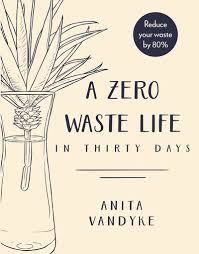
A Zero Waste Life


I'd seen A Zero Waste Life around the shops for a while, but didn't realise that it was Australian until I saw Anita Vandyke on SugarMamma.TV a few months ago.


Soon after watching I was requesting the book from my library- which seemed a more Zero Waste thing to do. And it saved me 20 bucks too. Which I transferred to my mortgage. Which would make Sugar Mamma proud. 

Anita Vandyke is an interesting woman. She initially trained in Aeronautical Engineering, and is now a medical student. Clearly no slouch in the brains department. In the Introduction Anita describes her "aha moment", an "Is this all there is?", "Is this who I will become?" existential crisis sitting in a meeting in her mid 20s. So she quit her high paying job, and her initial motivator for change was financial when she was no longer working, and then became broader to encompass the environment, and life more generally. Anita doesn't want us to waste our time, our money, or our future. 

Plastic is Mother Nature's non-renewable resource, and time is ours. 
Anita lays out a 30 day programme for change, with four key steps- think, do, reflect and review. Apparently we can aim to reduce our waste by 80% over 30 days. That's a big call.
Living a zero waste life is not only actually really easy, it is also completely necessary
It's always frightening to see statements like this one:
Every piece of plastic created since the 1950s still exists.  
Yes, all the little plastic toys I played with as a kid, the straws I used (well they were paper initially), every tub of yoghurt I have ever bought- it's all still out there somewhere. I just don't know where. In landfill? In the  Great Pacific Garbage Patch?

A lot of this stuff I knew already. I've had environmental leanings since I was a teenager. I have already made some changes over the past few years. I was a great fan of both series of The War on Waste over the past few years, and have taken up soft plastic recycling as a hobby. But I can do more. We all need to do more.


I was already most of the way to making a Zero Waste Kit to have in my handbag. I've been taking my own (reusable) cutlery to work for years. I've been refusing plastic bags for at least 5-10 years. I reuse drink bottles. I try really hard to remember to refuse straws. I'll formalise things though, and make an actual kit as Anita suggests. I did just buy myself a pretty pink, sparkly water bottle. It sparks joy every time I look at it... oh wait, that's another book altogether.


I took my kit to Thailand last week,
it was great, very handy
Early on (Day 5) Anita suggests that we put ourselves onto a buying ban for the rest of the month. But I'm not ready to commit to a buying ban just now. Not that it wouldn't help me, but I recently bought a new house. I'm buying huge, expensive things at the moment, like solar panels, and a fireplace. I am trying to cut down - it just doesn't look like it right now ...

A lot of the content overlaps with other reads I've done recently. Decluttering. Minimalism. Gratitude. Food waste. Environment. Politics. Philosophy. Mindful consumption. 

It was a Sunday afternoon, I had just come home with a bag full of clothes after spending a few hours at the local shopping centre. I was sipping my takeaway iced chocolate while checking my Instagram and Facebook feeds. After an hour of mindless scrolling, I sat down for an evening of TV, watching housewives yell at each other. This was a regular Sunday for me. Looking back now, all I can think about are the hours I lost in wasteful consumption- blindly shopping for more stuff, consuming empty calories and indulging in the vortex of social media and televised trash. 
Reading A Zero Waste Life has given me the impetus and the wherewithal to try some things I'd been meaning to do for ages. I'm now using a shampoo bar, and a conditioning bar on my hair- and I really like them. I'm going to buy a shampoo bar for the dog next time too.

I'm keen to try some of Anita's recipes for DIY products- both beauty products and cleaning products for the house. I'm not ready for baking soda toothpaste, but would happily try a Sugar Scrub or an All Purpose Cleaner. I'm impressed that Anita freely shares these recipes online- on her blog, or instagram. These really are changes we can all make. A Zero Waste Life is a great place to start. 


http://australianwomenwriters.com

Sunday, 4 November 2018

The Art of Living Alone & Loving It


I don't live alone, but I will one day soon enough. Not a fate that I ever expected, or planned. But one day soon enough Master Wicker will fledge and leave the nest. And I will live alone. Actually it's just occurred to me (right now) that I have never lived alone! I've always had family, or flatmates. I've lived single, but never alone. Short stays in hotels for conferences probably doesn't count. Maybe this will be a bigger change than I had ever contemplated...

The Art of Living Alone & Loving It was one of those books that I picked up and bought the first time I ever saw it in a store. That was a few months ago, and in the past couple of weeks I got around to picking it up. I really enjoyed it. It's a good all round Self Help/Meditation of Life kind of book. The advice contained within could help anyone regardless of how many people are in the house on census night. 

Like most of us Jane Mathews didn't chose to live alone. She "fell into it post divorce - not with an elegant swan dive but a graceless belly flop." But she came to love the freedom and independence. We all want "a life brimming with opportunities and potential, lived in Technicolor, not black and white."

It's not all fun and games though this single lifestyle- living alone is a skill and requires some thought, effort and discipline Jane tells us. "It is always potentially trackpants o'clock." So how do I become a "frolicsome otter" swimming in my independent waters, revelling in every twist and turn?
Our lives are built choice by choice. 
The book is in chapters dealing with all the facts of life - relationships, health, home, finances, interests, spirituality and action, how to actually get things done. There is even a great chapter on Cooking for One- I want to try Cheat's Quesadillas now.... If only I could keep wraps and cheese in the house. Each chapter ends with a one page summary- the Take Aways. 

Chapter 2 Mental Strength and Shift is absolutely fabulous. There are 12 tools to help us be more resilient and tough. It is wise and universally applicable, not relevant just to those living alone. 

The grit in the oyster makes the pearl. 

Vitality, not happiness is the opposite of depression. 

The world is as you perceive it. 

Avoid developing a habit of discontent, which is an emotional cut de sac. 

Jane Mathews is a Barefoot Investor (see my review) fan, and so much of the advice in the finances chapter had a familiar theme. Which is fine, it's all rather sensible advice. I was a bit taken aback in this section when Jane pointed out that those living alone are more vulnerable financially and "We have to think twice about buying things we want but don't need. Every dollar spent now distances us a little from the life we want in the future." Well. Oops. Maybe I should have read that before the changes I've made in the last few months? No regrets though. 

Jane wants us all to live big lives, pushing the boundaries, experiencing new things, learning new things. To enjoy the abundance of time alone, because that's what everyone else wants more of!
Better to be alone than wish you were. 
The chapter on spirituality was the least appealing one to me. My internal landscape is rather barren I'm afraid. I'm quite happy to try new things, and trailing my fingers through the water sounds delightful, but I don't feel the need for oracle cards or to walk labyrinths anytime soon in this lifetime. I am half tempted to try meditation though. 

I love that Jane calls those living alone soloists! Such a strong, empowered word and image. Soloists are the fastest growing demographic. Two million Australians live alone. A quarter of all households. 
You will find you are as capable as you need to be.
I know that I'll reread this book whenever it comes my time to live with myself. 

RN Life Matters interview with Jane Mathews


Friday, 12 October 2018

The Art of Frugal Hedonism


I plucked this book off the library shelves a few months ago when I was cruising (somewhat uncharacteristically) in the Business section! I'd never heard of The Art of Frugal Hedonism, but was captivated by the title and cover. I shoved it in a pile of other books and brought it home. I've borrowed it several times since that day. And read it cover to cover. 

I started reading it one day when at a bit of a loose end, and was immediately pulled in right from the Foreward by Clive Hamilton. It's all really well written as well as being interesting. It's fun and funny, and not at all stodgy.


Annie Raser-Rowland and Adam Grubb really know their subject as the book was born out of their beliefs and experiences. In 2016 they were living on $105 each per week (including bills, but excluding rent/mortgage payments) compared to the Australian average of $440 (artificially low because it is including adults and children alike). The Art of Frugal Hedonism is a manifesto of sorts of how to value-add your life without actually paying for it. It teaches us that if we consume less, we have don't have to earn as much to live the same life, we can work less and live more- and it's better for the environment.  
As we grew older, dear reader, your authors noticed that a lot of people in our unbelievably affluent society were struggling to thoroughly enjoy life, despite having it so good. 
The book is 51 chapters full of anecdotes, tips and advice on how to live this life, but with an added dash of philosophy. I particularly enjoyed a new 3 Rs. Relish, Recalibrate and Revel in Resourcefulness. Chapter 2 is simply called Relish, and it advises us to use our own nerve endings to our advantage. They offer rather unconventional advice such as
Stroke your dog's ear between thumb and forefinger and marvel at its silkiness. Snuggle into your bed on a cold night and actually grin about how good it is... Enjoy the rocking movement of a train... Call it mindfulness, call it living in the moment, call it relishing- it's recommended by psychiatrists, hedonists, Buddhist monks and cheapskates alike. 
Stroking my dogs ears has long been one of my favourite activities. It's glorious. And obviously free (well apart from the dog food and vet bills). 

Chapter 6, Recalibrate your Senses suggests a way for us to really appreciate what can be everyday treats for us. 
The basic blueprint for modern first-world living is normalised hyper-abundance and hyper-stimulation, punctuated by desperate attempt at escape when the fallout becomes too distressing. These attempts usually take the form of bouts of restraint (like diets), or of collapse (like illness, or 'lie-by-a-pool-for-two-weeks-getting-drunk' holidays). Frugal Hedonism inverts this pattern by normalising an elegant sufficiency of consumption, and then artfully dotting it with intensely relished abundance.
They point out how good a cold beer tastes after a sweaty day of working in the garden with a friend. How good a hot shower feels after a week or camping (I do know how that feels but fervently hope never to experience it again, I can Relish my daily shower without having to Recalibrate by camping).

Reveling in Resourcefulness, Chapter 17, reminds us how good it feels to problem solve, to fix something that otherwise may be no longer used, or thrown out. I've taken up mending things this year, which does not seem all that big a deal I suppose, but I was so proud of my efforts mending a hole in my flanelette sheet that I took pictures and sent it to friends! Those sheets have lasted out the winter just fine (and indeed are still on the bed, winter isn't quite finished where I live), and I didn't need to buy new sheets this winter. And it seriously was rather quick. Previously I would have consigned them to dog blankets long ago. 
Everyday life used to provide people with ample opportunity to experience the satisfaction of being canny, constructive, and creative to achieve an end via the constant necessity of making things and repairing or repurposing them. Apparently, this feeling is so pleasurable that as those necessary activities which supplied it dwindled, we have invented leisure activities to supply it in their place- cutting up brand new fabric to use for recreational quilting, finding 'shed' projects to tinker on, building model aeroplanes, doing puzzles, gaming. 
Blogging?

Perhaps I would rename Chapter 20- Indulge Your Curiosity, to Remain Curious, to fit with my R theme. I've already recognised the need to remain curious as an important principal in my own life. Curiosity may have killed the cat but it certainly brings great joy to humans. Annie and Adam suggest that knowledge can function in lieu of material goods, and that it is "deep hedonism".
As your understandings amass, you begin to sense the world around you as a dense and majestic cathedral of thrumming, interconnected functions and stories. 
I loved this book so much, I suspect that I'll buy my own copy at some stage. And I'll definitely be searching out their other book The Weed Forager's Handbook and most definitely try to do an Edible Weed Walk on my next visit to Melbourne.

If I'd been paying attention I would have noticed Lisa's review at ANZLitLovers last year.


Or heard the RN Lifematters interview with Annie Raser-Rowland.


I'm not exactly sure if this book qualifies for the Australian Women Writers Challenge, as the second author is a man, but will list it anyway as I'm sure more people would love it too. And I hope they will tell me if it doesn't. Actually I'll ask on twitter. 


http://australianwomenwriters.com