Showing posts with label Junior Non Fiction. Show all posts

Tuesday, 30 October 2018

My Year (So Far) in Nonfiction


Nonfiction November is about to take over the world again. Here in the blog world it is hosted by Doing Dewey, Julz Reads, Sarah's Bookshelves, Sophisticated Dorkiness and What's Nonfiction?

I watch a lot of Booktube too now and Nonfiction November is on over there this month hosted by A Book Olive and Non Fic Books.

It's fair to say that I'm having a pretty bad reading year. I've only read 49 books so far this year. I didn't really read anything over the past three or four months. I'm starting to work my way out of this Great Reading Slump of 2018 it seems, but it's still slow going. 


Checking my Goodreads tally I see that I've read 14 nonfiction books so far this year. I've also had a slow blogging year so I haven't blogged most of these books, and it seems I haven't rated them on Goodreads either. 


I've really enjoyed most of those 14 Nonfiction books. 


Week 1 Your Year in Nonfiction hosted by Kim at Sophisticated Dorkiness (one of my favourite blog names ever)

What was your favourite nonfiction read of the year (so far)?


I think it would actually be my most recent nonfiction read, The Art of Living Alone & Loving It (see my review). 


I also really enjoyed The Art of Frugal Hedonism (see my review). Oh they're both The Art of ...


And this one is just fun, but rather fascinating. I love junior nonfiction.


I'm almost finished up with the audiobook of Leigh Sales' Any Ordinary Day, which is fabulous and will get a high rating from me. So much to think about in this one. 


I'm more than happy that three of those four books are Australian. And by Australian Women Writers too. 

Do you have a particular topic you've been more attracted to this year?

I've been reading around my tag of Reconsidering My Life and a lot of my reads have touched on that in various ways. Books about ways of living, and also financial matters. 

What nonfiction book have you recommended the most?

Probably The Trauma Cleaner (see my review). It has a lot broader appeal than my three favourites above. And it's Australian too!


What are you hoping to get out of participating in Nonfiction November?

A few things. This is my second year participating in Nonfiction November, but I really only dabbled my toes in the waters last year. This year I'm hoping it will spur me on to read some of the nonfiction waiting for me on my shelves. I've got a few on the go at the moment that I'd like to get finished too. I also want to blog about some of the books that I've already read this year. Of course I'm looking forward to seeing what everyone else reads, and finding lots of interesting new books and blogs. 

Friday, 22 April 2016

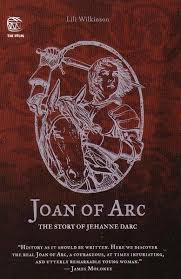
Joan of Arc. The Story of Jehanne Darc


I'm really quite obsessed with Joan. It's an impossible story. Fantastic. Extraordinary. Almost surreal. But it seems to be real. So I was keen to read this book when I found out about it. Joan of Arc was Lili Wilkinson's first book. It was commissioned, and so far remains the only non-fiction book that she has written. I was very pleased to find that my library had a pack with the book and an audio version. I made the most of my recent trip to Newcastle and listened to the audiobook three times!


Fifteenth century France was quite a different one to the France of today. Much of Northern France was under English control. The Hundred Year war between England and France was three quarters of the way through when Jehanne Darc was born in 1412.

Legend says that when Jehanne Darc- Joan of Arc- was born at midnight on 6 January 1412, all the roosters in the village crowed, as if they were heralding a new sort of dawn. 
The story starts and ends at a rather obvious place, Joan's very public death in the Old Market at Rouen.

People who watched Joan die claimed that they saw angels around her head; that a dove flew from the heart of the fire; that the words Jhesus-Maria were written in the flames; that a halo appeared above her head; that her heart remained full of blood, even when the rest of her was reduced to ashes.

Joan's" trial" was pure farce, as I suspect many medieval trials were.

The man chosen to break Joan was the Bishop of Beauvais, Pierre Cauchon. Cauchon was 60 years old, a Burgundian, and a very intelligent, cunning and cruel man. Cauchon had been promised by the English that if he could find Joan guilty, he would be made archbishop of Rouen. 

Any wonder that Joan was found guilty then? She did make him work for it even though the odds were seriously stacked against her.

On the prosecution side, there sat a cardinal, six bishops, 32 doctors theology, 16 bachelors of theology, seven doctors of medicine, and 100 other clerics. On Joan's side, there was just Joan. 

Once again Charles, the king that Joan put on the throne, comes under heavy criticism.

From the day Joan was captured, till the day she died Charles made no attempt to help her. The laws of chivalry stated that any noble or captain could be ransomed, but Charles never offered to ransom Joan. 
Charles waited 21 years to save Joan. He then wrote a letter to the pope seeking to have an official trial of rehabilitation, which could officially annul the Trial of Condemnation where Joan was declared a heretic.

I've seen many images of Joan before,
but not this one I think

The structure of the audiobook was a bit confusing at times, as there are historical notes and asides liberally peppered throughout the narrative- which is of course obvious in the book format but not so much in the audio. Covering interesting topics such as Women in Medieval France, Saints especially Saint Michael, Catherine and Margaret who spoke to Joan, these notes give an invaluable historical background to Joan's story. Lili Wilkinson also uses many primary first hand accounts of Joan's life, actions and her trial which while fascinating, did not always slip easily into the audio either. This book is the second I've read about Joan that strongly recommends Regine Pernoud's Joan of Arc by Herself and her Witnesses. I must have it. Lili Wilkinson did a great job of telling Joan's story, I look forward to reading some of her fiction too.


French Bingo 2016

http://australianwomenwriters.com

Monday, 20 January 2014

Roald Dahl

January 2014 has been a big Dahl month at Chez Wicker. I'm reading three of his books, one associated book, been listening to his books on audio and generally loving the Dahl vibe. So I decided to branch out a bit too and learn a bit more about the man himself. 


Roald Dahl not only wrote fascinating stories, he lived a fascinating life too. The basic facts are pretty well known. Born in Wales. Lived in England. Worked as a spy during the war. I wanted to go a bit deeper, so sought out the only two biographies in my library about Roald Dahl.


The first one, Tell Me About Writers Roald Dahl, took just a few minutes to read. But I learnt so much cool stuff about Roald Dahl. 

Roald was a prize winning orchid grower. 

Roald's father Harald Dahl lost an arm as a young man when he fell off a roof.

Roald was a great collector of modern art. 

If I had known that Roald's first wife was Patricia Neal, an American actress, then I'd forgotten. 

I'd learnt recently that Roald Dahl had helped develop a cerebral shunt after his son Theo was injured in an accident. Here I learnt that he was injured when his pram was hit by a taxi in New York.

Quentin Blake based the drawings for The BFG on none other than Roald Dahl himself. 


The other book I borrowed was Famous Lives. Roald Dahl. The Storyteller by Jason Hook. A treasure trove of great facts. 

Among the items Roald kept on a desk in his writing hut was a heavy, silver ball, made entirely of chocolate wrappers; a carved grasshopper; his father's knife; the cerebral shunt he helped develop; a model of a Hurricane fighter plane, and his own hip bone. 

Harald Dahl's left arm had to be amputated after an accident as a 14 year old. Sorry I but I do like the gory medical details. 

As a young boy Roald heard Norwegian folk tales from his mother about giants and witches. 

I knew that Roald had been in a plane crash during the war (I read Boy a few years ago, and may have read Going Solo too)- he crash landed in the desert in Egypt after he became lost and ran out of fuel. He just managed to drag himself clear before the plane burst into flames. Roald spent six months in hospital recovering from his injuries. 

He became a published writer with the aid of CS Forester (of Horatio Hornblower fame), who asked Roald for some notes to help with a story. Dahl wrote a complete story and Forester sent it to The Saturday Evening Post, who published it. You can hear Roald tell the story himself:


Through the magic of the internet- we can still read that first story!

I hadn't heard of his first story for children, The Gremlins- and we can read that too! It seems gremlins as a term came from the RAF during the second world war as little imps causing mechanical problems on aircraft. Disney published that story, and it's still in print, but I've never seen it before in shops, and it doesn't seem to be one of the 6,002 Dahl titles that are published by PuffinPerhaps Disney is still hanging on tight to it? It just adds even more to the ever growing, never diminishing TBR. 

Roald made rich and powerful friends while working in America as a spy during the war. After the war he made a living for a time buying paintings and antiques for his new wealthy American friends. 

The nanny was pushing little Theo's pram when he was struck by a taxi. He was 4 months old, and had a badly fractured skull. He needed a series of "dangerous operations". Theo didn't end up needing the valve that his father helped develop. 

In 1965 Roald's wife Patricia suffered three strokes while pregnant leaving her crippled, blind in one eye and unable to speak. Patricia had to learn to speak again

Her words came out muddled: a 'spoonful of sugar' became a "soap driver", a cigarette was an "obliging". Dahl would later remember this when he wrote about a tongue-twisted giant in The BFG. 
Roald used to tell his children that their dreams were created by a big, friendly giant who blew magical powders through their bedroom window. He would then say goodnight, and creep out into the garden. Easing his creaking bones up a ladder, eh would slide a bamboo cane through their window, and gently blow.

Many of his stories came from stories that he made up for his own children- certainly a common theme for many of the great writers for children. 

In his final years, Dahl became a very controversial figure. He made an outspoken attack on Israel, criticised the author Salman Rushdie, and reportedly turned down an OBE because he felt he deserved a knighthood.

There's just so much fascinating stuff. I wonder if he was a curmudgeon, or just opinionated?

A quick google, and Oh WOW! News of a recent biography about Roald Dahl that is trying to burst my Dahl bubble.

The much-loved, best-selling children's author, one of the UK's most popular post-war writers, was a man of considerable fury and contempt for people who crossed him, or whom he considered beneath him. The creator of Willy Wonka, the Twits and Fantastic Mr Fox was often less than fantastic as a human being. He was an anti-Semite, a chronically unfaithful husband and a raging bully to business associates, teachers and friends. The creator of the Big Friendly Giant could easily, it seems, transform himself into a Big Unfriendly Bastard.

Can this really be the same man? 

"I think probably kindness is my number one attribute in a human being. I'll put if before any of the things like courage or bravery or generosity or anything else. If you're kind, that's it."

I might leave off reading that newer biography for a while. I want the Dahl magic to continue. That article actually takes big swings at most of the major names of classic British children's authors. 

There were lots of more conventional and widely known Dahl details in these books, but these I thought the most intriguing. 

Sunday, 7 July 2013

London


Perhaps I should try and read something more learn-ed when travelling, but I do enjoy the Horrible Histories franchise, and had already bought the London title, so it was an obvious book to include for my holiday reading. It made great reading on my Paris Gare du Nord to London St Pancras Eurostar train. 

I've read a few Horrible History books now and reading London has certainly confirmed the notion that every place has a bloody, and rather Horrible history. We may now think of the English as a gentle, well mannered people but that certainly has not always been the case. Indeed they were a rather blood thirsty and brutal lot. 

London was named after King Lud, pre-Roman king of Britain. Lud-dum.

The Romans arrived in 55BC led by Julius Caesar, and they were to stay until 410AD. Caesar's presence is commemorated as his sword is still on the London coat of arms, and is quite visible all over the city. 

On grand dragon statues

And simple traffic bollards


It is thought that Boudicca is buried under Platform 8 at King's Cross Station. 


The real Dick Whittington story does not involve a cat, the cat version was made up 200 years after his death. 

The English had particularly dreadful sports and entertainments involving their animals. Bear, bull and badger baiting were practised for well over 700 years before being banned in the 19th century. 

Of course their bloodthirsty nature didn't end at watching animals die hideous deaths, they were also very fond of public executions.  Most of the people to die at the Tower of London were not beheaded- 7 were beheaded inside the grounds of the Tower the rest were hung outside so that large crowds of people could watch.There was a special gibbet constructed at Tyburn so that 24 people could be hung together. 

Executioners were not always precise in their acts, and sometimes relatives would tug at the dying so that they would die more quickly. It was rather fascinating to read that the body and clothes of the dead then belonged to the executioner and that the family would need to buy them back. The heads that were displayed on poles were of course prone to rotting so they were boiled in salt or painted with tar to make them last longer. 

London tells us that a horrified Charles Dickens attended the executions of the Cato Street Conspirators in 1820 who were beheaded after they were hung as traitors.

There are also wonderful and gory descriptions of plague arriving in London in 1348.

And the interesting beliefs of the time:


London was a perfect introduction for me. 

Monday, 1 April 2013

France


I'm a great fan of Horrible Histories on the tele. There are many, many books of course, and like most things the books came first. I haven't read all that many of the books. I read Gorgeous Georgians last year and loved it. As more research for my upcoming Continental Grand Tour I've just read France, even though I was more than slightly outraged at Terry Deary's recent comments about libraries

I didn't love France as much as Gorgeous Georgians. Perhaps it was familiarity with content to some extent. I found the early parts about France in the Dark and Middle Ages to be quite confusing. Of course Horrible Histories doesn't always try and present a cogent, linear narrative of history- they are too busy chronicling the terrible, grisly deaths of many of our forebears. And that's ok to get kids interested and reading history- which is what the series has achieved, but if you are trying to understand the history not just find an assortment of gross facts then it may not be what you are after.

Still, I think it did put the French Revolution in some context for me. Even though I studied the French Revolution in my own personal Dark Ages of High School, I'm not sure that I remember all that much from those studies. Of course I've learnt some things as an adult which helps. France helped me realise that in the 1000 years leading up to the revolution of 1789 the French people had lead a very marginal existence with poor diets, too many taxes, and often being killed in droves by soldiers. Rich kings and starving peasants had been the norm for centuries. There were flour wars in 1775. Which perhaps helps explain the rather extreme laws regarding bakeries to this day in France- bakeries are regulated so that they can't all be closed in a particular area, they are also given a schedule as to when they can close for holidays.

France did of course also present many interesting facts. Here are some of my favourites. 

In the Middle Ages the French made a sport of catching young swans.

Joan of Arc didn't defeat the English, but she united the French, and the English never recovered from the defeats they suffered at her army's hands. 

Charles VI (1368- 1422) really was quite mad, among other things he imagined that he was made of glass, and had steel rods put into his clothes so he wouldn't shatter if he fell over. At one time he was treated with 250 oranges, and apparently this cured him for a while. I've come across fascinating snippets about Charles before. I must find out more about him. 

Francis I (1494-1547) was quite the patron of the arts. He acquired the Mona Lisa from Leonardo da Vinci. France claims that he hung it in his bathroom. I'd forgotten about the Leonardo- France connection despite accidentally finding an exhibition about him when we toured the Loire in 1998, and having walked the double helix staircase at Chambord that is attributed to him. 

Marie de Medici wore the most expensive dress in history. Worth 10 million pounds today, it had 3,000 diamonds and 39,000 pearls. She wore it once.

Picture source
I imagine that it was this one, her coronation dress, worn on 13 May 1610 at St Denis (I'll be going there!). What a week that must have been. Crowned Queen of France one day. Her husband assassinated the next day, and she then became regent until her eldest son Louis XIII came of age. 

France banned tobacco sales in 1635! Seems it's true

Louis XIV adopted wigs because he was bald, and heels because he was short. 

The French helped the American people to rebel against the English. 

Louis XVI helped advise Dr Joseph Guillotin with his terrible invention. Later Louis XVI's neck was too fat to be killed swiftly at the guillotine. This seems surprising as he had been imprisoned for some time before his death, and even if he had a fat neck I would have thought that a period of imprisonment would have corrected that. 

Napoleon sold off the land in the Louisiana Purchase to America in 1803 to raise money for a war against the British. Napoleon may have been killed by arsenic poisoning. 

Madame Tussaud was a real person (I had never thought about that) who made wax masks from the severed heads filling guillotine baskets. Her page on wiki is quite fascinating.

Somewhat controversially I think France claims that the Eiffel Tower was built for the 100th anniversary of the Revolution, and that her 289 metre height was in reference to the date of the revolution. Would Gustave Eiffel have designed his famous tower in metres in the 1880s? I can see that the 1889 World's Fair/ Exposition Universelle was held in France as a centenary event, but I'm just not sure about the height having any deeper meaning. Further research is required I think. 

Books on France, a great 2013 challenge from Emma at Words and Peace

Dreaming of France, a great Monday meme from Paulita at An Accidental Blog

Thursday, 21 March 2013

London Not for Parents!


It's quite hard for me to put aside my Paris obsession and concentrate on other cities for my upcoming Grand Tour. But sometimes it must be done. Hardship as it is. This year I'm planning to make my first ever visit to London. I'm very excited about it, and have begun a bit of pre-reading. London Not for Parents was an obvious place to start.  I read the companion Paris volume in 2011 and loved it. They're from a great series of books from the folks at Lonely Planet.

There's so much in London that I want to do, I know that we won't have time to do it all.

At least now when I ride the London Eye, I'll know that I'll be as tall as 26 giraffes (135m).

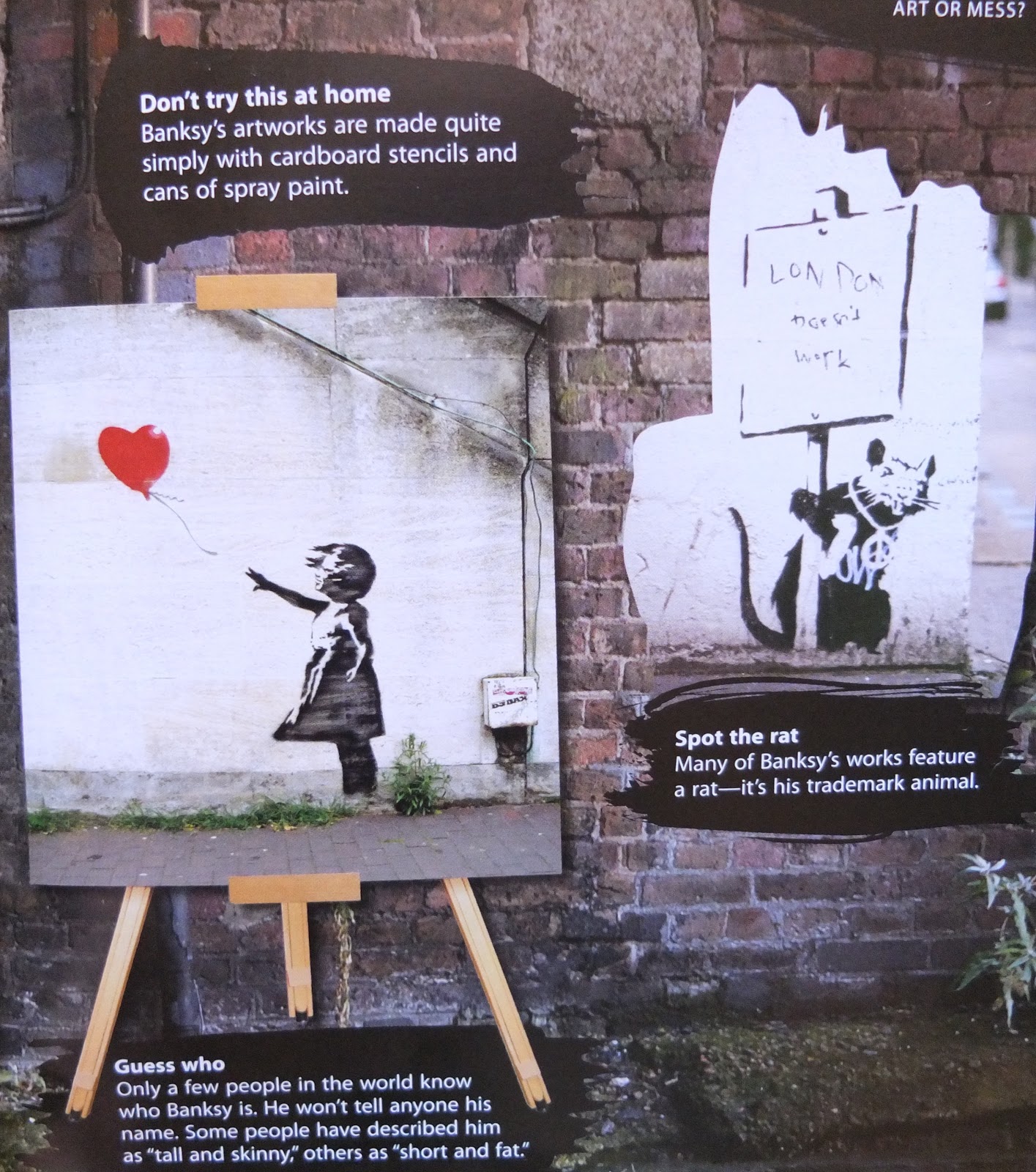
I want to see some of Banksy's art. But will I recognise it? Apparently his work is simply made with cardboard stencils and spray cans, and he often features a rat.


When I visit St Paul's I'll know that it is the 5th incarnation on the site. The previous four cathedrals all being timber burned down over the ages, the last one in The Great Fire in 1666- started by a baker cooking two big bits of bacon in his oven in Pudding Lane.

The Great Fire burned for six days

There is a Christopher Wren designed monument to the Great Fire near Pudding Lane where the fire started. You can climb it! I think I will.

3,000 people are buried in and around Westminster Abbey.

More than 100 people have been hanged, beheaded, or shot at the Tower of London over the centuries. The Tower was the prison, while the executions were mostly carried out on Tower Hill. If you were an important person like a baron, earl or the wife of a king you were beheaded in private, usually on Tower Green in the Tower of London.

Charles II kept exotic birds in a cage (including a crane with a wooden leg on Birdcage Walk.

Too good not to repost

By law sturgeons, whales, dolphins or porpoises caught in British waters belong to the current monarch. The wild swans that live on the River Thames are part-owned by the kings and queens of England. Every year the swans are counted and given a royal health check. The tradition, which started 800 years ago, is called swan "upping".


Sunday, 25 November 2012

One Small Island


I was very excited about this title when it came out last year, it's a shame that it's taken me so long to read it. It's a fabulous book, about a fascinating part of the world. Little did I know how fascinating it really is.

One Small Island tells the tale of Macquarie Island, a small island in the Southern Ocean between New Zealand and Antarctica. But like all good things that good possibly be construed as belonging to New Zealand, we found it first and claimed it for Australia.

Macquarie Island was discovered in July 1810 by Captain F Hasselborough, who had been blown off course while heading to Campbell Island, another subantarctic island. He named it for Lachlan Macquarie, the new Governor of New South Wales. Actually, much of New South Wales is named either Lachlan or Macquarie, and I'm sure the ongoing popularity and use of the name Lachlan in Australia stems from this time also.

Macquarie Island was a natural refuge to huge colonies of seals and penguins. A sealing industry was immediately set up in 1810, and in the ten short years that followed the sealers killed more than 100,000 fur seals, until there were none left. Naturally a lack of seals didn't stop the ravenous desire for oil, the elephant seals were the next target, and when they were all but gone then penguin oil became the industry. It seems rather impossible that there was a penguin oil industry at one time, I'm glad we live in a somewhat gentler time.


I've known about conservation efforts on Macquarie Island for some time, the recent efforts to rid the remote island of rabbits and rats. I didn't know that previously there were feral cats, dogs and wekas amongst many others!

There is a lot of information packed into this book, so much so that both endpapers include even more.


The book itself alternates large illustrative double pages


with beautiful, intricate pages crammed with information in various formats- imaginings of primary journals from early explorers and sealers, newspaper accounts, maps, drawings. There are a few lines of text at the bottom of each page, that reads quickly as a stand alone story. I was too keen to read the story so read through the bottom first and then came back for a slower reading of the informative pages. It's a very clever design, easy to read just the text for younger children, but then with much more information that older children and adults can digest. Although young children do love pouring over illustrative detail.


While One Small Island is a tale of ecological destruction and (mis)adventure, it is ultimately optimistic and hopeful. We have stopped the slaughter of seals and penguins. Although it is sadly too late for the Macquarie Island parakeet, the seals and penguins have come back. The wekas, cats and dogs have gone. There rabbits and rodents are on their way out due to expensive, large scale government efforts. The books message that it's important to care for our "precious places, no matter how small or faraway they are" is a vital one.


An Illustrated Year by An Abundance of Books


Sunday, 21 October 2012

Who Explored Australia? James Cook


Captain James Cook is perhaps one of Australia's most famous early explorers. It's almost impossible to grow up here and not know something of him. That he came to the East Australian coast in 1770. And that he died in Hawaii.

This book, the second I've read in this fabulous Who Explored Australia? series helps to fill in some of the gaps.

James Cook was the second of eight children born to his Scottish farm labourer father, James Cook, and his mother, Grace Pace. Four of his siblings were to die before they were five years old. Young James only had 4 years of schooling, from 8 to 12 years, which was paid for by his father's employer. James was believed to be an average student, but to have been quite talented at mathematics.

I walked past the cottage recently in Melbourne,
but didn't go in. 

He left school initially to work on the farm, before leaving as a teenager to work in a grocery shop, and then beoming a sailor. Working mainly in the North Sea, he quickly rose to become a ships captain. James Cook joined the British Navy in the lead up to the Seven Years War with France. Most of his naval service was in North America, where he developed a great skill charting unfamiliar waters.

In 1768 Cook was tasked with leading an expedition to Tahiti to observe the Transit of Venus due on 3 June 1769, and to search for the Great Southern Land. 94 people were on board The Endeavour, and the book includes an interesting two pages on the provisions that she took on board for the journey. 800 pounds of suet! Who would know what to do with that these days? Or where to get it from?


After spending three months in Hawaii, The Endeavour then went in search of the Great Southern Land. Several months later, on 7 October 1769 she sighted New Zealand. After six months spent charting the coast of New Zealand (the significance of Cook Strait never really dawned on me before, d'oh!), James Cook set off to find New Holland. The first sighting of Australian land came on 17 April 1770 at Point Hicks in what is now Eastern Victoria.

Captain Cook Memorial, Canberra
Showing Cook Strait and the three routes he took on his 3 Pacific voyages. 

After travelling up the East Coast, James Cook anchored the Endeavour in what was to become Botany Bay, south of Sydney Harbour. Interesting to read that he first named it Sting Ray Harbour, and then Botanist Bay, before it became Botany Bay. By August the Endeavour reached Possession Island off Cape York where Captain Cook claimed the Eastern Coast of Australia for Britain in the name of King George III.


There is an interesting page on Joseph Banks who was a mere 23 years old when he was selected by the Royal Society to travel with James Cook to the South Pacific- a journey that was to ensure his ongoing fame.


It's rather amazing to note that there were three botanists aboard the Endeavour! Dr Daniel Solander and Herman Sporing certainly don't have the enduring fame in Australia that Joseph Banks does. Banks' name lives on in place names and multiple plants- most notably the Banksias of course.

A Banksia in Blue Mountains National Park
James Cook was to lead two further expeditions to the Pacific. In 1779 after being unable to find the Northwest Passage he headed back to Hawaii, where he was killed on February 14. It took almost a year for the news of his death to reach England.

Check out my first post on this series Who Explored Australia? Blaxland, Lawson, Wentworth, Evans and Strzelecki.

Sunday, 16 September 2012

Sophie Scott Goes South


I've long been obsessed by the notion of Antarctica. Back when I was 20 I decided to write an action thriller set in Antarctica. I'm not sure why, it's not really my genre, and I don't really write. Pity I didn't get round to doing it though, now Matthew Reilly has been there and done that, and my ideas would just seem derivative.

I always do enjoy tales of people journeying to Antarctica, so of course was keen to get my hands on Alison Lester's latest book, Sophie Scott Goes South. I saw Alison Lester speak at the CBCA Conference in Adelaide in May.

Sophie Scott Goes South is somewhat of a collaborative effort. In 2005 Alison Lester made the long journey south herself on the Aurora Australis from Hobart (5475km each way!). She sent daily emails to schools and families around the world. Children often drew responses to her emails and sent their artworks to Alison Lester. She then created the Kids Antarctic Art Project. There are lots of amazing resources, articles and images about this project online. Alison often manipulated or compiled the children's images to make them her own. She describes that process here. There has been a touring exhibition of those artworks for several years, although I haven't been lucky enough to see it.


Sophie Scott is a 9 year old girl whose father is the captain of the Aurora Australia. She goes with him for a 5 week supply journey to Antarctica. Presented in diary format Sophie tells the story of her voyage- her anticipation, the cramped sleeping arrangements in the cabin she shares with her Dad, the astonishing journey with massive seas and seasickness. The voyage south is exhilarating despite the extremes of weather. Icebergs. Penguins. Seals and whales.


Fully illustrated by the beautiful pictures from the Kids Antarctic Project and also by photographs that Alison Lester took on her trip. Sophie Scott Goes South conveys a lot of information as well as telling a story. Antarctic explorers. Icebergs. The amazing weather at the bottom of the world, and glimpses into how people survive there.


Yet all written with a view to kids.

We threw lolly-coloured streamers to the people waving and held on until the streamers snapped and the water between us got wider and wider. 


Antarctica is an important place. One that needs to be protected for future generations, and for itself. I hope I get to visit myself one day, and make my own Antarctic diary just like Sophie.


An Illustrated Year is hosted by An Abundance of Books.

Tuesday, 21 August 2012

Daily Life in Ancient and Modern Paris

Browsing through my library catalogue checking out books for Paris in July I came across Daily Life in Ancient and Modern Paris and knew that I would have to read it. And an interesting read it is too.

It must be said that I don't know a lot about French history. I remember studying the French Revolution in high school Modern History. But that was in the 70s, and what can I really remember? Not that much. Names mainly, and the general gist of the thing. I'd never been taught about older French history, nor given it a thought I suppose.

So it was very interesting to learn of early Paris. Celtic ironage people settled into the limestone hills near the Seine in the seventh century BC. A village was created on the Ile de la Cite about 300 years BC. It was the time of the Parisii, "boat people", who fished and traded on the Seine.


Paris was invaded by the Romans before the birth of Christ, and the Romans built a settlement on Ile de la Cite, which they called Lutetia Parisiorum. Lutetia grew over the next few hundred years to spread to both sides of the river.

The Vikings began invading in the 9th century AD, sailing their boats down the Seine to attack Paris six times in 10 years. They laid seige in 885. Complicated political machinations (that I don't fully understand) led to Ile de France breaking away from what was then the Frankish Empire to form France.


Despite centuries of war and religious fighting Paris blossomed. Notre Dame was constructed between 1163 and 1345. Plague arrived a few years later in 1348 near the start of the Hundred Years War. Tumultuous times continued in the 17th and 18th centuries with increasing disparity between rich and poor culminating in the French Revolution of 1789.

Interesting to note that it was the Revolution that created the opportunity for Paris to become a culinary leader of the world. The Parisian chefs had traditionally prepared their meals for the nobility, they found themselves without employment after the aristocracy had largely been guillotined and so they opened restaurants for the public.

The beauty of central Paris that I love so much was created when Georges-Eugene Haussmann was given the job of rebuilding the city in 1850 by Napoleon III (Napoleon's nephew Louis-Napoleon Bonaparte). More than 20,000 buildings were torn down, and 40,000 new buildings constructed in Second Empire style- 5 or 6 story apartment buildings with wide facades, mansard roofs, wrought iron balconies and tall windows- that is all so familiar, and delightful.


Paris was again under seige in 1870 during the Franco-Prussian War. Hot air balloons were used to communicate with the outside world during this time, and famously many of the animals in the Paris Zoo were killed for food.

I grew up seeing images of the construction of the Sydney Harbour Bridge. I'd never thought about the construction phase of the Eiffel Tower.


Paris was occupied by Nazi forces from June 1940 to August 1944. The Resistance leader was General Charles de Gaulle. I probably should have known that. At least I do now.

Extraordinary to see Nazi officers sitting enjoying Parisian cafes

I was surprised to learn that the population of Paris in 2001 was only 2.2 million people. Although it appears that this "Paris" would be the 20 central arrondissements inside the periphery. The population of central Paris peaked in 1920 at 2.9 million. The population of the broader Paris metropolitan area is around 12 million currently.

Daily Life in Ancient and Modern Paris is part of a series published by Runestone Press. Other cities include London, Timbuktu, Istanbul and Cairo.