Thursday, 17 September 2015

21st Century's 12 (but really 20) Greatest Novels

A rather grandiose claim perhaps- the greatest novels of the 21st century. This BBC list resulted from polling several dozen book critics. They came up with a list of 156 books. Of course it would be nice to see the whole list, but here is the top 20.

1. The Brief Wondrous Life of Oscar Wao- Juno Diaz (2007)


2. The Known World - Edward P. Jones (2003)

3. Wolf Hall - Hilary Mantel (2009)

4. Gilead - Marilynne Robinson (2004)

5. The Corrections - Jonathan Franzen (2001)

6. The Amazing Adventures of Kavalier & Clay - Michael Chabon (2000)

7. A Visit From The Goon Squad - Jennifer Egan (2010) (see my review)

8. Billy Lynn's Long Halftime Walk - Ben Fountain (2012)

9. Atonement - Ian McEwan (2001)

10. Half Of A Yellow Sun - Chimamanda Ngozi Adichie (2006)

11. White Teeth - Zadie Smith (2000)

12. Middlesex - Jeffrey Eugenides (2002)

13. Americanah - Chimamanda Ngozi Adichie

14. Austerlitz - W.G. Sebald

15. My Brilliant Friend - Elena Ferrante


16.  The Line of Beauty - Alan Hollinghurst

17.  The Road - Cormac McCarthy (see my review)

18. NW - Zadie Smith

19. 2666 - Roberto Bolaño

20. The Great Fire - Shirley Hazzard

5/20

I'm rather surprised that I've managed to read 5/20 when my reading focus has been elsewhere for quite some time. By "read" Atonement, I do mean that I started it in good faith some time ago. It's not my fault that I was forced to stop after about 30 pages. Or perhaps it is. I know I should give it another go at some stage. I have meant to read many of these books. Several are sitting in the TBR.

Wednesday, 16 September 2015

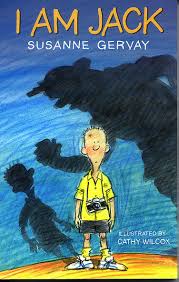
I Am Jack


I've been meaning to read I am Jack for some time now, and was pleased to have the chance recently. I think I actually found out about the book because of the theatrical adaptation by Monkey Baa, Australia's best theatrical company for young audiences. I have already seen their productions of Thursday's Child and Pete the Sheep.

I Am Jack, the book, was written back in 2000, and the stage adaptation has been touring since 2008- and is still touring- I saw it a few weeks ago. The Australian tour continues until September 2015, and then the production will be touring America in October and November 2015.

Susanne Gervay wrote I Am Jack after her own son Jack was bullied as a child. Jack is 11 years old. He lives with his mother and sister in a third story flat above a fruit and veg shop. Jack's Mum works long hours at the local supermarket to make ends meet, and her new partner Rob stays 4 nights a week.

Jack is being bullied at school by the thuggish George Hamel. George starts calling Jack Bum Head. Soon pretty much all of the kids are calling Jack Bum Head too. Jack's world falls in on itself. His friends won't play with him any more. He's lonely and the school playground has become a minefield.  Jack takes refuge in the school library at lunchtime. He tries to talk to his mother but she is always busy and he doesn't know what else to do.

I wanted to tell Mr Angelou why I didn't want to go into the change rooms, why I was late, why my school trousers were torn, why I missed school, why I didn't answer any questions in class .... I couldn't. I feel breathless. It really hurt when they called Mum names. When they said my father left because of me. And I just took it, like a coward. 

It's probably no surprise that Jack does overcome his difficulties with George Hamel by the end of the book. His bargain loving Nanna reminds him

'You know you're never alone when you have people who love you.'

and Jack releases the hold George has over him.

It makes George Hamel seem stupid. It makes the kids who followed him seem like that too. It makes me wonder why I let them bully me. 

Bullying in schools has long been an important topic, at least one in four Australian children are bullied at some time, and the advent of cyber bullying has made it even easier. The Australian government has a successful Bullying No Way! website.

Hear Susanne Gervay being interviewed last year on Radio National about the fourth and final Jack book, Being Jack.

http://australianwomenwriters.com

Monday, 14 September 2015

Harriet the Spy


I’m very excited to have read Harriet the Spy at long last, it’s been on my TBR for so so long. Particularly as it comes highly recommended by Lisa Simpson in the classic episode from Series 9, Lisa The Simpson


And please don't deprive yourself of wonderful books like To Kill a Mockingbird, Harriet the Spy and Yertle the Turtle- possibly the best book ever written on the subject of turtle stacking.

An essential episode that has another favourite scene. 


Yes I have watched more of The Simpsons than is good for me over the years. But now I've finally read that trio of books. We always have preconceived notions of books that are quite famous and Harriet was no exception. 

I wasn’t expecting Harriet to be quite so wealthy for a start. The Welsch’s have two servants - Ole Golly, Harriet’s nanny I suppose although referred to as her nurse, and Cook. Ole Golly likes to quote the classics- Dostoevsky, Wordsworth, Henry James. The Welsch’s have a library and a rather lavish lifestyle- Harriet’s parents are always going to parties and dinners in tuxedos and dresses that sparkle in the light. Harriet is left at home with Ole Golly. 

Ole Golly entertained herself usually on nights like this by making some new recipe, like Lobster Thermidor or choucroute garnie, anything that neither she nor Harriet had tasted before. 

Harriet is 11 years old and has been scribbling her spying observations in notebooks since she was 8. She has set up a patrol of her neighbourhood and has her favourite residents and stops where she likes to conduct her spying activities each afternoon after school. She is rather a creature of habit and has taken a tomato sandwich to school every day for 5 years. 

I really liked the first part of the book, where Harriet was jotting witty things in her notebook. There was a gentle humour. Although I was a bit surprised that the first part was so much about Ole Golly and her suitor. Her friendship with Sport would be unusual now I think. Sport seems relatively poor- he looks out for his writer father, does housework and shopping. It seems odd that they would go to the same school. 

Although I'm glad to have finally read this rather iconic book, I feel sad that I didn't like Harriet the Spy more than I did. I really liked Book One, and I know that I would have loved it if I'd found it at the right age. I'm sure I would have taken up a notebook and begun spying activities. I don't quite know what to think of the rest. I really didn't like the later parts of the book. It all gets a bit mean and preposterous after Harriet's notebook falls into the wrong hands. I have no history with Harriet, no broader cultural knowledge about where she fits into the scheme of things. I'm usually the first person to appreciate and like satire and sarcasm. I'm not sure that's what it was, or what it was for me. 


272/1001

Sunday, 13 September 2015

The Witches


I'm closing in on my plan to read (or listen to) all of Roald Dahl's writings for children- but then there'll be the desire to read all his adult stuff of course. I do have a rather large boxed collection of that waiting on the shelves. On a recent road trip Master Wicker and I listened to the 3 CD version of The Witches read by Simon Callow. It's part of the fabulous Roald Dahl Audio Books collection that I have in the car at all times. We hadn't listened to one for ages- it seems that there are so many Finnish preselection songs to listen to before I die too.

It should be no surprise to anyone that I think The Witches is marvellous. Our narrator, a young boy is orphaned quite early on in the piece. He goes to Norway to live with his Norwegian grandmother, who likes telling him tales of witches. She was a witchophile in her day, but has now retired. She is 86, wears black lace dresses and has a fondness for "disgusting black cigars". Still she can tell her young grandson how to recognise a witch when he sees one, and of five children who vanished, never to be seen again after an encounter with a witch.

Of course Roald Dahl's witches are not gentle forest folk concocting herbal remedies they are malevolent, nasty pieces of work who have it in for children.

'Which child,' she says to herself all day long, 'exactly which child shall I choose for my next squelching?'

It is masterful that at first glance they may look like ordinary women, but soon the many differences are obvious. Their wigs, gloves and square fronted shoes. Their large nose holes for sniffing out children. Quite easy it would seem as children smell of dog droppings anyway.

Naturally the boy encounters some witches, and the rest of the wonderful Dahl action continues where witches are trying to turn children into mice. We have poor Bruno Jenkins to warn of us about the sin of gluttony.

'He's always suffering mishaps,' Mr Jenkins said. 'He suffers from overeating and then he suffers from wind. You should hear him after supper. He sounds like a brass band! But a good dose of castor oil soon puts him right again. "Where is the little beggar?'

I'd like to say that I loved Simon Callow's narration all the way through like I did for The Twits but honestly the voice he did for the Grand High Witch drove me nuts. And this took up much of disc 2. I did wonder if he was trying to instill a Germanic/Nazi vibe to her. The rest of it though was Callow brilliance. And of course Roald Dahl ensure laugh out loud brilliance. The Witches is a perfect Dahl story.

September 13 was Roald Dahl's birthday. Now it is Roald Dahl Day.

Friday, 11 September 2015

Sister Heart


I hadn't heard of Sister Heart when I picked it up recently at my local book shop. I'd heard of Sally Morgan of course. Indeed I've been meaning to read her seminal book My Place for probably decades now. I know that I've boorrowed it from the library on occasion, and still not managed to read it. So of course I was sorely tempted by a new pretty hardback- even better, a verse novel for children. I still can't quite believe that I like verse novels now, and even actively seek them out. Thanks to Steven Herrick for that. You never know one day I might get mature enough to read poetry...

Sister Heart may have sat unread in my humungous TBR were it not for Lisa at ANZLitlovers running her Indigenous Literature Week  last week. The timing was too good to pass up. 


Sister Heart is the tale of a young girl forcibly removed from her family, from her country.


I hate the bully policeman
for snatching me
from the station
when Mum was working
at the out-camp

This young girl is taken by boat to her new home far away, although it is not a home based on family, it is the cruel, rather inhospitable home of institutional care with corporal punishment and stinky soup, where she is left alone and bewildered, until she is befriended by another girl Janey.


I breathe deeperpretend I am biggertaller olderI walk like I'm not afraidlike I am brave

There are many things we don't know about this young girl. We don't know where she is from really, although she is referred to as a norwester, implying that she is from remote North Western West Australia. We don't know her real name. She is give the name Annie by the Reverend who travels with her, but she already has two other names. 

I already have an english name
Lots of people on the station
have english names
Boss won't say language names
but I have one


My language name
is the name Mum whispers
when I'm sick
The name she croons
when she strokes my hair

Annie struggles with many things at her new home. She misses her home, her family, her country. She also struggles with English. 

There is too much english in this placeenglish hurts my headenglish is hard on my tongueenglish is missing good wordsenglish is lonely

Annie is lonely too and for a while she loses her voice too.

SometimesI feel my voicerattling inside melike a trapped thingtrying to get out

I'm certainly glad to have heard Annie's voice. Stories of the Stolen Generations are powerful and important to remember, these forced removals of children still affect families now. After all they were official Australian government policy into the 1960s and 70s. 

You can listen to Sally Morgan talk about Sister Heart on Radio National. It's a fascinating background to the book. In Western Australia the Aborigines Act of 1905 made the Chief Protector of Aborigines the legal guardian of all Aboriginal children under 16 years of age, and so he had the power to move any of them at any time. Sally Morgan dreamt the first page of Sister Heart, and feels her great grandmother gave the story. 

See the Teaching Notes from Fremantle Press. 

P.S. I can't fix the formatting of some of the poetry. I have tried multiple times, it can't be corrected. Sorry. 

http://australianwomenwriters.com

Wednesday, 9 September 2015

Ash Road


Ash Road is a fabulous read. However, I let myself be a bit put off by the daggy old cover of my edition and I initially wasn't sure that I was going to like it, but it's such a great story- both a compelling adventure with action waiting to boil over, and a clever and nuanced character study. I did like the rather 1970 recommendation at the start. "For readers over 10, especially boys."


Ash Road is the story of a few short hours in a baking hot summer. Three 15 year old boys convince their parents to let them go camping alone for the first time. 


They had escaped from the city for a glorious week of freedom in the bush. They had never done it before. They had planned it for months. At first their parents had said no, firmly no, but the boys had nagged and nagged. 

Things go awry very quickly. On their very first night one of the boys has inadvertently started a fire, while making coffee- I knew it was an evil substance. The first chapter, The North Wind, deals with the boys starting their trip and the start of the fire. The action then moves to Ash Road in Chapter 2, a rural community some distance away, but which will come under threat from the flames. We then don't see the three boys again for some time, but meet the residents of this rural road. 


At first there were quite a few characters to get sorted, and it took me a while to get them all straight. I loved how Grandpa Tanner was introduced:


It was early for Grandpa Tanner to be out of bed. There had been a time when he had been up around dawn almost every day, but there was no need for that now. His family had long since grown up and gone away; his wife Marjorie had been dead for so many years; the relentless bush had reclaimed his once splendid farm; dogwood scrub and blackberries had choked his fruit trees; sorrel and couch grass had overrun his garden; there was no cow to milk or hens to feed. 

Grandpa Tanner's actions late in the book moved me to tears, and will stay with me for a long time. 


Ivan Southall does an incredible job of building the atmosphere and tension of that fateful morning. His descriptions of the progress of the coming fire are wonderful. 


And he was frightened of the sky. It was so threatening, so ugly, so unlike anything he had ever seen. It was a hot brown mantle over the earth with pieces breaking off it, little black pieces of ash; an oppressive mantle that did not prevent the penetration of the sun's heat but imprisoned it, added to it, and magnified the hostility of the day. 


Every Australian has their own experiences with and memories of bushfire. Thankfully my experiences have been more from the tv news, and much less close than those of the residents of Ash Road. Although we've all smelt smoke from bushfires, and I remember ash raining down in my inner city backyard in Sydney when fires ringed the city. There have been many terrible fires in recent years that we seem to have a collective consciousness regarding fire, so much so, that early on when some of the residents of Ash Road doubt that they could ever be threatened by fire, it seems a bit incredulous to a modern reader. Also, by a variety of circumstance the children of Ash Road are left essentially on their own to deal with the oncoming inferno. It's not quite a scenario that I think would play out now, but it makes for compelling reading.


It's a shame that Ivan Southall has become somewhat of a forgotten Australian writer. He had a rather successful career winning the Children's Book Council of Australia Book of the Year four times between 1966 and 1976. And he still remains the only Australian author to win the Carnegie Medal (for Josh way back in 1971)! Surely we're overdue for the next Carnegie winner? Text Publishing have included three Southall titles in the their Text Classics series- Ash Road, Hills End and To The Wild Sky so these amazing stories are available to a whole new generation of readers. I certainly hope many modern readers find their way to this very Australian story. 


The Text Classics edition has a great Introduction by Maurice Saxby. We learn that three years before the publication of Ash Road Ivan Southall's family and their home to the east of Melbourne were threatened by a bush fire. This first hand experience is very obvious in the writing. Maurice Saxby also tells us that "Ash Road may be the most emotionally tense of Southall's early novels".

274/1001

Tuesday, 8 September 2015

Troy


I approached Troy with some trepidation. Greek mythology has never been of great interest for me. I read David Malouf's Ransom a few years ago, and actively disliked it. So I didn't have high hopes, I was dreading it actually - but Troy really surprised me. Ransom was the first I had read of the Trojan War I think- the first time that I came across the battle of Achilles and Hector, and learned of Hector's appalling fate. Somehow I had forgotten what was to befall poor Hector when I started Troy. I did find it a rather quick and enjoyable read overall, although I did think it could have been a bit shorter.

Troy is a YA retelling of the Trojan War told through two sisters- Xanthe and Marpessa, orphans who have grown up in the royal households of Troy and now work there in servitude. It's a rather confusing family, Priam has fathered 50 sons, and so there are many, many royal princes. Xanthe works in the household of Hector and his wife Andromache, she is a nanny for their young son Astyanax. Xanthe also works in the "Blood Room"- the hospital of sorts were wounded soldiers are brought for treatment.


Xanthe hated the war. Every day, the huge wooden gate they called the Skaian Gate, which faced the Plain and the sea beyond the Plain, opened wide, and the chariots poured through, filled with armed soldiers. Lord Hector always led them out. Behind the chariots came the foot-soldiers. The Greeks came too, in chariots and on foot, from the tents that they had put up on the beach, and then both armies began to hack and stab one another and many died. 

Marpessa works for Paris and Helen, she can see the gods when they come down to Earth- which they seem to do with rather alarming frequency. Marpessa is one of the few who remembers the visits of the Gods but she knows that she shouldn't tell anyone besides her sister that she sees the Gods, and that "it was better to tell her stories on the loom". Which is very true! You can paint or weave all sorts of mystic, mythic stories about any number of Gods and that is perfectly fine, but if you talk about such things then you are branded as crazy- even now.


I generally enjoyed the appearance of the Gods in the story and to the people of Troy. But if you're going to be a God come to Earth to warn the citizens, why make it so they forget that you were even there? It makes no sense. I do get that they can meddle if they want to, make people fall in love, cause earthquakes or giant serpents come out of the sea, but why bother talking to people and warning them of horrors about to beset them, and then leave them so they can't remember the conversation?


There are several love triangles set against the dramatic backdrop of the Trojan War, and yes the horse does make an appearance. I'm always amazed at what is considered to be a "children's" or YA book. Just because the protagonists are young does not mean that it does not deal with some very adult concepts. Troy was almost bawdy much of the time, there are prostitutes, a sex scene and discussions about procuring an abortion.


At its heart Troy is a rather powerful exploration of betrayal, love, power, longing, friendship and family. My copy quotes Philip Pullman saying "Every generation needs its version of this great story." Is that true? I'm not completely sure. I don't know if this story is any greater than any other. Why should this story in particular be special and worthy of perserving? Yes there are gods and kings, and war and love, but does that alone make it a great story?


271/1001