Saturday, 17 May 2014

Big Game Hunting

It's not all that often I go Big Game Hunting. But recently I took part in the opportunity to track down some rhinos in the Central West.

There was only one in Orange.

Flower Power
Keri Le Page
Orange Adventure Playground


There were two in Bathurst. Both indoors. 

One at the National Motor Racing Museum
not somewhere I usually go
you can just spy the rhino in the window

Durer's Rhioceros - After Dali
Gaye Chapman
I do love her inspiration for this rhino,
and it looked fantastic
my favourite of the three I found

The second was at the fabulous
Australian Fossil and Mineral Museum

Creature Creature: Terra
Shanel Tang and Ambrose Rehorek


I was hoping to find more, but only got to those three in the end. It was all part of the Taronga Wild! Rhinos project, using 125 individual rhinos around Sydney and country NSW to raise awareness and funds for Taronga's Black Rhino breeding program.


I liked that the rhinos were thematically placed, and suited to their surroundings.


Back in February Brona showed us some of the Sydney Rhinos that were part of this project. Including my favourite that I saw (sadly not in real life) Put A Lid On It.

Saturday Snapshot is a wonderful weekly meme
 now hosted by 
WestMetroMommy

Friday, 16 May 2014

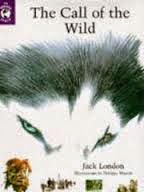
The Call of the Wild


I really thought that I had read this book in my own, rather remote, childhood. Now I'm not so sure. As I was reading I was waiting for that spark of recognition, the echoes of childhood memory stirred within. It never happened. Perhaps I didn't read it when I was a kid. Maybe I saw a movie, or tv show? Perhaps it's just so famous that I thought I must have read it? Whatever the case I'm very glad to have finally had the opportunity to read The Call of the Wild now. 


Perhaps I just confused it with one of my
favourite ever Far Side cartoons?

For some reason I was expecting not to like it particularly, the story or the writing style- but I actually quite enjoyed both. Of course some parts of the story are a bit graphic and I almost squinted while reading sometimes, but it's actually quite a compelling story. 

I like his writing too. It's surprising from the very first sentence. 

Buck did not read the newspapers, or he would have known that trouble was brewing not alone for himself, but for every tidewater dog, strong of muscle and with warm, long hair from Puget Sound to San Diego. 

It seems a rather modern start. And some of the writing is quite lyrical at times. 

With the aurora borealis flaming coldly overhead, or the stars leaping in the frost dance, and the land numb and frozen under its pall of snow, this song of the huskies might have been the defiance of life, only it was pitched in minor key, with long drawn wailings and half-sobs, and was more the pleading of life, the articulate travail of existence. 


Buck is a large, mixed- breed dog leading a rather cozy and comfortable life on Judge Miller's property in the Santa Clara Valley when he is stolen and sold to travel north to the Kondike Goldrush of the 1890s. His pampered life is gone, and he must adapt to this harsh, brutal, cold and punishing new environment to survive.

And not only did he learn by experience but instincts long dead became alive again. The domesticated generations fell from him. In vague ways he remembered back to the youth of the breed, to the time the wild dogs ranged in packs through the primeval forest and killed their meat as they ran it down. 

There is much savagery in The Call of the Wild, as you would expect in a frontier story. Much of it meted out by men (and most of the characters are men, as it would have been), and some by dogs. Buck has a succession of owners- some benevolent, some downright mean. There are many deaths- both human and canine. As is often the way in books the dog deaths were more moving than the human deaths. Although the deaths of the dogs were often quite prolonged affairs and the people dispatched much more quickly- but often as violently. The fight between Buck and rival Spitz. Pages and pages of Dave's suffering made me cry. I was glad that we didn't ever really come to Buck's death as we do in so many dog books-books like Old Yeller or My Life in Dog Years.


There was much about the cruelty of nature in those final chapters.

Mercy did not exist in the primordial life. It was misunderstood for fear, and such misunderstandings made for death. Kill or be killed, eat or be eaten, was the law; and this mandate, down out of the depths of Time, he obeyed. 

Some parts of The Call of the Wild are now dated, but that's ok, it was published in 1903 after all.  Of course the internet now is full of dog and cat stories, which is fine. But it seems that there are still modern day dogs just  like Buck. I'm not sure that my dogs are all that Buck-like...

They must be able to hear The Call from here
it's a favourite spot
in the winter sun

Thursday, 15 May 2014

37 Children's Books That Changed Your Life

Buzzfeed created this lovely new list to celebrate Children's Book Week in America, this week May 12 to 18 2014.

So let's celebrate it here too.


The Phantom Tollbooth by Norton Juster

The Secret Garden by Frances Hodgson Burnett (see my review)

The Giving Tree by Shel Silverstein

From the Mixed-Up Files of Mrs. Basil E. Frankweiler by E.L. Konigsburg (see my review)

Where the Red Fern Grows by Wilson Rawls

The Little House Series by Laura Ingalls Wilder (I've finally started, see my review)

Miss Rumphius by Barbara Cooney (see my review)


Black Beauty by Anna Sewell

Bridge to Terabithia by Katherine Paterson

Ronia, The Robber's Daughter by Astrid Lindgren

The Little Prince by Antoine de Saint Exupery

A Wrinkle in Time by Madeleine L'Engle (see my review)

Go Dog Go! by P.D. Eastman

The Giver by Lois Lowry (see my review)

Little Women by Louisa May Alcott

The Redwall Series by Brian Jacques (see my review Redwall)

Where the Wild Things Are by Maurice Sendak

Mike Mulligan and His Steam Shovel by Virginia Burton

Roll of Thunder, Hear My Cry by Mildred D. Taylor (see my review)

The Ramona Books by Beverly Cleary

Harriet the Spy by Louise Fitzhugh (see my review)

Anne of Green Gables by L.M Montgomery

The Harry Potter Series by J.K Rowling (read 1/7)

Charlotte's Web by E.B White

The Lorax by Dr. Seuss


Matilda by Roald Dahl

The Paper Bag Princess by Robert N Munsch

The Boxcar Children by Gertrude Chandler Warner

My Side of the Mountain by Jean Craighead George (see my review)

The Stranger by Chris Van Allsburg

The Brothers Lionheart by Astrid Lindgren

The Story of Ferdinand by Munro Leaf

The Lion, the Witch, and the Wardrobe by C.S Lewis

Mrs Frisby and the Rats of NIMH by Robert C. O'Brien

Are You There God? It's Me Margaret by Judy Blume (see my review)

The Nancy Drew Books by Carolyn Keene

Harold and the Purple Crayon by Crockett Johnson


23/37 read, a pretty respectable effort. Interesting to have two books from Astrid Lindgren and neither of them are her most famous work, Pippi Longstocking.

It's amazing how each list has it's own gifts- always some you've read, some you've been meaning to read for ages and actually have lying around the house, some you've never heard of and some that you must order online immediately never having heard of them before (oops, I did it again).

Update June 2014 24/37

Update June 2015 26/37

Update June 2017 29/37

Monday, 12 May 2014

My Life as an Alphabet


There are just so many books, it's really hard keeping up. I don't always remember where I heard about a particular book, but for this one I do. Lisa at ANZLitlovers mentioned it when she listed the finalists for the 2014 Victorian Premiers Literary Awards, and she said that it was popular with the kids at her school. My Life as an Alphabet went on to win the Young Adult Award and the Children's Peace Literature Award. I found it at my library recently, and wanted to read it so I snuck it into my busy schedule. I'm very glad that I did. It's a great read- managing to be both funny and moving.

My Life as an Alphabet is a funny, quirky book- a bit like a Rosie Project for the YA set. Although Candice Phee isn't searching for a mate like Don Tillman was. Candice is simply trying to help her family, and her small number of friends be happy. Candice's younger sister has died, and now she is an only child. Her parents haven't really dealt with the death, and both are getting by as well as they can in their own ways. There is an ongoing family rift with Rich Uncle Brian.

My family does not have enough laughter in it. All the laughter evaporated when my sister died. 

My Life as an Alphabet is written as an extended response to a school assignment from Candice's English teacher, Miss Bamford. It is meant to be 26 paragraphs, but Candice extends it to 26 chapters. Conceits like that don't always work in fiction I think, but it works a treat here. It's a school project writ large. It's rather fascinating to see that Barry Jonsberg, an English teacher himself, borrowed the title from an assignment submitted by one of his students. He has created a unique and very funny first person voice in Candice- always one of my favourite voices to read.

Candice is an interesting, quirky character. She is on her second run through Dickens- it always annoys me when characters are better read than I am! She befriends the equally quirky Douglas Benson From Another Dimension, and worries about the religious musings of her fish, Earth-Pig Fish.

What if she believes that if she does die, she will be brought, in a fanfare of heavenly trumpets, to my bosom and live in eternal bliss when in fact she's almost certainly destined to be flushed down the toilet?


My Life as an Alphabet will be released in the US September 2014 as The Categorical Universe of Candice Phee. And I thought I'd discovered a sequel :-(. It's being adapted as a play touring to schools.

It's been a good year for new Australian authors for me so far- first Steven Herrick, then Ursula Dubosarsky and now Barry Jonsberg. I'm looking forward to reading more from all of them.

Saturday, 10 May 2014

Like Father Like Son

Master Wicker is a teenager now, so I'm learning more about modern pop culture than I've known for some time. He watches a lot of music videos. Recently we both saw this one by Belgian artist Stromae (no I'd never heard of him either, but he's interesting).


He's Belgian, but the video reminded me of a phenomenon I witnessed in the windows of Paris last year. 


And it's not just for the boys!


I'm not sure if I like the idea or not. What do you think?

Dreaming of France is a wonderful Monday meme
from Paulita at An Accidental Blog

Saturday Snapshot is a wonderful weekly meme
 now hosted by 
WestMetroMommy

Tuesday, 6 May 2014

Author Event Trevor Shearston


Six months ago I went to a fascinating author talk, but time being what it is, I didn't get to telling you about it. Now Game has been longlisted for the 2014 Miles Franklin and I'm seeing the book everywhere and being reminded of missed opportunities.

I try to go to every author event that I can, even if I think that the book isn't particularly my cup of tea, or my usual reading matter. I know that I will enjoy myself, chat with interesting folk, and likely learn something. And so it was with seeing Trevor Shearston talk about Game. I'd never heard of the book or the author back then.

Game is about the latter stages of bushranger Ben Hall's short life. Trevor picked a time when Hall and his companions had become "dead men walking" after the death of a police sergeant during a mail coach hold up at Jugiong. Hall had to leave NSW or be killed. He wondered if Ben Hall had doubts about the life he was leading, and feels that these times of doubt make for interesting stories.


Trevor spoke a lot about his writing process for this book. He has long been interested in Australian bush ballads and folk songs, indeed he sang several for us this night. Trevor found the songs gave him a gateway into the feelings and the emotions of the people he was writing about. He pointed out that's it's important to have an emotional connection to the subject as you're going to be with them for a long time.

The ballads about Ben Hall were mainly composed soon after his death, by not particularly educated people, and they are songs full of anger and grief. The songs alone of course weren't enough to write a novel so he travelled and researched. Much of the book is set in the Central West I believe. Certainly Ben Hall was shot and killed 20km from Forbes in the corner of a paddock. Trevor told us that seven police surrounded him and shot him as he slept, and that his body was strapped to a horse and taken through the streets of Forbes at 3am. Trevor travelled to the property where Ben Hall was shot and stood there amongst the yellow box, white cyprus and saw the low range of hills.

Why make up the details when they're all there to see?

During his visit to the site Trevor found the remains of a house, and a piece of broken crockery in the creek. He wondered if Ben Hall had eaten his dinners from it. Trevor used a lot of newspaper accounts from the time. Some events are well covered and so he must stick quite closely to the truth- for example he found 40-50 witness reports of the shooting of Sergeant Parry.

 There are always some old people in the audience who know the history backwards.

One snippet in the Yass Courier gave him half the novel, about the relationship between Ben Hall and his son, although the historical novelist is there to take the characters between the gaps in the historical record.

That's the fun- inventing between the facts. 

Trevor Shearston was a teacher in Papua New Guinea, and his previous 7 works of fiction were set in PNG.

Random fact: Tinned sardines were a bush staple for anyone travelling on horseback.

I still haven't read Game, but Lisa at ANZLitlovers has.

Monday, 5 May 2014

25 Essential Books about Americans in Paris

I'm not American, and don't have any particular fascination with books about Americans per se. But I do have a fascination with books about Paris, so this Flavorwire list is still interesting, and possibly even essential, for me.

1. A Moveable Feast by Ernest Hemingway

2. Paris Notebooks by Mavis Gallant

3. Notes of a Native Son by James Baldwin

4. An Extraordinary Theory of Objects by Stephanie LaCava


5. Breathless: An American Girl in Paris by Nancy K. Miller

6. Dreaming in French by Alice Kaplan

7. Paris in Love by Eloisa James (see my review)

8. Paris by Julien Green

9. Paris I Love You But You're Bringing Me Down by Rosecrans Baldwin

10. Paris to the Moon by Adam Gopnik

11. The Sweet Life in Paris by David Lebovitz (see my review)

12. Paris was Yesterday by Janet Flanner

13. Shakespeare and Company by Sylvia Beach

14. Time was Soft There: A Paris Sojourn at Shakespeare & Co by Jeremy Mercer

15. The Greater Journey: Americans in Paris by David McCullough

16. Between Meals: An Appetite for Paris by A.J. Liebling

17. My Life in France by Julia Child

18. American Cocktail: A 'Colored Girl' in the World by Anita Reynolds

19. Eugene Bullard: Black Expatriate in Jazz-Age Paris by Craig Lloyd

20. Inside a Pearl: My Years in Paris by Edmund White


21. The Most Beautiful Walk in the World by John Baxter (see my review) he's not even American! John Baxter is Australian.

22. C'est la Vie by Suzy Gershman

23. Henry James Goes to Paris by Peter Brooks

24. Living Well is the Best Revenge by Calvin Tomkins

25. The Autobiography of Alice B. Toklas by Gertrude Stein

Hmmm. 3/25. Not a particularly sterling effort. It must be said that I hadn't heard of many of these books. Which can be dangerous- I just bought three of them online….

Books on France, a great 2014 challenge
 from Emma at 
Words and Peace

Dreaming of France is a wonderful Monday meme
from Paulita at An Accidental Blog