Tuesday, 17 December 2013

Top Ten New to Me Authors in 2013


Top Ten Tuesday is a great weekly meme from the folks at The Broke and the Bookish. I've been a rather infrequent Top Tenner for some time. Most of the time I don't have time to participate, but occasionally I manage to check out the schedule before hand and get myself organised.

I've read lots of great new to me authors this year, and so this topic was perfect for me. Plus I really love an excuse to look back at the best books of the year, of course not all of those are new to me authors, but this year a great many are. I've linked to my reviews.

First off the fiction. Kids and adult.

My very first book of the year was a new to me author- and it was a corker! Lois Lowry's The Giver.


May brought two great new authors. Patrick Ness's A Monster Calls.


Deb Kandelaars' Memoirs of a Suburban Girl. 


In June I read one of the Australian books of 2013. Graeme Simsion's The Rosie Project.


In August I finally read an Australian classic I should have read long ago. Joan Lindsay's Picnic at Hanging Rock. 


In October I finally got to read David Walliams' first book The Boy in the Dress.


On the nonfiction side I was wowed by two books about books.

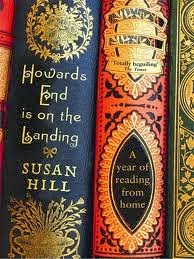
In March I read Susan Hill's Howards End is on the Landing.


And more recently Rick Gekoski's Tolkiens' Gown. I haven't blogged about it yet, but there will be some gushing to come.


I read two books about sugar and our modern diets that were very influential for me. Although I'm a long, long way from omitting sugar (really they mean fructose) from my diet.

I read the book that started the whole sugar ball rolling David Gillespie's Sweet Poison in March.


And I read Sarah Wilson's I Quit Sugar in September.


It's really been a great year for new to me authors.

Monday, 16 December 2013

Ruby Red Shoes Goes to Paris


I bought Ruby Red Shoes Goes to Paris a few weeks ago. I saw it on the new shelf in my local bookstore and was helpless to resist its charms. I'd put it on the shelf at home and then promptly forgot about it. Until this week when my friend Brona read it and reminded me. I was particularly sad this particular evening, after some unexpected bad news and thought that Ruby Red Shoes Going to Paris would be a perfect salve. It was.

I'd never heard of Ruby Red Shoes before (turns out this is her second book) but was delighted that she was going to Paris, and of course wanted to read about it. I'm quite happy to read about anyone going to Paris, no matter if it's a cartoon hare and her grandmother or not. Somewhat bizarrely I've even been known to be jealous of a 4 metre chicken going to Paris.

Ruby Red Shoes Goes to Paris a simple, charming story. Ruby Red Shoes is actually a white hare, who naturally is never seen without her red shoes, who lives with her grandmother, Babushka Galina Galushka in a brightly painted old fashioned gypsy caravan. One day Ruby and her grandmother leave their chickens, who are understandably quite miffed at being left at home, and fly to Paris.


Ruby and her grandmother take an apartment, and set themselves up in the city of light. Naturally, the visit many of Paris's most famous sights- The Eiffel Tower, The Rodin Museum, and Cafe de Flore.  All must see sights to be sure. The illustrations are wonderfully detailed and particularly gorgeous.

Musee Rodin is one of my favourite places in Paris too


Who doesn't love Le Tour Eiffel?

Kate Knapp is an Australian author and illustrator/artist who hangs out at Twigseeds in Brisbane. Ruby Red Shoes Goes to Paris took her 8 months of illustrating, 7 days per week!

Dreaming of France is a wonderful Monday meme
from Paulita at An Accidental Blog

Books on France, a great 2013 challenge
 from Emma at 
Words and Peace

Sunday, 15 December 2013

The Peppermint Pig


The Peppermint Pig has one of the best opening lines I've ever read.

Old Granny Greengrass had her finger chopped off in the butcher's when she was buying half a leg of lamb. 

That's just fantastic. What kid doesn't want to read more about Old Granny Greengrass and her fingers? Sadly Old Granny Greengrass isn't much of a figure in the family story of The Peppermint Pig. The Greengrass family are living in London in the early years of the twentieth century. James, the father works as a coach painter, but has to leave his employment under rather odd circumstances. The four Greengrass children and their mother move to Norfolk to stay with family. There they take in Johnnie, the titular Peppermint Pig of the title. Johnnie was a runt, and sold off cheap by the milkman.

'Runt of the litter,' the milkman added. 'Too small for the sow to raise. He'd only get trampled on in the rush.'

 Johnnie soon becomes the family pet, and house trained.

"a pig has more brains than a dog, let me tell you."

But Johnnie isn't the main character of our story either. An intriguing slice of life, The Peppermint Pig gives us a great sense of life in Norfolk in 1910/11. Already historical fiction when written in the 1970s, we have a great glimpse of life in the pre-antibiotic era. The fear of sore throats when they could end a young life. Fever carts. Passing bells. Carbolic acid sheets and washes- although it seems it was also used as a medication. Nina Bawden uses such a wonderful vocabulary suitable for the time, and I love it when children's authors use words like slatternly.

The Peppermint Pig was quite an unknown entity for me. I'd heard of author Nina Bawden a little bit, she's most famous for one of her other children's books, Carrie's War, although it wasn't to win any particular prize on publication. The Peppermint Pig won the Guardian Children's Fiction Prize in 1976. Nina was a rather extraordinary woman, with the rather rare ability to write for children and adults- whilst she is most famous as a children's author, she was shortlisted for the Booker Prize in 1987 for Circles of Deceipt. Always one with strong political views, they helped shape her writing for both children and adults.

The initial impulse to write for children, she once explained, had come after she found herself depressed by the books her sons were reading, with their “wooden characters uninvolved in any reality I recognised. I think I wanted to give my children something that would encourage them to feel they could make a difference to what happened in the world.”

Nina Bawden often used family stories or personal experiences as the inspiration for her stories, or for added authenticity. Her own war time evacuation to Wales famously formed the basis for Carrie's War.

A great-grandfather on her mother's side was another skeleton, an "old tramp" who had taken to drink but still dropped in on the family from time to time. When Bawden put this character into The Peppermint Pig, her mother was furious, railing against the disgrace and against Nina's uncle, who had failed to keep the secret.

224/1001

Saturday, 14 December 2013

As we must appear to the hawk #6

Recently I was lucky enough to fly to Adelaide. I hadn't been to Adelaide for several decades, and now I've been twice in the last 18 months or so. I like window seats on short flights, so booked a window seat both ways. This was my Sydney to Adelaide flight.

Botany Bay

Kurnell

The beautiful blue Pacific

The coast south of Sydney

The clouds were cool this particular day

The dams are emptying

I love this shot

Rivers are great to see

I like the contrast between manmade and natural patterns

This pond or dam looked like a silhouette 

Australia is vast


Crop circles?

The jacarandas were out in force
I mainly associate jacarandas with Sydney,
but it seems they are big in Adelaide too

A classic view of Adelaide coming in to land. 

I've shown you an Adelaide- Sydney flight before.

Saturday Snapshot is a wonderful weekly meme now hosted by WestMetroMommy

Saturday, 7 December 2013

Art Gallery of South Australia

I do love popping into an art gallery. Not that I know all that much about art really. Although I am slowly learning. They're typically beautiful spaces, and you get to see such interesting things, whether you like them or not is a whole other matter. Like at MONA last year.


The Art Gallery of South Australia is no exception. Indeed, it has more than a few things going for it. Totally free. Lovely staff and volunteers, and the insight to realise that taking photos in there isn't a burden. They're completely happy with non-flash photography.

I still haven't learnt to use these things
I must do it. I missed out on the audio tour!
The gallery has multiple rooms. To the right of the entrance desk is the Elder Wing of Australian Art. It's lovely. Much of it feels a bit like the Art Gallery of New South Wales. Lots of classic elegance. Quite European gallery in feel actually. 


I was excited to recognise the Sydney Longs in the corner.
(We saw an amazing Sydney Long exhibition in Canberra last year)
And Hans Heysen

They blend the Aboriginal art within the main section of the gallery.
I really liked that. 
Out the back of the first floor is a beautiful room showcasing Ernabella Batiks. It's an amazing space and feels quite spiritual.


My favourite batik. 

The other half of the main floor is the Melrose Wing of European Art (newly refurbished this year). It's quite different in there. Quite. Themed rooms. 

Even I had worked out the death theme here.
Memento mori.  
Every room holds a fascinating mix of different types of art works.

An amazing work that photographs really badly.
Too much detail to take in, this but a mere glimpse.
Swings and roundabouts for the children?Yes? No. Pigface. 
Jake Chapman. Dinos Chapman, 2011

The Seduced Room
That's a hell of a wallpaper.

This is so very cool, but I have no idea what it's about.
Twin subjecter
Thomas Hirschhorn, 2011

Present Realities Room.
Representing landscapes. 

It was all starting to feel a bit MONA. Which is not necessarily a bad thing. Until this room. When suddenly it was very MONA. Not surprisingly this has been controversial

We are all flesh.
Berlinde De Bruyckere, 2011-12
Her work at MONA seems suddenly quite tame.
A room rather bizarrely titled The Human Condition. 


I can see how large portraits of George III juxtaposed with a statue titled The Negress have something to say about The Human Condition. But two headless horse skins pushed together? No sorry, I don't get it. Ok, so it's called We are all flesh. But I don't think you should need the title to finally make sense of a work of art. 

There are many more rooms downstairs. Decorative arts, and a range of Asian Arts. A whole room featuring William Morris.  The piece I loved best were the Adelaide Tiffany Windows. I'd never heard of these before. Of course I've heard of Tiffany windows before, and have long admired Louis Comfort Tiffany's work. I've seen some on visits to America. I'd never heard of the Adelaide Windows though. 

Naturally they're astonishing
And tell such a sad story. Commissioned to commemorate the grief of a wife and mother. Ada Ayers (daughter in law of Henry Ayers, five time Premier of South Australia, now possibly best remembered via Ayers Rock/Uluru), was widowed and six of her children had died. 

Six cherubs commemorating the six lost children.

Typically beautiful Tiffany colours. 

Whenever you find yourself in Adelaide with a little time to spare it's really worth a visit. 

Saturday Snapshot is a wonderful weekly meme now hosted by WestMetroMommy