Our Australian government funded broadcaster, ABC, has an interesting monthly book group, The First Tuesday Book Club. Tonight for the final show of 2012, they presented the 10 Aussie Books to Read Before You Die, as voted by the Australian Public. And now I have a new list to read.... these books I should have read already.
10 Joan Lindsay - Picnic at Hanging Rock (see my review)
9 Kate Grenville - The Secret River
8 Christos Tsiolkas - The Slap (see my review)
7 Norman Lindsay - The Magic Pudding (see my review)
6 Craig Silvey - Jasper Jones (I have read this and loved this, but sadly didn't blog it)
5 Bryce Courtney - The Power of One
4 Ruth Park - The Harp in the South
3 AB Facey - A Fortunate Life
2 Markus Zusak The Book Thief
1 Tim Winton Cloudstreet (well I've half read it. I gave up half way through! I did attempt to read it the year I was working nights,and perhaps I need to try it again. It's always number 1 on these lists after all)
45% is better than I normally do in lists. The books I've read are in red.
August 2013, I'm now up to 65%.
The full 50 Aussie Books to Read Before You Die is now up.
Tuesday, 4 December 2012
Saturday, 1 December 2012
My Friend's Glorious Hobart Garden
On my recent trip to Tasmania, I got to stay a few nights with my lovely friend Jane, who has a cute house, with a wonderful garden, full of interest-colour, texture and fragrance. A delight.
Saturday Snapshot, is a wonderful weekly meme from at home with books
Tuesday, 27 November 2012
The Amber Amulet
Oh my, I don't think I can say how much I love this tiny gem of a book. An early contender for book of the year.
I love the story, the writing, the styling, the cover, the humour, the warmth, the humanity, the fabulous illustrations. And they all work together to enchance each other. It's extraordinary, quite extraordinary, most unlike anything I've read before I think. I was planning to give my copy to my local library (trying to cut down on the bookshelves, an unwinnable game, but still I try), but I know that I can't part with it. Perhaps I'll buy them a copy? Poor things, they certainly need one.
![]() |
| Fabulous illustrations by Sonia Martinez |
The Amber Amulet is the story of 12 year old Liam McKenzie who lives with his mum in suburban Franklin Street. Except Liam is no ordinary kid, he has superpowers, enhanced by geological items on his Amazing Powerbelt, and his special outfit.
Adorning his wrist is a copper bracelet that his grandmother wore to soothe her arthritis, but he knows it is better used to amplify Empathy and Mercy. Pinned to his heart is his grandfather's bronze service medal, for Bravery and Valour. Two clear silicone discs secured in a wire frame rest on the bridge of his nose. They give his eyes Supersight, as well as protecting them against Debris, Hypnosis and Poking.
Liam doesn't sleep much and at night he prowls his street as the Masked Avenger, aided by his "loyal crime-fighting comrade, Richie the Powerbeagle".
![]() |
| Picture source |
The Masked Avenger looks out for his neighbours, he mends loose gates, and notices when their car tyres are flat. Franklin Street is "clean, orderly and respectful", but the Masked Avenger is "particularly concerned by the woman in the house at the end of the street. Something there is deeply amiss, though he can't quite put his finger on it."
The Amber Amulet is so compellingly readable. The Masked Avengers interactions with Joan, the lady at the end of the street are poignant, heartfelt and moving. I had saved this book to read on a short plane flight from Hobart to Melbourne. I'm glad I did, I loved it so much that I read it again on the flight from Melbourne to Sydney.
Craig Silvey is a young Australian writer, a mere 30 years old this year. I read, and loved, his previous book Jasper Jones, and still think of it fairly often. Zombie Cheeses. That still cracks me up. Listen to Craig Silver talk about The Amber Amulet recently on Books and Arts Daily. It's soon to be a short film. Yay. Will look out for it. I must search out his first book Rhubarb.
Monday, 26 November 2012
Greatest Cities of the World- Paris
Our Australian ABC has recently been rescreening Griff Rhys Jones' Greatest Cities of the World. I haven't seen any of the other cities, but made sure to catch the episode on Paris.
Griff takes us on a 24 hour journey through Paris on a single day. Exploring such Paris staples as bread, the life of a Parisian waiter and a Parisian dog.
There are many glorious glimpses of Paris of course. And some fascinating facts along the way.
Paris was considered "too beautiful to be bombed", which is why it survived World War II so well.
200 years ago Paris was France's second busiest port.
There are two water systems in Paris. The newer one supplying drinking water. The older system for street cleaning.
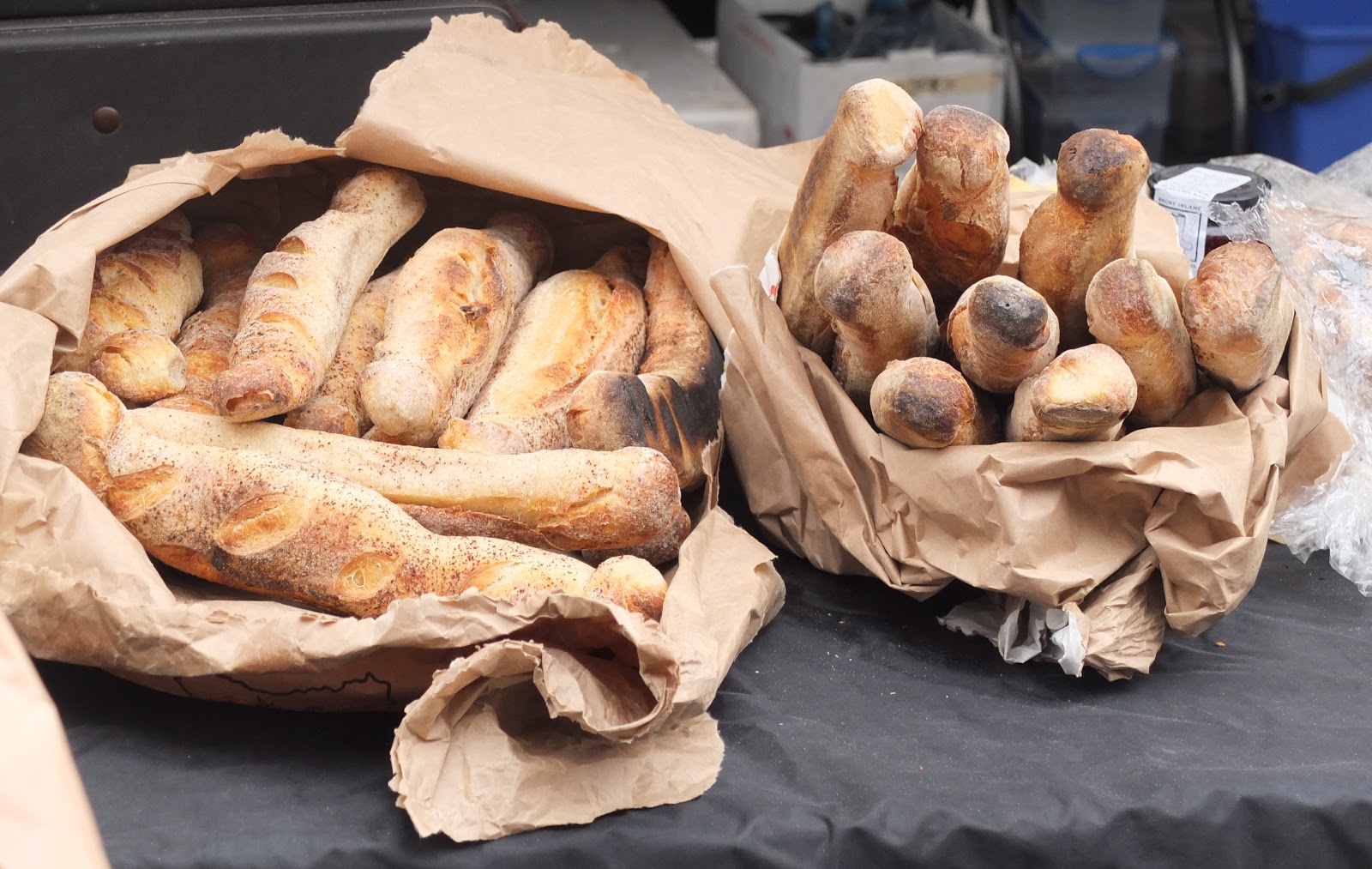
Baguettes were a Viennese invention. In Paris 70% of the bread is made by hand, compared with 3% in the UK. Parisians may queue for bread twice a day.
Most disturbing is the image of Griff greasing the large mechanism that keep the lifts of the Eiffel Tower running with molten mutton fat. Apparently this occurs once a week.
Fascinating to accompany a canine client to the Salon de Toilettage, and see the use of dog cologne.
We also get to visit the bee hives on the roof of the Opera Garnier who make one of the most expensive honeys in the world. I must try some of that next year. I am also looking forward to helping to consume the 80,000 bottles of champagne that need to be drunk in Paris each day.
It all appears to be on youtube if you've missed it.
Sunday, 25 November 2012
One Small Island
I was very excited about this title when it came out last year, it's a shame that it's taken me so long to read it. It's a fabulous book, about a fascinating part of the world. Little did I know how fascinating it really is.
One Small Island tells the tale of Macquarie Island, a small island in the Southern Ocean between New Zealand and Antarctica. But like all good things that good possibly be construed as belonging to New Zealand, we found it first and claimed it for Australia.
Macquarie Island was discovered in July 1810 by Captain F Hasselborough, who had been blown off course while heading to Campbell Island, another subantarctic island. He named it for Lachlan Macquarie, the new Governor of New South Wales. Actually, much of New South Wales is named either Lachlan or Macquarie, and I'm sure the ongoing popularity and use of the name Lachlan in Australia stems from this time also.
Macquarie Island was a natural refuge to huge colonies of seals and penguins. A sealing industry was immediately set up in 1810, and in the ten short years that followed the sealers killed more than 100,000 fur seals, until there were none left. Naturally a lack of seals didn't stop the ravenous desire for oil, the elephant seals were the next target, and when they were all but gone then penguin oil became the industry. It seems rather impossible that there was a penguin oil industry at one time, I'm glad we live in a somewhat gentler time.
I've known about conservation efforts on Macquarie Island for some time, the recent efforts to rid the remote island of rabbits and rats. I didn't know that previously there were feral cats, dogs and wekas amongst many others!
There is a lot of information packed into this book, so much so that both endpapers include even more.
The book itself alternates large illustrative double pages
with beautiful, intricate pages crammed with information in various formats- imaginings of primary journals from early explorers and sealers, newspaper accounts, maps, drawings. There are a few lines of text at the bottom of each page, that reads quickly as a stand alone story. I was too keen to read the story so read through the bottom first and then came back for a slower reading of the informative pages. It's a very clever design, easy to read just the text for younger children, but then with much more information that older children and adults can digest. Although young children do love pouring over illustrative detail.
There is a lot of information packed into this book, so much so that both endpapers include even more.
The book itself alternates large illustrative double pages
with beautiful, intricate pages crammed with information in various formats- imaginings of primary journals from early explorers and sealers, newspaper accounts, maps, drawings. There are a few lines of text at the bottom of each page, that reads quickly as a stand alone story. I was too keen to read the story so read through the bottom first and then came back for a slower reading of the informative pages. It's a very clever design, easy to read just the text for younger children, but then with much more information that older children and adults can digest. Although young children do love pouring over illustrative detail.
While One Small Island is a tale of ecological destruction and (mis)adventure, it is ultimately optimistic and hopeful. We have stopped the slaughter of seals and penguins. Although it is sadly too late for the Macquarie Island parakeet, the seals and penguins have come back. The wekas, cats and dogs have gone. There rabbits and rodents are on their way out due to expensive, large scale government efforts. The books message that it's important to care for our "precious places, no matter how small or faraway they are" is a vital one.
![]() |
Saturday, 24 November 2012
Salamanca Markets
This time last week I was lucky enough to be wandering around Hobart's fabulous Salamanca Markets. Possibly the most famous markets in Australia. Certainly one of the most colourful and entertaining. I don't think I'd ever been before.
Every Saturday from 8am to 3pm an otherwise quiet city street is transformed, from this:
To this:
There are plenty of colourful flowers, of the real
Colourful food
And a whole range of colourful characters, and causes. The most hippies I've seen in decades I think.
Saturday Snapshot, is a wonderful weekly meme from at home with books
Every Saturday from 8am to 3pm an otherwise quiet city street is transformed, from this:
To this:
There are plenty of colourful flowers, of the real
and not so real kinds
| Intriguing fruit leathers, I bought some home but haven't got to sampling yet |
Colourful handmade goods
Colourful, and good, buskers
![]() |
| Not a hippie, just young and hip Proving that Hobart is a small town, we both dined in the same Chinese restaurant the next night! |
![]() |
| I never did get to see what this guy did. Another reason to go back. |
Saturday Snapshot, is a wonderful weekly meme from at home with books
Monday, 19 November 2012
The Most Beautiful Walk in the World
I came across John Baxter somewhat accidentally. I stumbled upon his A Paris Christmas a few years ago, and immediately fell in love. So much so that I needed two posts to gush fully. Find the first post here, and the second. So I knew that I would have to read The Most Beautiful Walk in the World sometime. I've just recently reread Edmund White's The Flaneur, and so this seemed an opportune time to walk the streets of Paris again, this time with John Baxter.
I have to say that I was a little bit disappointed with this book. Primarily I think because I loved A Paris Christmas so, so much. And a bit because most of it wasn't quite what I was expecting of it. The weight of expectations like that are hard to live up to.
Which is not to say that it's not a great read. I did enjoy it, a lot, and I read it in a mere few days, I just didn't love it as much as I expected to. John Baxter is in the enviable position of living in the 6th arrondissement (central Paris is divided into 20 such arrondissements or areas). I am in the enviable position of planning a holiday in Paris next year, and of having secured an apartment in the 6th, so there was plenty of local interest for me. He describes it as Paris's Greenwich Village or Soho. In the time of Hemingway it was cheap, whereas the modern 6th is the most expensive area in Paris.
There is a whole chapter on the Luxembourg Gardens, more on it's dark history than the current day delights- it served as the former haunts of murderers and Nazis, as well as medieval queens. I've had the pleasure of strolling through the Luxembourg Gardens on quite a few occasions, but am looking forward to enjoying it even more next year with ready access, and hope to find more of it's treasures such as the original model of the Statue of Liberty.
John Baxter does eventually toy with the notion of the flaneur also. The broad avenues created by Baron Haussman as military conduits for Napoleon III (which happily destroyed the crowded tenements of the poor, and those likely to plot revolution) allowed Parisians to stroll and savour their newly beautiful city, and to promenade themselves in the fashions of the day.
I'd never quite absorbed the role of prohibition in helping to make Paris such a capital of artistic and hedonistic endeavours in the 1920s. It was the perfect time though really, coming as it did on the tail end of the First World War, and there were already many American servicemen staying on in Europe, teaching the Europeans how to drink cocktails.
Foreigners liked to drink early, in the late afternoon, when French customers were still at work and the cafes would normally be empty. They also ate early, unlike the French, who seldom sat down before nine. Above all, they possessed unquenchable thirsts. The French drank for pleasure and relaxation; the Americans, the Spaniards, and the Germans did so to get drunk.
Indeed, this book is full of endless fascination. The role that opium has played in European art and culture. The endless variety of Paris Metro stations, some of which may be a destination in and of themselves next year.
... we who walk in Paris write a new history with every step. The city we leave behind will never be quite the same again.
Some of the many fascinating factoids that I gleaned from reading this book:
Speilberg is said to have used the forehead and nose from a portrait of Ernest Hemingway when refinining his visual concept of E.T! Along with the eyes of poet Carl Sandburg, and the mouth of Albert Einstein.
The guillotine was in use until 1977.
Proust's favourite cafe was Angelina's.
Perfumiers gather flowers in the late afternoon, as their scent will be at its most powerful.
A newly elected president of France will make a courtesy visit to the Pantheon.
There is a statue commemorating the discovery of quinine as a treatment for malaria on the Boulevard Saint-Michel that I shall need to seek out.
Dreaming of France, a weekly meme by Paulita of An Accidental Blog
Subscribe to:
Posts (Atom)