Wednesday, 29 September 2010

The Food of Travel 1- Going East

Recently I had the pleasure of flying to and from Europe with Singapore Airlines. We had some intriguing meals along the way. They serve two choices in cattle class- one asian and one western. I learned to ask for the asian choice nearly every time, and came off better I believe, given the pallid scramble eggs and ordinary chicken that my Western eating husband was served.

It was early morning, and I was astonished to find decent looking food at Charles Kingsford-Smith, so I got the eggs and silverbeet hash from the  Danks Street Bistro outpost. The eggs were ok, but the silverbeet hash was awful- potatoes that were the wrong texture, and so hot I managed to burn my hard palate as my final act before leaving the country.


Imagine how thrilled I was to get an airline version of the same meal just a few hours later. I remember eating the eggs even though they were overcooked and somewhat rubbery and the yoghurt.


Some kind of fish curry from memory. It was kind of hot actually, and the cauliflower undercooked.


Imagine my absolute terror as a parent who has to fill out a permission note about once a week so that my child can eat a piece of birthday cake that another child might bring to school, to see Singapore staff blithely handing out packets of peanuts! Do they not know that a large proportion of the Australian population suffer from peanut allergies so severe that a mere sniff in a playground can kill them? What about when a  whole section of economy rips open their cheap packet of peanuts at the same time? Surely that's an antigen load likely to knock off even the hardest Aussie? But do you know there wasn't one call for a doctor or an epipen after the peanut serving? Shocked I was, shocked. 


Changi airport in Singapore  is allegedly one of the best airports in the world. It's certainly big, and seemed nearly empty all the time we were in it, which was quite a bit with the coming and the going. Still it's not that easy to get a good feed there. I remember ordering this because it had a ridiculous name, and I'd been in Singapore for a week by now, and was somewhat emboldened.  It was perhaps the worst thing I ate in Singapore. 


Flying over Afghanistan at something like 0400 local time and what do they give you? Chili prawn noodles. Naturally. Given the flight originated in Singapore those were proper chilies too. Not namby pamby ones. I can't remember if that's apple juice or wine. I hope it was wine, but fear it was apple juice. 


Wednesday, 22 September 2010

Top Ten Books I'm Dying to Read

Of course there are many more than 10 books that I'm dying to read, but here's todays list (in no particular order).


I've read it now
See my review


Harriet the Spy


If only because then I will be as well read as Lisa Simpson (in one episode at least), and will have read Yertle the Turtle ("Possibly the best book ever written on the subject of turtle stacking."), To Kill a Mockingbird and Harriet the Spy.


The Girl Who Played with Fire

Because a lovely friend lent it to me last December and I still haven't read it. It was meant to be my Singapore book way back in June. And I felt slack about not having read it then.

I've read it now
See my review


The Three Musketeers
More a book I'm dying to Finish rather than Read.

I've read it now


When it Rains
A local author, I went to the launch of this book last week, of course got merchandised, and now I must read it. 


The Sparrow
I've been wanting to read this for years, and then a lovely friend even sent me her copy all the way from America.


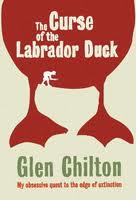
The Curse of the Labrador Duck
I got hooked by the reviews for this book when it came out, I bought it, and of course haven't read it. 


Proust
I don't imagine that I'll ever get through all 6 volumes but I'd like to think that someday I'll have the time to try


Notre Dame de Paris
This was meant to be my Paris book for this year. I was planning to read it at night having had walked past Notre Dame every day. Will I wait til my next Parisian sojourn or read it in the interim? Time will tell. 


I've read it now
See my review


Old Yeller
Because I just recently watched the movie of this for the first time, and now I'm intrigued to read the book. I'm sure I could learn even more about hydrophobe. 


I've read it now
See my review


Pride and Prejudice and Zombies
I know it's Wrong. I know I probably won't like it. But I bought it and I want to give it a go.

I never get my Top 10 out on a Tuesday, it takes a while of mulling it over, and waiting for it to bubble up to the surface. The folks at brokeandbookish do a better job of it. 


Sunday, 19 September 2010

Magnolias

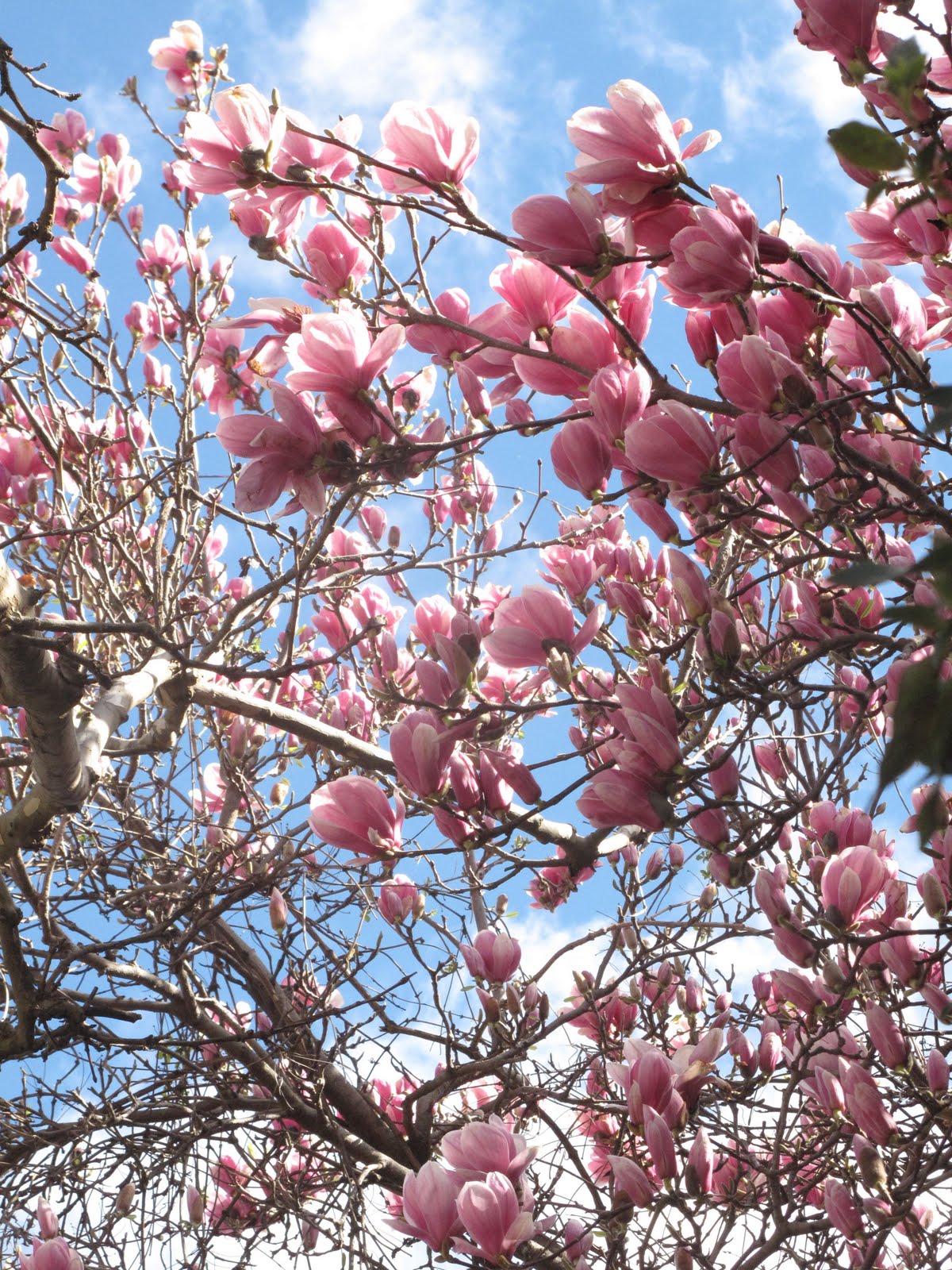
Is there anything more magnificent than magnolias in bloom? Their peak is short, they still look nice when the foliage starts to come in but for me I just love those glorious few days when they burst into bloom. I haven't had much of a chance to capture images of this years magnolias, what with work, rain and courses, but I still managed to capture a few moments of stunning beauty.


Tuesday, 7 September 2010

Top Ten Books I Can't Believe I've Never Read

I'm really a somewhat haphazard book blogger. I've blogged a couple of books here. I really should get around to starting a blog about my experiences reading 1001 Children's Books You Must Read Before You Grow Up. I think that would make a half decent and interesting blog. It's an amazing ride, and I will be much better read, if not Grown Up at the end of it.

I do follow a number of excellent book blogs, for both adult and childrens books, but I do that haphazardly too- it all takes so much time. Similarly, I'm not much of a meme reader or follower. I'm not even sure why they're called memes. But this one has been nagging at me for a few weeks. I came across it on the wonderful Deb Nance's readerbuzz blog. I found her list both interesting and inspiring. Imagine having never read Enid Blyton! It's almost unimaginable for an Australian of my vintage. But of course we share many similar holes in our reading too.

I've been having random thoughts about what I should put on this list for a few weeks. I'm not sure how I'm going to round out my Top Ten at this stage, but let's have a look, and see where it takes us.


1. The Bible

Yes it's true. I can hear the shocked intakes of air. I'm pretty sure that I read some childrens bible stories when I was a child, but I've never read a Bible as such. Or The Koran, or whatever it is that the other major religions read.


2. Dickens

Yes, ALL of it. Well, I have read half of Bleak House twice, and it is just about the best book I've never read. I'm planning to read A Christmas Carol this December, perhaps that will count for something.


I've read it now!
see my review


3.The Diary of Young Girl
Shame. Shame. Shame


4. The French Classics.
I think to convey the gaps in my reading from here on in I must largely use clusters of books, rather than individual books or authors. I am a Francophile, tis true. And yet, I've read so very little of their literature -modern or classic it must be said, but the classics seems the bigger omission at the moment. I've dabbled at the edges of this wonderful French world. I read Madame Bovary last year, and it was a revelation. Not just the descriptors of 19th century French life, or the casual mentions of famous French surgeons, who are now more known because of their eponyms than their actual deeds. But my goodness, I have yet to come across an English language equivalent to Emma Bovary. Currently I'm two thirds of the way through The Three Musketeers, and this is just as scandalous. It's a ripping yarn. These two little glimpses into the vast array of French Classic Literature make me hungry for more. I want to read Hugo, Zola, Moliere, de Maupassant, Proust, Verne. Sadly of course it will all be in English translation. But one day, perhaps one day, my French will be good enough again to let me try reading in the original.


5. Australian Childrens Classics
This is not to say that I have read every adult Aussie classic that I should have either. I've read only one Patrick White. It was of course a herculean effort on my behalf and took 3 months of my life to read. Still I do feel like I should try to read him, and in this lifetime too, and not save him til I'm dead, as I plan to do with all the unread Virginia Woolfs. And there are many others too of course. But there are also some yawning holes in the Aussie kids classics that I've never read- well I don't believe I have. Blinky Bill. Snuggle Pot and Cuddle Pie. The Magic Pudding. This must be corrected.


6. Shakespeare
Or even Tales from Shakespeare. Yes I've seen some of the plays. I've perhaps even understood some parts of some of the plays, and laughed at some of his jokes. Still I find it difficult to read plays. It's not something that I try all that often to be honest. The most successful attempt to read a play would have been The Importance of Being Earnest, which I've read twice.


7. The Complete Works of Oscar Wilde
Speaking of Being Earnest, I do think that Oscar Wilde was possibly the best wit who has ever lived (or at least the best one I've come across thus far). I'm always in awe of his work, but still have much to read, fairytales included, even though once again I have actual copies of these books that I've bought with my hard earned cash that languish, unread on my bookshelves.


8. Bill Bryson's A Short History of Nearly Everything.

This is quite an abject failure. I even own three different versions of this book, and still I haven't read it. The original, the Illustrated one (hey, the mere sight of the illustrated version of The DaVinici Code made me buy it instantaneously, and then read it, when I had been completely uninterested until the very moment that I saw the illustrated version in the shop, and here I am with the illustrated version of a book I really want to read sitting on the shelf), and I've even bought the children's version (A Really Short History of Nearly Everything). I think I've got through half the first chapter of the illustrated one.


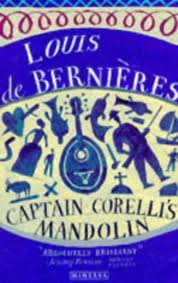
9. Captain Corelli's Mandolin
Because I must be the only person in the world who hasn't actually read it. Or even seen the movie.


I've read it now!
See my review


10. The Wind in the Willows
Likewise.


So it seems the Top Ten is a bit blurry round the edges.... it was fun to do, and good to think about how I can get some of these books read some stage soonish.

Wednesday, 25 August 2010

They're doing what to Enid Blyton now?

Love her or loathe her Enid Blyton can still stir up controversy more than 40 years after she died. Never content to let her, or her books alone, Hodder is "dragging her language out of the 1940s" and promising to remove such offensive phrases as "awful swotter", "dirty tinker", and even phrases that can not have been confusing or offensive to anyone "mother and father", "jolly lonely" and "it's all very peculiar". It's all very peculiar indeed.

Is it hystrionic to note that the language of Shakespeare, Dickens and Chaucer are all much more dated than poor Enid's and yet people still manage to read these books? Possibly. Yes, there have been toned down versions of these literary greats (and I'm by no means claiming Enid's oeuvre to be literary greats) to help children, and no doubt some adults, cope with the olde worlde language. But these versions can in no way compare to the experience that is reading the original, delving into the language of the time, and reading them as the author intended.

Modern children can definitely cope with this. They still love them. More than 2 million Famous Five books are sold around the world each year!I read the whole Famous Five series out loud to my then 7 year old son a few years ago. He absolutely loved them. Yes I had to explain some things- the pony trap that they used in the first book springs to mind, but there are things that need explaining in most books. I think reading the Famous Five books expanded his vocabulary no end. I've read many author interviews over the years where the author will credit Enid Blyton for nourishing their early love of books and reading, and many turn out a Blyton-esque attempt as their first written work. My son too, did exactly that. He wrote his first story at 7 in Year 2. Eight Go to Bells Mansion. It was wonderful. 15 typed pages of heavily Blyton-esque storyline, with robbers, and plucky children. He did veer somewhat away from Blyton with the giant spiders though.


Totally un-modern children can also cope. I read the Famous Five series to myself when I was about 9 -probably 20ish years ago ;-). I still have fond and very strong memories of Five Go Off in a Caravan. I was never allowed to go on a solo caravanning holiday with my cousins as a child. Indeed, I had never seen the wonderful painted wooden caravans that Enid described so vividly in 1946, they were completely outside my realm, but they set my imagination on fire. Such is the power of these books over children, and I am rather furious at Hodder for fiddling with them. I agree with bookshelves of doom that this seems to be more about dumbing down than creating modern translations to woo todays youngsters. The original versions will still be available, but that hardly seems the point.

Apparently she never actually used the term "lashings of ginger beer"! I was very relieved to see "All for one, and one for all" appear in The Three Musketeers last night. I was 150 pages in, and starting to worry that it might not actually be there.

I was surprised to see Enid Blyton come up in conversation between Jennifer Byrne and Ayaan Hirsi Ali on Jennifer Byrne presents this week. I expected a smorgasbord of much more erudite topics, still they did make old Enid sound Revolutionary and Challenging to Authority, and when you look at her from that perspective, you know what?, she is. (It's dealt with from 10 minutes in in the video)

Saturday, 31 July 2010

Snow Monkeys

We've all seen those photos of the cute Japanese Snow Monkeys sitting in the hot spring surrounding by snow, looking like the rich and lazy skiers lounging about in hot tubs after a day on the slopes and too many beers at the bar.


I had presumed that this was an ancient behaviour of these monkeys who long ago learnt to keep warm this way during the long, harsh Japanese winter. Not so. Turns out nothing could be further from the truth. They learned it some 40-50 years ago by watching people sitting in the springs (these very same rich loafers I suppose)!

In 1963 Mukubili, a rather visionary troupe leader as it turns out, mimicked some human behaviour and changed the lot of her troupe to this very day. The rest of her troupe copied her behaviour, and the rest as they say is history. Her descendants still enjoy their hot spring hot tubs, and because of their fame humans bring them food every day. The individuals in this troupe are now twice the size of their near neighbours who still have to forage for their food rather than be fed by people who like to take photos of the hot tub loungers.

I stumbled on this rather interesting fact whilst watching the documentary Snow Monkeys: Who's Hot and Who's Not. It was actually shown on the ABC about six months ago and has been languishing about unwatched on our hard drive recorder, just waiting for a wintery Saturday evening, and a bored child with nothing else to do. Much like the young snow monkeys who have so much free time that they have learned to play with snowballs.

Monday, 19 July 2010

Making the Rounds with Oscar


I was always going to be the perfect reader/buyer for this book. I was already in Oscar's thrall, having read about him way back in 2007, and he was even the topic of my first ever blog post! Oscar of course is a very famous cat who lives on the third floor of a nursing home in Rhode Island. Oscar has a special calling- he will go and sit on the bed of patients during their final hours. He will often jump up on a bed, sniff the air and jump off, but when he settles himself in the staff quickly learnt that the patient wasn't long for this world. It's a remarkable skill really. Of course, many animals, usually dogs I suppose seem aware when their people are unwell and will sit by them. Is that more of a devotional motivation? Oscar doesn't seem to particularly bond with these patients, and indeed the patients who live on Oscar's floor all have severe dementia and they probably don't know that Oscar is there for a long part of their illness. Still, I think it's a really nice idea for a nursing home to have a cat. It helps accentuate the home and not just the nursing. Actually this place has two cats per floor, it's more than just a token gesture.

So, I was intrigued enough by Oscar's habits to buy this book when I first saw it. Yes I wanted it so much I was happy to pay full price, just in case I never saw it again. Unusual behaviour. More typically it sat unread for several months. Then, whilst looking for something gentle to read whilst trying to combat jet lag it seemed the perfect title. And in some ways it was. It was a rather gentle, and easy to read book. It wasn't the book I was expecting however. I was expecting little anecdotes about the cat I guess, padded out with filler. It was much more a book about dementia than about cats.

David Dosa is a physician, a geriatrician. Early on he describes how the "family business" is paediatrics. His mother, uncle and grandfather were all paediatricians. They weren't necessarily thrilled when he developed an interest in geriatrics. In my favourite non-feline sections he discusses the differences between paeds and geris (although perhaps these are somewhat obvious, I liked his turn of phrase).

I thought of going into paediatrics. I love children and babies, and have two little ones of my own. The difference for me has always been the stories. Children are a blank canvas, portraits waiting to be drawn. When we look at them their lives are just beginning, we feel a sense of renewal and an expanse of infinite possibility.

My older patients, on the other hand, are like rich paintings and boy, do they have stories to tell. On my best days I can look at them and see all the way back to their childhood. I think of their parents (long gone now), the places they've been, the things they've seen. To me, it's like looking through the other end of a telescope, back to the beginning.

David Dosa works both delivering palliative care to dementia patients in the nursing home, and also does on call at a hospital some times. I found his tone a bit disengenuous at times, can he really be that naive and ignorant? It is one of the senior nurses Mary who initially points out Oscar's gift to Dr Dosa. He isn't a cat person, and is disbelieving that a cat can have such a higher sense. He does of course come around to belief as Oscar sits with each person who dies. Indeed, Oscar will wait outside closed doors to get into the room of dying people, and even scratch and bang at doors and walls to get in if the door is shut for what he feels to be too long.


But the book is much more about dementia, and more particularly the final stages of their illness. And this is where I found David Dosa particularly disengenuous. He goes to talk to family members who had Oscar with their loved one in their final hours. He comes across as if he's never particularly thought how it must be for the families to watch their loved one wither away, both intellectually and physically. He needs to get a lot of help from the ever-present, ever-sensible Mary. And the families of course. Did he never really ponder this during his training? Or have a particularly poignant experience or discussion with a family before? Maybe he didn't. Perhaps my perceptions were coloured by reading this book basically in the wee small hours when I couldn't sleep. And it was a perfect jet-lag book. But I wanted more about the cat. Perhaps there isn't that much to say about the cat, I don't know. It is an endlessly fascinating feline behaviour though,isn't it? Comforting to know that Oscar is there bringing comfort to these people as they die.


Interesting to see how a relatively simple book about a cat can need multiple different covers for the different markets around the world. I think Portugal's cover is the best, as this is meant to be a book about a cat (although I don't think it quite achieves that aim). And France, I'm sorry I do love you, but you really have some of the worst book covers in the world. I suppose you save all that creative flair for making chocolates and maccarons and wine, and there is precious little left over for book covers. Browsing your bookshops is interesting, and somewhat difficult for a foreigner, all the books look the same, all the spines of the books seem to actually be the same. It's confusing for the non-French, almost as much as your disdain for the burqa and the humble boardie.