Monday, 1 April 2019

(all) The Single Ladies of Jacaranda Retirement Village


I was immediately drawn to this book as soon as I saw the cover. It's a great cover. So pretty. It's a great title. I was keen. Then I found out that Joanna Nell is a Sydney GP. I was very keen (I do love a doctor/author). And then happily a good friend gave me a copy for Christmas. Even better, I was about to spend a week by the beach in Thailand. I figured that the single ladies of the Jacaranda Retirement Village would make excellent holiday companions- and they certainly did.

Peggy Smart is 79, she's widowed and now moved into a unit at the Jacaranda Retirement Village with her dog Basil. Peggy had a quiet kind of life and marriage. Married to the faithful Ted, Peggy has raised two children Jenny and David, she is a doting grandmother. She wears a bit too much beige, needs a toilet nearby, bakes a mean slice, and has her eye on Brian, the widower next door. 

Peggy did have her own identity, even if she didn't like it. Overweight, self-doubting. She was a nondescript person, an elasticated waistband of a human being. 
Then along comes Angie Valentine, an old friend that Peggy hasn't really seen in 50 years. Friends at school Angie and Peggy lost touch in their twenties and have lead very, very different lives. Angie has been married four times, she is flamboyant, a risk-taker, and hasn't outgrown all her wild girl days. Angie sets her sights on making Peggy over. Together Angie and Peggy make a kind of Patsy and Eddie of the Retirement Village set. 
"You have to stop thinking like an old person. If you behave like an old biddy, people are going to treat you like one. "
Angie starts doing her best to bring Peggy out of her widowed, beige life. 
"You have to accept that Ted's gone now. But you're still here, and there's a lot of life left to live. Start living it."
This overall theme is set before the book even starts with Dylan Thomas' Do Not Go Gentle into That Good Night as the epigraph. This is then echoed a few times within the text. 
In a Welsh accent.
Rage, rage against the dying of the light. 
It's also a meditation on motherhood at times.
What was strange was that Peggy had so few memories of day-to-day motherhood with David and Jenny. It was as though she'd lived those days under a light anaesthetic. But the years were there, plain to see, in a series of grainy photographs. Peggy, Ted and the children, all smiles. Christmas trees and birthday cakes. Tight-skinned summer days with buckets and spades. Memories strung together like bunting with nothing in between. 
Also marriage and friendship, health, and everything else that's important in our lives. I'm at a time of life where I've been making lots of changes in my life, some of which I've wanted, some of which I haven't.  (All) The Single Ladies (sorry but I think of the song every time I think of the title) is a great reminder to take risks, to make changes. To be brave. 
'A ship is safe in harbour,' he would say, 'but that's not what ships are for.'
Peggy has a fall, and her well meaning children hover wanting to help her, to make sure that's she's safe in her harbour at the retirement village. Although Peggy comes to realise that that may not be exactly what she wants. 
It was a game of geriatric bingo. Take it easy. Elevate your legs. Drink more water. At your age.  
Joanna Nell strikes just the right balance of tone, lighthearted and funny at times, serious when it needs to be. Set in the Northern Beaches of Sydney not too far from Big Little Lies- Note to Self- I must rewatch Season 1 in preparation for Season 2 later this year-
A cloud of white birds erupted from a Norfolk Pine near the beach. A young family sat eating sandwiches on the sand across the road from the café. Everywhere, people moved at a Saturday pace, eating their smashed avocado on toast and smiling in the knowledge that the working week was still far in the future. In some ways, Peggy missed weekends. Retirement afforded the luxury of crowd-less weekdays but there was something about the respite from the nine-to-five that had always made Saturday and Sunday special. 
I'm not so sure about that. I'm ready to make the most of uncrowded weekdays. I already enjoy them now due to rotating rosters. Perhaps decades of shift work takes away the thrill of regular weekends?

I expected to do lots of poolside reading, but Thailand in February is pretty hot and after burning my lily white face on the first day (accidentally in the pool) I took to spending the heat of the day in our air-conditioned villa, and read in comfort. I always expect to read way more than I do on holidays. But there are always too many other distractions - naps, walks on the beach, trips to local markets and the delights of two hour breakfasts, and rather long dinners every day. The Single Ladies of the Jacaranda Retirement Village was the perfect length, they kept me company for my whole stay. 


Jean Whittle is a real life Peggy Smart. Retirement villages, and even  nursing homes are going to have to change the way they do things with the coming flood of Baby Boomers, and just the arrival of the twenty first century. 

Joanna Nell has her second book due out later this year. The Last Voyage of Mrs Henry Parker is due for release in September. I'll be there. 


http://australianwomenwriters.com

Thursday, 21 March 2019

Quitting Plastic


It seems that I'm having a bit of a nonfiction moment recently, but here's been such a lot of fascinating Aussie nonfiction lately. Like many people I've been really interested in trying to decrease my plastic footprint, particularly since I watched War on Waste in 2017, and there's acutally quite a bit to learn when you're going about that. More recently I read Zero Waste Life and made quite a few changes on the back of it. So I knew as soon as I saw Quitting Plastic that it was for me. 

Quitting Plastic is written by a mother daughter team from Sydney. Clara Williams Roldan is a policy and legislative advisor for the NSW parliament ( a fact which makes me very happy), while her mother Louise Williams is an award winning journalist. They're clearly a talented family as another daughter Elowyn Williams Roldan did the illustrations. 

While Quitting Plastic is full of practical tips and solutions for reducing plastic in our lives and our homes it also takes a broader historical view to look at how we got into this mess in the first place. How one third of all the plastic wrappers, packaging and bags that we use end up in our oceans. How we took "such a strong, high-performance material" and used it "to make disposable items that we toss away, often within minutes and without a second thought."

Plastics really boomed in the post (second world) war period. All that wartime deprivation, hardship and rationing was suddenly replaced by convenience, and we grabbed it with both hands. 
In a flash, humanity went from the relative scarcity of natural materials and the deprivation of wartime to a utopia of plenty. We had a new, cheap material that appeared to last forever.... Cleaning up after ourselves was just another antiquated waste of time, while throwing out more and more disposable items symbolised modernity and efficiency. It represented a triumph over the drudgery of the past. why wash up if you could just throw the dishes and cutlery away? And plastic was at the forefront of this modern, new world. 
"We had a new, cheap material that appeared to last forever. " Unfortunately it does, and that is exactly the problem we face now. We (and our oceans and marine life) are now literally drowning in single use plastic (the oxymoron of our times it seems).
They are lightweight, so they 'leak' easily into the environment. They are free, so we don't value them, and they are used only briefly before being tossed.
Even so we had to learn to 'shop and toss'. Quitting Plastic tells us that when coffee vending machines were first introduced office workers would carefully wash the plastic cups for reuse. I remember my grandad washing every bread bag for reuse, there was always one drying on his clothes line.

In Australia 88% of metal waste is recovered for recycling or reuse, and nearly all our aluminium. Of course metal is heavy to transport and using lots of energy to produce and recycle. But just a fraction of our plastic is recycled. And there is a big difference between recyclable and recycled. 

The big four of single-use plastic (straws, disposable coffee cups, plastic water bottles, plastic bags) are actually pretty easy to tackle. I recently made my own zero waste kit for my handbag, and it's been so easy, and such a delight to use. I don't drink coffee so I don't need a reusable coffee cup on hand at all times- I do have one for winter when I do quite like a chai latte from time to time. Reading Quitting Plastic made me wonder how men, who traditionally don't carry handbags, quit plastic. It's not going to be nearly so easy for them to carry about their zero waste kit. 


I really like that Quitting Plastic reminds us that we can't be perfect, that it's a journey for all of us. Clara is more than ten years into her quitting plastic journey and still hasn't managed to get rid of it entirely. Just yesterday I asked for no straw in my smoothie at a local cafe. I got the straw anyway. When you're taking this issue deeply that can seem like a failing, that the world will self destruct somehow because I didn't manage to avoid that single straw. But it won't, and I've successfully dodged many other straws. 
There is no way to fail quitting plastic, because it's a process.
The  majority of Quitting Plastic is a room by room guide to reducing plastic in our homes, and life. There are also chapters on Plastic-Free Kids (and isn't that a challenge?), Entertaining, and Eating (and Drinking) Out.

The major chapters are Kitchen, Laundry and Cleaning, The Bathroom, and Your Wardrobe. Within each chapter each activity is broken down with many subheadings, - Washing Your Clothes, Stain removers, Hair Care, Toilet Paper, Menstrual Products etc. Each subheading is given a category to indicate the relative ease with which changes can be made - Easy, Medium, Hard, Improving. Toothpaste is rated Hard, Clothes, wipes and brushes Easy. Clara gives a verdict on her experience with the various alternatives. Rather than listing companies or products that may be difficult to find where ever you are she lists relevant Search Terms to find products near you, online recipes and other solutions. 

I was thrilled to see some tips about using Soapberries as I'd just bought my first packet on the very day that I read those words about them. Apparently soapberries work better on a warm/hot cycle to maximise their release of surfactants, which makes sense, but I only wash in cold water. So I currently have my little bag of soap nuts steeping in some boiling water on the stove. I can even wash the dog with that later apparently, so may have made my dog a plastic free beauty too. I will report back. 

Much of our clothing is now synthetic, ie plastic, and the Your Wardrobe chapter was really eye opening. Global textile and footwear production doubled from 2000 to 2014, a period that also saw the arrival of fast fashion. I've been aware of the problems of microfibres entering our water ways from our washing machines for some time. I've been hoping that someone clever would solve this by the time I need a new washing machine, but it's still very alarming to know that a city the "size of Sydney is flushing plastic microfibres equivalent to 7.5 million plastic shopping bags down our drains via our washing machines every single day"!! 7.5 million bags. OMG. 

Although there is some good news here too. Front loaders seem to generate fewer microfibres than top loaders. Yay. I have a front loader. There are interesting products becoming available to help trap microfibres before they enter the environment. Guppyfriend is a bag to put your synthetic clothing in in your washing machine. Cora Balls are a plastic ball designed to trap and collect fibres within your wash. I'm not sure that makes sense to me logistically. Surely the washing machine manufacturers need to sort this out? And governments need to regulate them to make sure they do so.

 I'm not much into fashion, but have have bought quite a lot of clothes in the past few years, I've bought more than I used to, more than I should have. "Oh that isn't too bad, it fits ok, and doesn't look too hideous, I'll buy it." I know I have too many clothes now. I've read Marie Kondo's book, I've watched her Netflix series, but I haven't gone the full Kondo yet. But I have tried to stop buying new things. Last year I put myself on an official Black Pant Buying Ban. It hasn't been totally successful, but has made me more conscious of the problem. Quitting Plastic suggests taking the Spark Joy method back to the source - put your hand on potential purchases while they are still in the shops, before they get into your house, into your wardrobe where one in five garments will be left unworn or barely used. I have to say that I think my ratio may even be worse than that....

There is a (brief) section at the beginning help us to understand the different types of plastics, and how relatively Good or Bad they may be. I've heard a bit about bioplastics, but don't pretend to fully understand Compostable Bioplastics. Bioplastics can be made from a wide range of renewable resources - sugar cane, corn and agricultural and forestry waste. I get that, and that seems a good thing, rather than using non-renewable fossil fuels. But it's the compostable part I don't understand at this stage. Bioplastics apparently need industrial  composting (and temperatures above 60 degrees) to break down. If put into landfill they will still emit greenhouse gases. But that they break down at all, surely they must not be the same plastic compounds that we are currently using?

It's a coming thing though, massive companies are feeling the zeitgeist and embracing change. Lego has committed to fully sustainable materials by 2030. It has kicked off with making (plastic) plants from Brazilian sugar cane. This plastic is still recyclable but not biodegradable. Lego doesn't want their products to be biodegradable I'm sure. The nomenclature is very confusing to me. European Bioplastics has a graph showing how bioplastics can be bio based, biodegradable or both. And rather confusingly bioplastics can still be made from fossil fuels.


Still I was thrilled to learn that Australia is working towards National Packaging Targets of 100% recyclable, reusable or compostable packaging by 2025 through the Australian Packaging Covenant Organisation. Although it's a shame that isn't listed in the reverse order - compostable, reusable, recyclable. So is individual effort still worthwhile? Undoubtedly yes. 
What's driving change is us. 
The Covenant is voluntary. Targets can be missed. Plastic use is predicted to double again over the next twenty years. We need to still be driving that change. We are at the beginning of the end of single-use plastics. 

I was planning to donate my copy of Quitting Plastic to my local library after I'd read it, but there's so much useful, practical advice in here that I'm going to keep it as a resource at home for now. I  learnt a lot of new information from Quitting Plastic, it wasn't just a reiteration of things I already knew. I had no idea that vegan silk was a thing, or Qmilch - a fibre made from milk protein by a young German microbiologist way back in 2011! There's so many interesting things on the horizon. 


http://australianwomenwriters.com

Tuesday, 19 March 2019

Force of Nature


I had such a good time listening to Jane Harper's debut novel The Dry recently, that I soon found myself back for her second outing, Force of Nature. Truth be told, I was a bit worried as I'd heard lots of people say that it wasn't as good as The Dry. That would be a hard thing though. The Dry was fabulous, and very deservedly well loved by pretty much every one.

Force of Nature takes place about six months after the events of The Dry. Our main protagonist is again Aaron Falk, a rather unlikely hero - a financial detective with the AFP (Australian Federal Police). Aaron becomes involved with the search for a missing woman, Alice Russell, after a company team-building weekend goes awfully, awfully wrong.

Ten people, five men and five women, go on a weekend camping trip in the Victorian bush. They are split into male and female teams. Alice disappears during the walk, and for a long time, at least half the book, we don't what has happened to her. We don't even know if Alice is alive or dead. If she is dead what happened? If she is alive where is she? The area they go to, the fictitious Giralang Ranges, has a dark history, with an Ivan Milat-esque serial killer active in the area in the past. One of his victims has never been found, and the aura of that time lingers in the minds of everyone, inextricably linked to the Giralangs.

Force of Nature has a great structure with two alternating narrative threads twining together like a rope pulling us along, drawing us inevitably towards the end. One, is the current investigation into Alice's disappearance, and the other is a narrative account of the four days the women were together on the hike. Each of the women has their own backstory, with their own history in the relationships between them, and their own secrets that play out when they are thrown together in difficult circumstances. For the first two thirds or so I was just listening in the car whenever I had the chance and partially invested, but towards the end I was swept up and I ended up listening to the last third or quarter binge style in one evening at home. 

I really loved Steve Shannahan's narration of The Dry, but it didn't work quite so well for me here. Much of Force of Nature is dialogue between the five women on the retreat and having a blokey Australian male voice bringing their words to life seemed wrong. His narration of the Aaron Falk chapters worked much better for me. 

I do know that someday soon I'll be listening to Jane Harper's third and most recent book The Lost Man. 

Jane Harper talking about life and Force of Nature at SWF 2018


Wednesday, 27 February 2019

Sing, Unburied, Sing


I've been meaning to read Jesmyn Ward for ages. I first heard about her with Salvage the Bones, which was published back in 2011. And I'm pretty sure that is sitting about in my physical TBR somewhere. But naturally I haven't read it. There has been a lot of hype about Sing, Unburied, Sing since it was published in 2017. It won big name prizes and Obama named it as one of his best reads of the year. I was interested initially, but then put off a bit as I'd heard a lot of people referring to it as a ghost story of sorts, and that's not really my thing. Or I thought it wasn't, but maybe it is.

Recently I was organising my TBR for a short holiday in Thailand. And of course I wanted to take lots of books with me, but my friend had booked us as carry on only! One small suitcase with a 7kg limit- not much room for books in there. I ended up taking two books (and only reading one of them), and a whole stack of audiobooks on my phone. I listened to about three quarters of Sing, Unburied, Sing on the way to Kuala Lumpur and then finished it off after I got home as I was too busy holidaying to listen to any audiobooks while I was away. As is pretty much always the way.

Sing, Unburied, Sing is a story told by three narrators. It is Jojo's 13th birthday in the opening pages of the book. He lives with his grandparents and younger sister Kayla in the rural Gulf Coast of Mississipi. His grandfather, Pop, slaughters a goat in the first few pages, it is such a memorable start, and was the sample I heard on Audible, and had me hooked, and keen to listen further as it was both grisly and beautiful at the same time. Jojo's mother Leonie is around but not particularly involved in the lives of her kids. Leonie is the second narrator, and she is self-absorbed and horrid. The third narrator is Richie, a young boy who was in prison with Jojo's grandfather when he was a young man. Richie died many years ago, and yes he's a ghost.

Jojo's father Michael is about to be released from prison after three years away, having previously worked on the BHP Deepwater Oil Rig which exploded in 2010. I can't remember that we get told why Michael has been in gaol but Leonie and her friend and colleague Misty embark on a road trip with the kids to pick him up. Apparently the multiple narrative voices and road trip across Mississipi evoke Faulkner's As I Lay Dying, a book I haven't ever been brave enough to pick up. The road trip was one of the less interesting storylines of the book for me.

While Sing, Unburied, Sing is a "ghost story", it's so much more than that. I was surprised by how much I accepted the ghostly aspects, and that they really didn't bother me at all. To me it is a book primarily about race, and also class, poverty, drugs, incarceration, violence, illness, death and dying. It is great story telling, and beautiful writing. But it's an unusual book in that I think I would have enjoyed it even more if I had read the book, rather than listened to it. Once I settle on an audiobook I'm usually grateful that I listened to it. 

I really loved the narrator of Jojo's chapter, but found the woman doing Leonie very distracting. She was all Eartha Kitt and breathy, which didn't sound like Leonie at all to me, and I heard the narration more than I heard the story. I would like to read Sing, Unburied, Sing sometime. I think I'd enjoy it even more second time through, and also as a read.

This little passage stuck with me
Some days later I understood that he was trying to say that gettin grown means learning how to work that current, learning when to hold fast, when to drop anchor, when to let it sweep you up. 
as it echos that sage advice of Kenny Rogers from so long ago ....


Jesmyn Ward answering questions about Sing, Unburied, Sing on PBS. 

Jesmyn Ward author event at Shakespeare and Company in Paris. We're I've been quite a few times, but never to an event. Well not yet. Jesmyn calls Sing, Unburied, Sing a book about death, and that is one of the reasons why she opened with a death. 

Tuesday, 19 February 2019

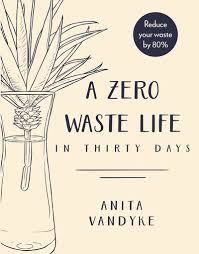
A Zero Waste Life


I'd seen A Zero Waste Life around the shops for a while, but didn't realise that it was Australian until I saw Anita Vandyke on SugarMamma.TV a few months ago.


Soon after watching I was requesting the book from my library- which seemed a more Zero Waste thing to do. And it saved me 20 bucks too. Which I transferred to my mortgage. Which would make Sugar Mamma proud. 

Anita Vandyke is an interesting woman. She initially trained in Aeronautical Engineering, and is now a medical student. Clearly no slouch in the brains department. In the Introduction Anita describes her "aha moment", an "Is this all there is?", "Is this who I will become?" existential crisis sitting in a meeting in her mid 20s. So she quit her high paying job, and her initial motivator for change was financial when she was no longer working, and then became broader to encompass the environment, and life more generally. Anita doesn't want us to waste our time, our money, or our future. 

Plastic is Mother Nature's non-renewable resource, and time is ours. 
Anita lays out a 30 day programme for change, with four key steps- think, do, reflect and review. Apparently we can aim to reduce our waste by 80% over 30 days. That's a big call.
Living a zero waste life is not only actually really easy, it is also completely necessary
It's always frightening to see statements like this one:
Every piece of plastic created since the 1950s still exists.  
Yes, all the little plastic toys I played with as a kid, the straws I used (well they were paper initially), every tub of yoghurt I have ever bought- it's all still out there somewhere. I just don't know where. In landfill? In the  Great Pacific Garbage Patch?

A lot of this stuff I knew already. I've had environmental leanings since I was a teenager. I have already made some changes over the past few years. I was a great fan of both series of The War on Waste over the past few years, and have taken up soft plastic recycling as a hobby. But I can do more. We all need to do more.


I was already most of the way to making a Zero Waste Kit to have in my handbag. I've been taking my own (reusable) cutlery to work for years. I've been refusing plastic bags for at least 5-10 years. I reuse drink bottles. I try really hard to remember to refuse straws. I'll formalise things though, and make an actual kit as Anita suggests. I did just buy myself a pretty pink, sparkly water bottle. It sparks joy every time I look at it... oh wait, that's another book altogether.


I took my kit to Thailand last week,
it was great, very handy
Early on (Day 5) Anita suggests that we put ourselves onto a buying ban for the rest of the month. But I'm not ready to commit to a buying ban just now. Not that it wouldn't help me, but I recently bought a new house. I'm buying huge, expensive things at the moment, like solar panels, and a fireplace. I am trying to cut down - it just doesn't look like it right now ...

A lot of the content overlaps with other reads I've done recently. Decluttering. Minimalism. Gratitude. Food waste. Environment. Politics. Philosophy. Mindful consumption. 

It was a Sunday afternoon, I had just come home with a bag full of clothes after spending a few hours at the local shopping centre. I was sipping my takeaway iced chocolate while checking my Instagram and Facebook feeds. After an hour of mindless scrolling, I sat down for an evening of TV, watching housewives yell at each other. This was a regular Sunday for me. Looking back now, all I can think about are the hours I lost in wasteful consumption- blindly shopping for more stuff, consuming empty calories and indulging in the vortex of social media and televised trash. 
Reading A Zero Waste Life has given me the impetus and the wherewithal to try some things I'd been meaning to do for ages. I'm now using a shampoo bar, and a conditioning bar on my hair- and I really like them. I'm going to buy a shampoo bar for the dog next time too.

I'm keen to try some of Anita's recipes for DIY products- both beauty products and cleaning products for the house. I'm not ready for baking soda toothpaste, but would happily try a Sugar Scrub or an All Purpose Cleaner. I'm impressed that Anita freely shares these recipes online- on her blog, or instagram. These really are changes we can all make. A Zero Waste Life is a great place to start. 


http://australianwomenwriters.com

Thursday, 24 January 2019

Star Jumps


Hmm, is it wrong to read a book about drought whilst sitting in a bath? I suspect it is. Morally reprehensible at the very least, if not full on wrong. It wasn't a dry bath, there was water in it. I didn't realise that was what I was going to be doing tonight it must be said. I decided to have a bath, I had Star Jumps out from the library and it looked like a perfect bath sized snack. And it was.

I've become very fond of verse novels over the past few years, I really can't fully explain it as I'm so terrible at reading poetry. Of course, the reading speed is great, it's not that often that I can knock over a book in a day- I've been known to fall asleep reading a picture book...

I'd been meaning to read Star Jumps for years, probably since it won the Prime Ministers Literary Award for Children's Fiction in 2010 (the first time that a Children's category was included).

Star Jumps is the story of a dairy farming family told in first person by the youngest of the three children, Ruby. Ruby is young enough to not remember a day of rain, she has grown up in drought and knows nothing else.
There is something we don't understand,
 as if we were just kids,
grubby in old clothes,
playing in weeds,
with a dog that doesn't scare strangers 
and cows that want to die 
instead 
of making milk. 
The cows, the farm and the family are all doing it tough because of the drought. Star Jumps is about the ties that bind, making your own fun, and coming together in the hard times. Themes that would be familiar to any rural family, and many urban families, but with less cows. 

Lorraine Marwood is an Australian poet and author, and was a dairy farmer herself for many years, and this definitely shows in her depth of understanding of farming, of the practicalities and the hardships. But she kept saying that the newborn calves were baaing.
The gentle baaing from the five new calves
I'm confused. Do calves baa?

I am probably more annoyed than I should be that the kid on the cover is doing a handstand and not a star jump. Otherwise I do like the image of the cover.


Teacher's Notes for Star Jumps


http://australianwomenwriters.com

Wednesday, 23 January 2019

A Year in Books 2018

I'm very late even starting to look back at 2018, which is quite apt really. I had a bad reading year, and a slow blogging year in 2018. Which is not to say that I didn't enjoy things, I just didn't get all that much done. I did delve (possibly too much) into the fabulous world of Booktube, which made me excited about lots of books and audiobooks but didn't leave me with much time to get them read or listened to. I need to temper that this year. 

Goodreads tells me that I read 55 books and 10,650 pages in 2018, although I suspect this doesn't include the 600ish pages I read of Les Mis as I failed to finish it. That is perhaps my biggest disappointment of 2018- that I didn't finish the Les Mis Chapter A Day Readalong. I will still finish Les Mis some day, I'm still just not sure when. I love it every time I pick it up again, I just don't pick it up all that often at the moment, and certainly not every day. I need to try to get back to that habit again, and get it finished. Then I'm tempted to listen to the audiobook...

Also, many of the books I read were audiobooks. I slipped easily into the arms of audiobooks as my actual reading dwindled. A lovely way to keep "reading". 

I also had a bad year of rating my reads, so this is year in review is made all the trickier. I like to wait until I do my review to rate, but then if I don't do the review, the rating doesn't happen and then it all falls away like grains of sand. So what were the books that I gave 5 stars to? Or those that I think I should have given 5 stars to if I had bothered to rate them at all?

The Pigeon. Patrick Suskind


Les Misérables. Victor Hugo


The Latecomer. Dimitri Verhulst


Claris: The Chicest Mouse in Paris. Megan Hess


Big Little Lies. Liane Moriarty. Audio


The (audio)book, the TV series, the soundtrack. I love it all. 

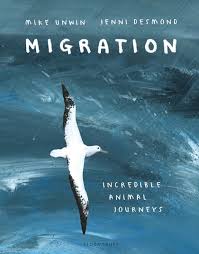
Migration. Mike Unwin. Jenni Desmond


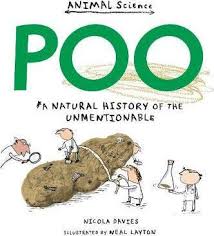
Poo: A Natural History of the Unmentionable. Nicola Davies. Neal Layton (illustrator)


The Art of Frugal Hedonism. Annie Raser-Rowland. Adam Grubb


Life After Life. Kate Atkinson. Audio


5 stars for the audiobook performance. 4-4.5 stars for the book. 

The Art of Living Alone and Loving It. Jane Mathews


Any Ordinary Day. Leigh Sales. Audio (the tea slurping edition)


Born a Crime. Trevor Noah. Audio


Do I have a book of the year? I'm not so sure. I really liked all these books, but I'm not sure that any particular one shines more than the others. 

11 (12 including Les Mis) of my 54 reads were, or should have been, 5 stars! Not bad for a bad reading year. 

5 Aussie books

9 Adult reads

3 Picture books

0 Verse Novels

4 Audio Books

5 Nonfiction Books

8 Female Authors/Illustrators

7 Male Authors

11 New to Me Authors

I appear to have let another year slip by without reading any Jackie French. How can this be? What an egregious oversight. It must not happen again this year.