Saturday, 12 November 2011

Turbo Chooks

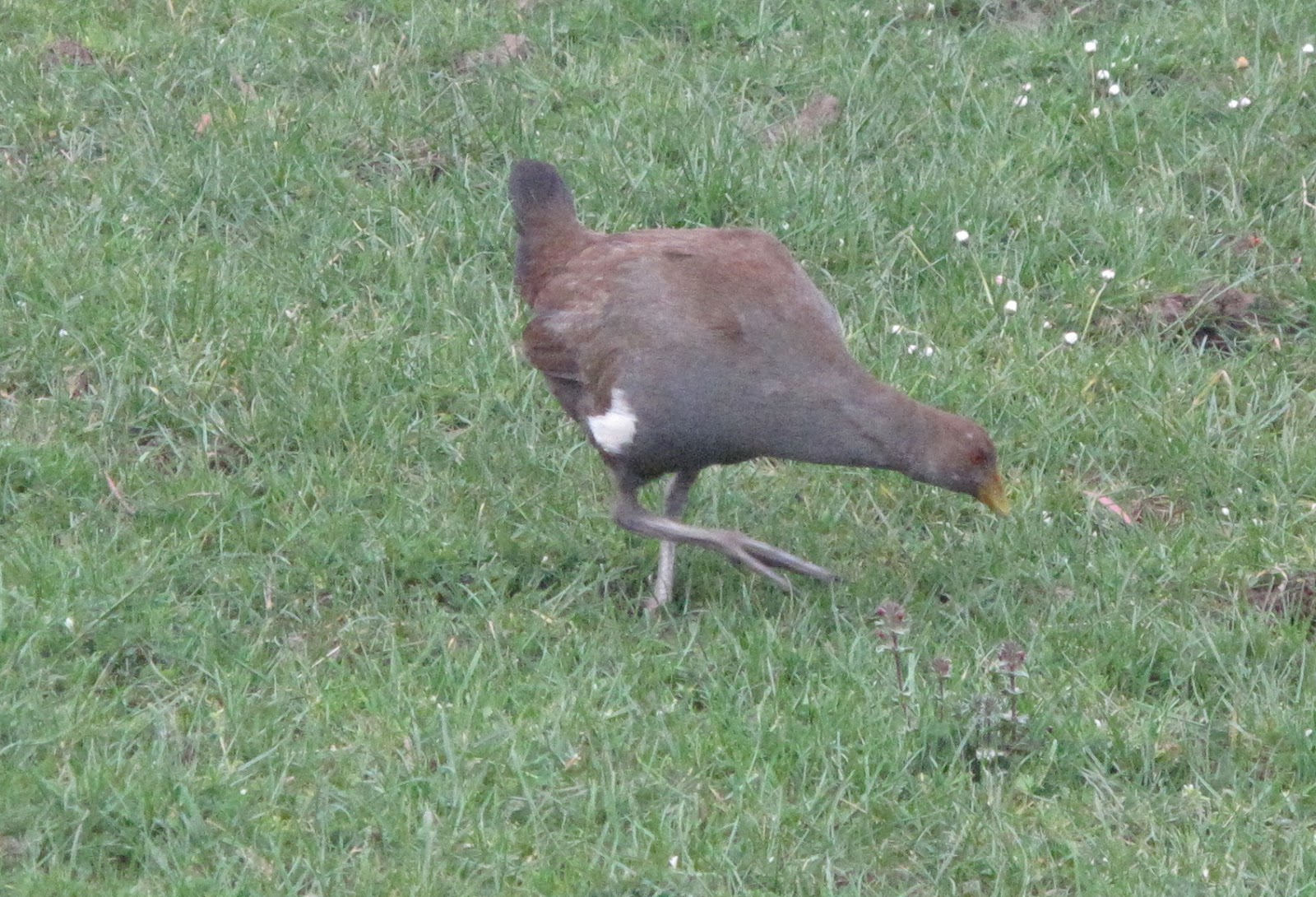
In September I was lucky enough to go to Launceston, Tasmania for a conference. I wasn't there all that long, but had a very enjoyable few days, and got to see some new birds.

Tasmania is a funny (small) place, and I was lucky enough to have the same cab driver 3 times! The second time was planned, but the third time was pure luck. Anyway, Paul told me that Tasmanians call these birds Turbo Chooks (turbo because they run really fast, chook is Australian for chicken). More properly called the Tasmanian Native Hen (Gallinula morterii). They were certainly plentiful in the nice lake across the road from the conference centre, and also by roadways. Turbo Chooks used to be common on the mainland too, but sadly went the way of most flightless birds when man, and their accompanying predators move in.


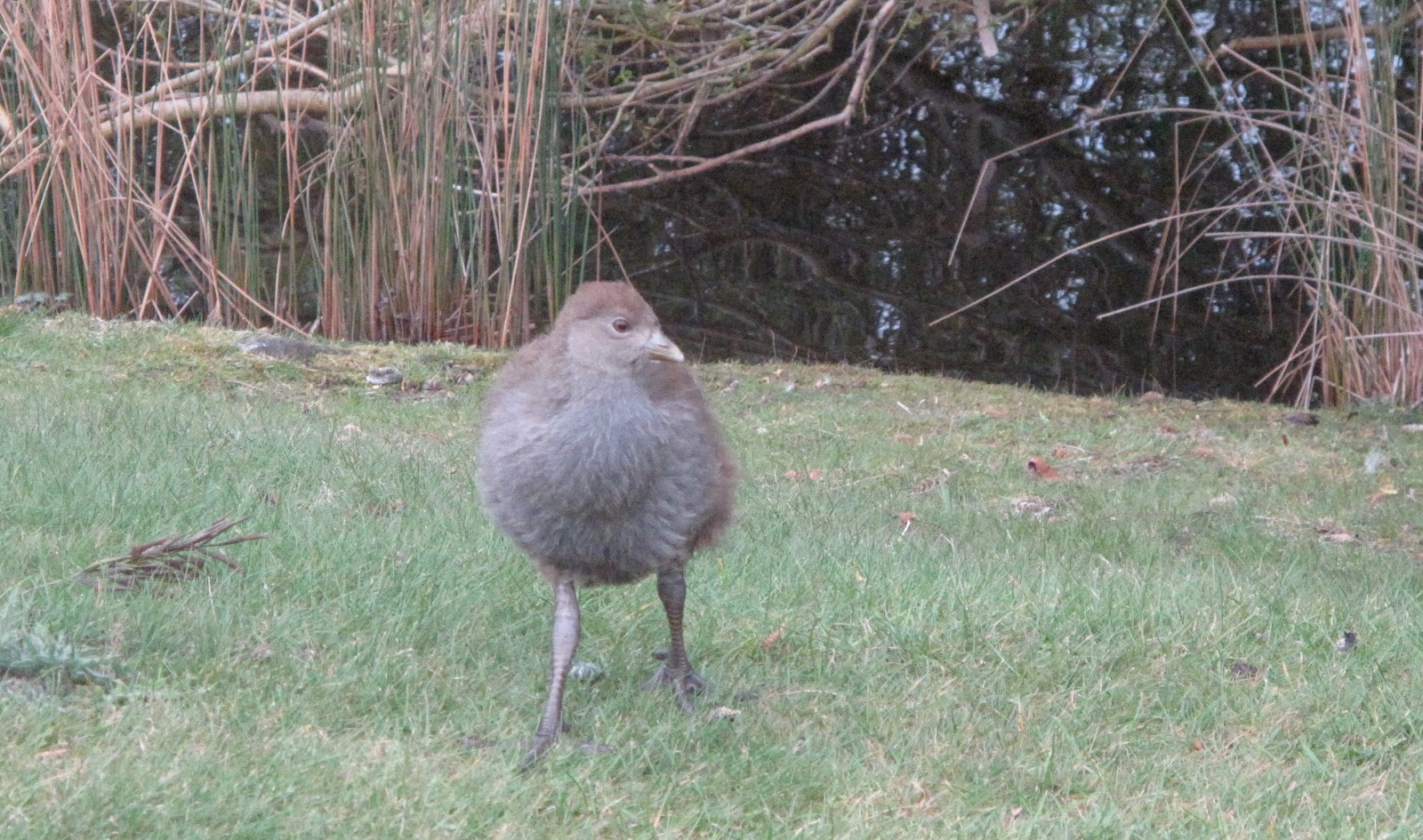
After a day or so (yes I'm very quick sometimes), I realised that some were juveniles.


Saturday Snapshot, is a wonderful weekly meme from at home with books

Friday, 11 November 2011

Joan of Arc


My fascination with Joan grows daily. This Junior Reader was a perfect place to start. As you may have noticed I quite like Junior Nonfiction, and believe even adults can learn something from most JNF that we pick up. I certainly learnt lots from this little book. 

Joan's basic story is so fascinating, that it would appear to defy reality, but of course it's true. An illiterate poor provinicial girl, starts seeing visions as a young teenager. The saints appear to her- St Michael, St Catherine, St Margaret. The saints tell her extraordinary things, that she is to do the work of God, and lead France to victory against the English (who control Northern France in the early 15th century, at the tail end of the 100 year war). Somehow, she gets into the royal court, the dauphin supports her, she starts fighting at Orleans, she gets the dauphin coronated as king in Rheims. Joan has a series of extraordinary victories, but is killed at the age of 19 by being burned at the stake. 

The structure of this DK reader is typical for this series. The story is in the middle of the page with fascinating little tidbits or sidestories on the margins.


My favourite tidbit

Makes me hope for a DK reader about Charles VI

I learnt lots of things from this little book.

The saints who appeared in visions to Joan, were all quite specific to her needs. St Catherine was a local saint for Joan. She was the best-loved saint of Joan's time. She would have been a local hero for Joan as she is buried near Joan's town of Domremy. She was the patron saint of unmarried girls. It reminded me that Catherine wheels are named after her, and the terrible method in which she was put to death on such a wheel. Thankfully in the modern world, Catherine wheels are pretty fireworks, but for many centuries they were a brutal method of torture, and a slow death

St Margaret was an early Christian girl who wore men's clothes to allow her to join a monastery. St Michael of course was a famous warrior who slayed the dragon.

Joan refused the offer of a sword from the dauphin, and instead used a sword that her voices told her would be at the shrine of St Catherine at Fierbois.

Orleans had been under seige by the English for 6 months when Joan led her assault. This was apparently a favourite method of the English, they would just wait, with no need for fighting, while the inhabitants of the beseiged town starved until they were ready to surrender. 

The dauphin was cowardly and didn't want to go to Rheims, in English held Northern France for the coronation.


Half of France, including Paris, was held by the English at this time. Joan gathered her soldiers at the small town of St Denis outside Paris. St Denis is particularly fascinating. I learnt a bit about him during my trips to Paris. He was the Bishop of Paris in the third century. Bishops weren't treated too well at that time. Denis was beheaded, and he was said to have picked up his head and walked six miles carrying it, preaching a sermon. He is usually depicted holding his own head. 

St Denis at the entrance of Notre Dame
Joan started experiencing some losses. Her sword broke. She was captured by the Burgundians, and bought by the English for 10,000 francs. She jumped 20 metres from a castle tower trying to escape. She was tried in a French court, but tried by the English. She signed a confession, and was sentenced to lifelong imprisonment wearing dresses rather than her usual men's clothing. Joan's voices came to her and told her she had been wrong, and she changed back into her male attire. She was burned at the stake at the marketplace in Rouen on 30th May, 1431 wearing a dunce's cap which labelled her a heretic, and a dress dipped in sulphur to burn more quickly. Her ashes were thrown into the river as a final insult, instead of being collected for worshippers. 

Joan called herself Joan the Maid. She was never referred to as Joan of Arc during her lifetime, and it was only after her death, and her legend grew that she became Joan of Arc. 

Wednesday, 9 November 2011

Wondrous Words Wednesday 9/11/11


Wondrous Words Wednesday is a fabulous weekly meme hosted by Bermuda Onion, where we share new (to us) words that we’ve encountered in our weekly reading.  

My words this week are taken from Caddie Woodlawn (see my review). Any book written quite some time ago (1935), about a time even earlier (1864) will have some new words, and Caddie was no exception.

1. Bully (adjective)

This comes up multiple times during the book. We all know and use bully in a modern sense, but this was a surprising usage for me:

"Caddie, they've got bully tops in the store at Dunnville," added Warren hopefully. 

"It's bully fun!" yelled Warren.

There are lots of definitions at Free Dictionary. It's really interesting how there has been quite a change in usage especially in the noun form. There is also bully beef of course!

Bully (noun)
i) A person who is habitually cruel or overbearing, especially to smaller or weaker people. 
ii) A hired ruffian; a thug.
iii) A pimp.
iiii) Archaic. A fine person.
iiiii) Archaic. A sweetheart.

Bully (adjective).
Excellent; splendid. 

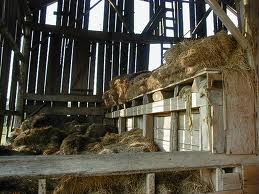
2. Haycock (noun)

I, myself, remember the long walks and the slim dinners and sometimes nights spent under a haycock, when we could not find a tavern which wanted decorating. 

Chiefly British. A conical mound of hay. The Free Dictionary.

Picture credit


3. Tow- headed (adjective)

An exciting game became much more exciting when, on coming out of hiding, one felt that he might find himself face to face with a redskin instead of tow-headed Maggie or gentle Sam.

i) A head of white-blond head resembling tow. 
ii) A person with such hair.
iii) A sand-bar or low lying alluvial island in a river, especially one with a stand of trees. The Free Dictionary.

It's pretty funny that I didn't know this word, as I believe I would qualify as tow- headed. And what is this tow that we tow-heads resemble? Tow is coarse broken flax or hemp fibre prepared for spinning. 

Tow

Tow-head!


4. Arbutus (noun)

One day, when the three adventurers were in the woods hunting for arbutus to take to Teacher, they heard a roaring on the river. 

i) Any of the broad leaved evergreen trees or shrubs of the genus Arbutus, including the madrona and strawberry tree, that are native chiefly to the warm regions in the Americas and Europe. 
ii) The trailing arbutus. The Free Dictionary.

What wiki has as a representative picture


5. Hogshead barrel (noun)

So they came to his farm one day and got him and put him in a big hogshead barrel.

Any of various units of volume or capacity ranging from 63 to 140 gallons (238 to 530 litres), especially a unit of capacity of liquid measure in the United States, equal to 63 gallons (238 litres).
A large barrel or cask. The Free Dictionary. 

6. Haymow (noun)

"You wanted to turn somersaults in the haymow, didn't you, Cousin Annabelle?"

i) Hayloft.
ii) The hay stored in a hayloft. 
iii)  Archaic. A haystack

Picture credit


7. Hoyden (noun)

But that a daughter of mine should so far forget herself in her hospitality to a guest- that she should be such a hoyden as to neglect her proper duties as a lady!

A high spirited, boisterous or saucy girl. The Free Dictionary. 

Saturday, 5 November 2011

As we must appear to the hawk #1

I recently listened to Alain de Botton's The Art of Travel. He held my attention for most of it, but he really grabbed me when he described the view from a plane window, (I've always loved photos taken from plane windows).

And to think that all along, hidden from our sight, our lives were this small: the world we live in but almost never see; the way we must appear to the hawk and to the gods.

If the hawk, or the gods, were traveling with me recently from Houston to LAX they would have glimpsed this too....

Smoke, not smog leaving Houston

Much of Texas was on fire


You can almost see the curvature of the Earth!


What appeared to be a large quarry in the middle of suburban LA


Smog not smoke over LA

Saturday Snapshot, is a wonderful weekly meme from at home with books

Friday, 4 November 2011

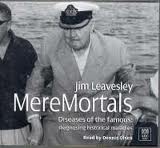
Mere Mortals


My latest in car listening has been to the totally wonderful Mere Mortals. A series of retrospective medical musings on famous people in history, written by a now retired GP Dr Jim Leavesley. Sadly this is only a selection of the 45 people included in the book format- and I will now have to read the book in it's entirety! These essays were written as programs for the wonderful Ockham's Razor on Radio National from the 1980s. Ockham's Razor is still broadcast on Sunday mornings.


Claudius
Joan of Arc
Henry VIII
Queen Anne
Samuel Pepys
Winston Churchill

Elizabeth Barrett Browning
The Brontes
Queen Victoria
Vincent Van Gogh
John F Kennedy

Some of these people had quite well known maladies of course. Churchill's black dog of depression. TB consumed the Bronte family. Samuel Pepys was famously cut for stone (bladder stones). And Queen Victoria spread her tendency for haemophilia through many of the royal houses of Europe.

My favourite section was the particularly fascinating one on Joan of Arc. She is of course famous enough that we all know her name, and know that she was burnt at the stake. But why was a 19 year old girl burnt at the stake? Why indeed was she involved in leading battles against the English? It does seem odd that an illiterate teenage girl should be leading French armies. I really hadn't thought about her much before now. Even though I've often walked past her statue on the Rue de Rivoli, and gazed at her golden wonder.


Joan was the youngest of five children born in the village of Domremy in what is now Lorraine. She began having a series of well documented auditory, olfactory and visual hallucinations when a teenager. Some have suggested that this may have been schizophrenia, but here Jim Leavesley suggests temporal lobe epilepsy. She had frequent, prolonged hallucinations from the time she was 13 but never developed a formal thought disorder.

Somehow Joan convinced the dauphin to trust her, and he put her in charge of the army. She liberated Orleans, insisted the dauphin then become crowned King of France at Reims, and went on to fight aggressively and courageously against the English, who at that time had control of most of Northern France including Paris.

Joan endured several gynaecological examinations to prove her piety, which allow her to become known as the Maid of Orleans. She is reported to have fully developed breasts, but no pubic hair, and never reached menarche. The author reports the theory that she has the rare condition of testicular feminization. Leavesly asserts that was burned at the stake for wearing mens clothing, rather than for her hallucinations, or any suggestion that she was a witch. As a final indignity her charred body was revealed to the crowd assembled to watch her death, as there was sufficient doubt about her sex, despite her feminine voice, that she was said to have loved finery, and been easily moved to tears. Her entrails reportedly didn't burn at the stake, which is quite unusual of course and Leavesley suggests that they may have been hardened by deposits of calcium due to TB, they had to be thrown into the Seine.

I'm really fascinated by Joan, and I will definitely be reading more about her.

The final section on John F Kennedy was also particularly fascinating. I wasn't aware that JFK had two particular problems with his health. He had Addison's Disease, a condition where the adrenal glands don't make the usual amount of steroid hormones that are required, and needs supplementation. He also had a back injury, that had required several surgeries, and JFK was apparently one of the first people with Addison's to survive surgery. JFK would often use crutches when out of the public eye, and wore an intricate sounding rigid brace which he was wearing at the time of his death in Dallas in 1963. Indeed, Leavesley suggests that the rigid back brace may have caused the shooting to be fatal. He believes that the rigid brace held JFK upright whereas if he had been able to slump after the first shot he may not have been fatally wounded by the third. It certainly sounds plausible. And makes it all the more tragic I think.

And what of the audiobook experience? I really enjoyed the reader here. Plummy, full voiced. He reminded me of the narrator in Rocky Horror in places. Although he does mispronounce some medical terms at times, which is a little bit distracting, but otherwise it's a completely engaging pleasure to listen to.

Thursday, 3 November 2011

Wondrous Words Wednesday 2/11/11


Wondrous Words Wednesday is a fabulous weekly meme hosted by Bermuda Onion, where we share new (to us) words that we’ve encountered in our weekly reading.  


This weeks Wondrous Words come from Ian McEwan's On Chesil Beach.


1. Pavane (Noun)

Their courtship had been a pavane, a stately unfolding, bound by protocols never agreed or voiced, but generally observed. 

i) A slow, stately court dance of the 16th and 17th centuries, usually in duple meter.
ii) A piece of music for this dance. (The Free Dictionary)


2. Calumny (Noun)

But even as he listened in hostile silence to this calumny, he felt a burden lifting. 

i) A false statement maliciously made to injure another's reputation. 
ii) The utterance of maliciously false statements; slander. (The Free Dictionary)

3. Anglepoise (Noun)

In a corner, under the slope of a roof, was a scrubbed deal table with an anglepoise lamp and a kitchen chair, painted blue.


A balanced-arm lamp designed in 1932 by British designer George Carwardine. (wiki)


The famous Pixar logo has an anglepoise lamp


4. Millenarian (Adjective)

He chauffeured Violet around, once to a Schopenhauer symposium in Winchester, and on the way she grilled him about his interest in millenarian cults. 

i) Of or relating to a thousand, especially to a thousand years. 
ii) Of, relating to, or believing in the doctrine of the millenium. (The Free Dictionary)

5. Monads (Noun)

He was in no position to know what an unusual situation the Pontings' was, a don married to a successful businessman, and Violet, a sometime friend of Elizabeth David, managing a household in the vanguard of a culinary revolution while lecturing to students on monads and the categorical imperative. 

i) Philosophy. An indivisible, impenetrable unit of substance viewed as the basic constituent element of physical reality in the metaphysics of Leibniz. 
ii) Biology. A single-celled micro-organism, especially a flagellate protozoan of the genus Monas. 
iii) Chemistry. An atom or a radical with valence 1. (The Free Dictionary)


The philosophical definition is clearly the one in use here. 

Wednesday, 2 November 2011

Caddie Woodlawn


Should I admit that I wasn't looking forward to reading this book? Probably not. My lack of desire to read Caddie was mainly based on ignorance I guess. I had only heard of this book within the past few years. I only vaguely knew that it was a story of growing up in the harsh frontier life of America. And that was about it. Of course, Caddie won me over. I came to enjoy the book, and the things it taught me.

Caddie Woodlawn is the story of an 11 year old tomboy living in the wilds of Wisconsin in 1864. Abraham Lincoln is president of America. The American Civil War was in full swing. And the Woodlawn family were doing their best to get along on their frontier farm. The family had recently moved from Boston and now lived in a farm house near a small village. The town shared a teacher with a nearby settlement, so that the children went to school for 3 months at a time twice a year, leaving them time to do their chores on the farm. They made do, and wasted nothing. Clothes were handed down, clocks and watches were repaired and not merely thrown out or replaced, and nothing was wasted, especially unsold turkeys.

That much I had expected I guess. What I hadn't expected was such a controversial book. Caddie Woodlawn deals extensively with race relations between the white settlers and the Native American populations. Caddie Woodlawn was published in 1935, and won the Newberry Medal in 1936.

Carol Ryrie Brink based her character Caddie, on her grandmother, Caddie Woodhouse. Carol had a particularly tragic early childhood, her grandfather was murdered and she was  orphaned by the age of 8- after her father had died of consumption, and her mother committed suicide. She went to live with her grandmother Caddie and a maiden aunt. Little wonder that she loved hearing her grandmother's stories of her own happy childhood on the frontier with her many brothers and sisters.

The language is dated at times it's true- Caddie talks of half-breeds and redskins, and compares rough skin to that of an Indians. But Caddie and her father are friendly with the local Indian population, they openly trust them, especially Indian John. The book starts with Caddie and her two brothers, Tom and Warren crossing the river to visit the local Indians while they are making a birch-bark canoe. There have been many massacres in the area in the preceeding few years, and from the second page the question of whether the locals would ever participate in such an activity is raised. Every time, Caddie and her father speak strongly in defence of their local Native friends. Throughout the book, the troublemakers are white settlers.

There is a moving passage early on in Chapter 3. Caddie and the other children are expecting a visit from Uncle Edmond, who always "comes with the pigeons." There is a great description of flocks of migrating passenger pigeons (whom Uncle Edmond liked to hunt).

One night when they went to bed the sky was clear and the woods were still. But when they awoke in the crisp autumn morning the air was full of the noise of wings, and flocks of birds flew like clouds across the sun. The passenger pigeons were on their way south. They filled the trees in the woods. They came down in the fields and gardens, feeding on whatever seeds and grains they could find. The last birds kept flying over those which were feeding in front,  in order to come at new ground, so that the flock seemed to roll along like a great moving cloud. 

The boys go out hunting, but Caddie stays inside

She liked hunting as well as the boys. But this was too easy. This was not hunting-it was a kind of wholesale slaughter. She knew that the Indians and the white men, too, caught the birds in nets and sent them by thousands to the markets. She knew that wherever the beautiful gray birds went, they were harrassed and driven away or killed. Something of sadness filled her young heart, as if she knew that they were a doomed race. The pigeons, like the Indians, were fighting a losing battle with the white man.  

That's very moving, and rather far sighted. Although by the time Carol Ryrie Brink writes Caddie Woodlawn in 1935, passenger pigeons have been extinct for over 20 years. The last passenger pigeon, the sadly named Martha, died in captivity in 1914. Another environmental tragedy.

Martha