Tuesday, 9 May 2017

A Pair of Jesus-Boots


A Pair of Jesus-Boots was originally published in 1969, reprinted several times in the early to mid 70s and then made into a BBC 4 part series in 1976. However, I think it's been out of print since the 70s and all the covers available appear rather dated and truly tragic.

A Pair of Jesus-Boots tells the story of thirteen year old Rocky O'Rourke. Rocky lives in the worst building in a poor square in Liverpool. He lives with his mother and his seven year old stepsister. His father is dead, although we don't ever find out why, and his stepfather is away. Rocky's mother is not really available, she likes sitting in her chair reading 'soppy' paper-back romances. Ellen-from-upstairs leaves her baby outside in all weathers in his old pram.
Number 3 was regarded by the rest of the square as the most disreputable house, and the families living there were regarded as the roughest and least desirable. Certainly they were the poorest, and the house was the dirtiest. 
Rocky hangs with a group of four other kids, they call themselves a gang, The Cats, and they are starting off a career of crime with minor acts- nicking biscuits from the back of a lorry, breaking into an empty shop. Rocky idolises his older brother who has been in jail for some time but is due out soon. 
Rocky lived mainly in a dream world, where school and home didn't have any existence for him. in his dream work he was either a successful criminal leader or a famous footballer - it all depended where his interests lay at that moment.
While I liked the setting, the story, and the Liverpudlian speech

'She'd have done better to have bought yer some warm clothes- an' a pair of shoes,' said the policeman. 
the writing never drew me into book fully, and the third person narrative was jarring. I found the characterisation and actions of Mrs Flanagan (Rocky's mother) quite confusing. Her behaviours and words are all over the shop.

Rocky's gang spend a lot of time sitting in their hideout drinking tea and playing cards. The boys in Rocky's gang are surprisingly diverse for the 60s. Billy Griffiths was crippled by polio when he was eight, and now has a limp, and gets about on a tricycle. Another of Rocky's friends is Little Chan who's parents run the local chippy. However the local villain is called Jim Simpson, which doesn't really sound all that threatening a name. 

308/1001

Sunday, 7 May 2017

Wicker Interview: Anna Walker

I am so very excited and absolutely thrilled to present the inaugural Strong Belief in Wicker Interview! I wasn't particularly planning to conduct any interviews but I read Florette recently (see my review) and I was absolutely entranced. The Paris location, the charming illustrations and story. All so perfect. 

I began thinking of questions that I would ask author and illustrator Anna Walker if I had the opportunity, and then I decided to make the opportunity and I contacted Anna. Anna Walker was very gracious with her time and agreed to my interview, and shared lots of wonderful images showing her creative process writing and illustrating Florette. 


Is there a reason that you didn’t specifically mention Paris within the text or illustrations?

Paris is such a beautiful and evocative city that I wanted to give the reader a sense of place through the imagery. I try to use words sparingly and let the illustrations tell the story too. 

Do you see Florette as a particularly Parisian story? Could it have been set in Melbourne for instance?

Paris seemed like the perfect setting as this was where the idea came from. I don’t think Florette could be set in Melbourne as we don’t have the density of city living that I needed to express. I considered other European cities along with Copenhagen but kept coming back to Paris as there is an intimacy in the layered apartments that lent itself to the surroundings I needed for Mae.

Have you travelled to Paris? Do you have any favourite gardens or other spots in Paris?

I have been to Paris a few times. Most recently I travelled with my family which became the inspiration for the story. We were on our way to the Louvre when we passed a shop window filled with plants. It was a brief moment but one that I thought about later, being fascinated by the idea of a forest in a city.

One of my favourite places to visit in Paris is the Luxembourg Gardens. We spent time there on our last trip, we loved the tiny boats and puppet show, and we all enjoyed sitting under the elm trees for afternoon tea!

As well as Paris, I'm really interested in your design process. I love it when picture books have an illustrators note, it always adds so much for me. I don't know why the publishers don't include that more often. 

These small samples make it look as though the story came together quite simply but in reality there was almost two years of drafts, drawing, searching, painting and distilling ideas to become the story that is Florette! :)


The seed of an idea scribbled

Thumbnail sketches of storyboard

Setting/Place working drawings


Playing with characters and colours

Mae in her little outfit

Playing with colours

Final city colours

Working on roughs

Rainy courtyard final illustration
-developed from rough

Cover idea

Final cover


Could you describe your creative process for us? As an author/illustrator do you write the text first? Or do the words and pictures come together in an organic way?

When I think of an idea for a story it is always takes the form of an image first. The words develop in an organic way as I think about how the story will be told. All I had in the beginning for Florette was a tiny scribble of a shop window and a terrarium. 

What illustrative techniques/media did you use in Florette? 

The illustrative techniques I used in Florette was watercolour, ink, pencil and collage. The illustrations were layered together to create the final artwork. 


How long did it take you to create Florette?

Illustrating the story took approximately one year. A bit longer if you include pulling the words into shape!


Did you have a childhood love of reading, drawing and creativity?

My childhood was all about reading, drawing and making things! My mum was a librarian during my early childhood so I spent many happy hours at the library pouring over books. I drew constantly and loved making things for my doll’s house. I believed in fairies and created tiny homes for them in the garden. Illustrating children’s books is a joyful way of playing in that world that I love.

What were your favourite books as a child? Do you feel that they’ve influenced your work?

Some of my favourite books as a child were:
Where the Wild Things Are by Maurice Sendak
Madeleine by Ludwig Bemelmans  (I visited The Carlyle in NY last year to see Ludwig's paintings and hear heavenly jazz!)
Sylvester and the Magic Pebble by William Steig
Winnie the Pooh by A.A.Milne

These books and others have become part of my personal story. I think they shape the books I make today. I am inspired by the craftsmanship, the tradition, the bravery, the clear voice that rings out in these special books that is an art form in itself.

Do you read picture books?

I do read picture books! I love them.

Who are your favourite picture book authors or illustrators?

There are so many illustrators and authors making exciting stories. It’s always hard to only name a few.
Davina Bell and Alyson Colpoy’s ‘Under the Love Umbrella’ is one of my current favourites. I am looking forward to seeing Laura Carlin’s new book 'King of the Sky'. I covet my copy of 'Du Iz Tak?' by Carson Ellis and am constantly inspired by the work of Kitty Crowther.


Thank you so much to Anna Walker for her generosity with her time, her words and her images. Florette is even more fascinating to me now. And I've added more to my TBR as I haven't read any of Anna Walker's favourite picture books, nor even heard of some of those authors and illustrators. 


http://australianwomenwriters.com

Dreaming of France is a wonderful Monday meme
from Paulita at An Accidental Blog  

Saturday, 6 May 2017

Maggot Moon


I picked up the audiobook of Maggot Moon from my library recently. I was looking for an audiobook for a road trip that Master Wicker wouldn't hate. I'd never heard of Maggot Moon particularly, although I've had a growing awareness of Sally Gardner for some time, never really hearing about her properly, but aware of her oeuvre, that it's very well regarded and that she covers a rather vast subject range.


So I didn't know what was coming when I popped the first disc of Maggot Moon into my car CD player. Oh. My God. It's so good. It's extraordinary actually. The young narrator Robert Madge did a particularly amazing job. He absolutely inhabits Standish Treadwell.


Before Hector came to this school, I hated it. I believed it was invented just so the bullies, with brains the size of dried-up dog turds, could beat the shit out of kids like me. A kid with different-coloured eyes: one blue eye, one brown, and the dubious honour of being the only boy in the whole of his class of fifteen-year-old who couldn't spell, couldn't write. 

It is 1956 and Standish Treadwell is 15, born into an impoverished and repressed neighbourhood in Sector 7 of the Motherland. Standish lives with his grandfather as his parents have left a few years before. People disappear frequently in Sector 7 and all evidence of their life disappears along with them. Standish and his grandfather have a marginal existence with little food, and many rats in the cellar. 


I tell you this for a bagful of humbugs, it was eerily deserted under this houses. All we could hear down there was the conversation of rats. A very stubborn thing is your common brown rat. I often wondered how it was the rats became fat when we were so very lean. 

The Motherland is a brutal regime and is out to impress the Evil Empires of the world by sending a manned rocket to the moon. It's hard to say much more about the story without spoilers. While I'm not a fan of allegory on the whole, and although Maggot Moon is clearly allegorical it's brilliance is such that I plainly saw that and just didn't care. 


Maggot Moon is not a gentle story by any means, it is actually quite violent, quite shockingly violent. But it is unbelievably gripping. I paid attention intently. And then I listened to it again. And again. Even now after I've finished listening to the book five or six times, I can't get it out of my head.


So much so that I googled about it quite a bit. 


Sally Gardner is dyslexic and she didn't read til she was 14 because of it. D'oh of course Standish is dyslexic. Rather embarrassingly I didn't form that word in my mind while listening to Maggot Moon, I just accepted Standish and didn't label him. But it's pretty obvious now. Sally Gardner has become a dyslexia campaigner and spokesperson. Jackie French is one of my favourite writers, and is also dyslexic. I'm not sure whether that has any significance or not.  


I also borrowed the physical book from my library because I was intrigued as to how it would look. It's fabulous. Illustrated with rats and maggots that make a great animation as you flip through (in parts).  Told in 100 short chapters it would be a lightning fast read. I think I'll read the book sometime. Maybe in a few months. 

And Master Wicker? He thought it didn't suck. High praise indeed. 


I will be reading Sally Gardner's work again sometime very soon. I'm totally intrigued. What a talent she has. What an imagination. 

Monday, 1 May 2017

How Proust Can Change Your Life


I do enjoy Alain de Botton's work whenever I get the time to appreciate it. I very much enjoyed The Art of Travel a few years ago. I was sold on How Proust Can Change Your Life from the time I first saw the front cover, and given that it was first published in 1997 that was some time ago. I bought the book a few years ago but it has sat on my shelf patiently waiting its turn although occasionally I would glimpse that lovely cover and hope to read it sooner. 

Happily a couple of recent(ish) events conspired to get me there. My friend Lisa at ANZLitlovers read it in March last year, and I read her review eagerly. And then it came time for Paris in July 2016 and it seemed the perfect time to pop the audiobook in the car CD player. Sadly I've long ago run out of July, and 2016, for the review. Indeed it's nearly time for Paris in July again. Ah, c'est la vie. 


How Proust Can Change Your Life is told in a series of nine lessons.

How to Love Life Today
How to Read for Yourself
How to Take Your Time
How to Suffer Successfully
How to Express Your Emotions
How to Be a Good Friend
How to Open Your Eyes
How to Be Happy in Love
How to Put Books Down

On one level it is a biography of Proust in some detail- his habits, his prodigious tipping, the precarious state of his health. I don't think I ever knew that Proust was self-published!


I haven't read Proust. Well, I did try to once but didn't get beyond the initial 30 pages of the narrator falling asleep, but I have an increasing fascination with him and his work. I want to give it a red hot try at some stage, but until now I'll read about him, and think about him. I've stalked him in his room


I couldn't help but wonder what the modern diagnoses for poor old Marcel may have been. He had such problems with his skin, his digestion, his asthma. 


Proust frequently has to suffer distressing insinuations that he is not as sick as he suggests. At the outbreak of the First World War the medical army board call him up for an examination. Though the man has been lying in bed more or less continuously since 1903, he is terrified that the severity of his illness will not be appropriately considered, and that he will be made to fight in the trenches. 

Alain and Marcel also had some helpful suggestions for Reconsidering My Life. Alain de Botton suggests that n'allez pas trop vite could well be a Proustian slogan. Don't go too fast. Wise words I'm sure, but is that even possible in the modern world of a single working mother?

Proust famously did not realise the nature of what he was trying to write until he had begun to write it. When the first volume of The Search of Lost Time was published in 1913, there was no thought of the work assuming the gargantuan proportions that it eventually did; Proust projected that it would be a trilogy [Swann's Way, The Guermantes Way, Time Regained], and even hoped the last two parts would fit in a single volume. 

However, the First World War radically altered the plans by delaying the publication of the succeeding volume by four years, during which time Proust discovered a host of new things he wanted to say, and realised that he would require a further four volumes to say it. The original five hundred thousand words expanded to more than a million and a quarter.

None of which is surprising in the least when you see the pictures that Alain has included of the rewritten manuscripts and the revisions and comments that Marcel poured onto every square millimetre available of the publishers proofs. 


Picture source
From the internet, not from the book

Chapter 7 How to Open Your Eyes, was my favourite chapter, about what would now be labelled gratitude, and of seeing the beauty in the quotidian.  Proust recommended studying the works of Jean-Baptiste Chardin in order to see the beauty in everyday objects. "Chardin's paintings succeeded in being extraordinarily beguiling and evocative."


The Silver Goblet
Jean-Baptiste Siméon Chardin
Musée du Louvre

"A peach by him was as pink and chubby as a cherub, a plate of oysters or a slice of lemon were tempting symbols of gluttony and sensuality." And I'm at least moderately certain that I would have walked past them in the Louvre- another reason to go back to Paris...

Why don't we appreciate things more widely? The problem goes beyond inattention or laziness. It may also stem from insufficient exposure to images of beauty, which are close enough to our own world in order to guide and inspire us.
While I do seem to prefer non-fiction audio books to fiction, the audio format does leave the listener without illustrations, or the rather intriguing layout of the book form of How Proust Can Change Your Life. A layout that I really wasn't expecting from de Botton.


Fascinating titbits


Marcel's surgeon brother (gynaecologist, urologist and general surgeon) Robert Proust did indeed introduce radical prostatectomy via a perineal approach in 1901, a "proustatectomy".


Proust spent lots of time at the Ritz entertaining, and was a legendary tipper

Though he was well catered for at home, and had a maid adept at preparing wholesome meals, and a dining room in which to give dinner parties, Proust repeatedly ate out and entertained at the Ritz in the Place VendĂ´me, where he would order sumptuous meals for friends, add a two hundred percent service charge to the bill and drink champagne from fluted glasses. 
I can't express my relief that I've finally finished this post. I finished listening to the audiobook last August I think. This post has been an albatross around my neck. Now lifted. I can move on. 


Dreaming of France is a wonderful Monday meme
from Paulita at An Accidental Blog  

Saturday, 29 April 2017

Dewey's 24 Hour Readathon The Second


I really enjoyed participating in my first Dewey's 24 Hour Readathon last October. Even though I didn't get all that much read in the end. 150 pages and 6 picture books. I'm sure I'll be able to top that this time round. For one thing the timezones are a bit kinder because it's not Daylight Savings here, so the Readathon starts at 10pm AEST, not 11pm like it did last time. And I'm not working this weekend. 


Last time it was all a bit of a last minute thing. This time round I've had over a week to prepare my TBR list. Short stories may work well. And some short books. Picture books. And there's still some books I haven't read from my last Dewey TBR.


Clearly, I'm not going to read all those books this weekend. But it's a great stack to dip into. And of course I may end up reading books not in this stack, but I figured this was a good place to start. I've got

Kids books

Adult books
Short stories
Verse novels
Graphic novels
Fiction
Nonfiction
Books I've had for ages
Books I bought this week
Books that were in the stack last time
Books that were gifts
Library books

I'm excited for the possibilities. 


I'll be joining Brona and #TeamANZ2017. Last year was the first time I've represented Australia on the International Stage and I'm very happy to be doing it again. 


It's not to late to join in. You can sign up at 24hourreadathon.com.


                                               &&&&&&&&&&&&&&&&&&&&&&&

Hourly Updates to come


I was too excited to start reading, so I snuck in two short stories from The Weight of a Human Heart by Ryan O'Neill, whilst having a bath to prepare myself.


Hour One 10pm


Opening Survey


1) What fine part of the world are you reading from today?

I'm reading from country NSW Australia

2) Which book in your stack are you most looking forward to?

Probably Joe Queenan's One For the Books

3) Which snack are you most looking forward to?

I have some very special French Salted Caramel Lollipops.

4) Tell us a little something about yourself!

This is my second readathon. I'm more prepared, and more excited than I was last time. 

And we're off!


I'm going to read another story from The Weight of a Human Heart, and then pick a novel. I'm not sure which one just yet. 


The problem with starting a readathon in the late evening is that sometimes you fall asleep, even though you don't mean to.


So my totals before I fell asleep during the first hour was


The Weight of a Human Heart - Ryan O'Neill 6 pages

After - Nikki Gemmell 6 pages

Yep. 12 pages all up. 


Hour Two 11pm


Sleeping. Oops! Guess I got myself too comfy.... That's a very early night for me. 


Hours Three to Twelve Midnight - 9am


Oh dear there was a whole lot of sleeping, not reading, going on. 


I did wake up around 2am and read 15 pages of After before falling back to sleep again. 


27 pages in total by 9am. Well that can only improve today. I need some quick reads to get that page count up.


Hours Twelve - Fifteen  9am - 12pm


Sleeping Beauty awoke. And got reading. 


37 pages of After


120 pages of The Weight of Water - Sarah Crossan (cheating with a verse novel)


184 pages in total 

Hours Fifteen to Eighteen 12pm -3pm


108 pages of The Weight of Water - finished. 

39 pages of After

331 pages in total. And 7 hours to go!

Hours Eighteen to Twenty One 3pm- 6pm

On a roll now....

40 pages of After

15 pages of The Weight of a Human Heart

141 pages of My Name is Book - John Agard - finished

527 pages in total. 

Hours Twenty One to Twenty Four 6pm-10pm

A sprint to the end. 

116 pages of After

32 pages of Don't Call Me Bear - Aaron Blabey - finished

32 pages of The Fabulous Friend Machine - Nick Bland - finished

25 pages of The Weight of a Human Heart (see my review)

732 pages all up. After a slow start wherein I pretty much slept the first twelve hours I'm pretty happy with that. It's been great. 
4 Books Finished

The Weight of Water - Sarah Crossan
My Name is Book - John Agard
Don't Call Me Bear - Aaron Blabey
The Fabulous Friend Machine - Nick Bland

Hmmm. I didn't get to finish After which I optimistically hoped that I would when I picked it up last night. But I got 260 of 300 pages read. That's pretty good for me, I am a ludicrously slow reader.

I've completed two readathons now, and realise that both times I didn't even start the book that I said at the start was the one I was most looking forward to. And I didn't even have one French Salted Caramel Lollipop. But I did have some rather delicious Dulce de Leche chocolate so it's not all bad. 

Will the French Salted Caramel Lollipops last till October? I'd say that would be a no. 

Thursday, 20 April 2017

Reading Well Mood Boosting Books

There's a few lists like this. This list was chosen by young people in the UK. Seems we all need to find some inspiration and solace in books sometimes. 

See also 31 Books That Will Restore Your Faith in Humanity


We Should All Be Feminists - Chimamanda Ngozi Adichie
A Bear Called Paddington - Michael Bond  (see my review)
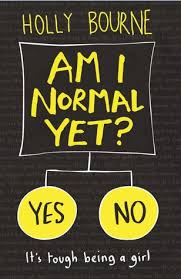
Am I Normal Yet? - Holly Bourne


Bodyguard series - Chris Bradford
Finding Cherokee Brown - Siobhan Durham
Matilda - Roald Dahl
Milk and Honey - Rupi Kaur
More Than This - Patrick Ness
The Rest of Us Just Live Here - Patrick Ness
Wonder - R.J. Palacio (see my review)
Eleanor & Park - Rainbow Rowell
Harry Potter series - J.K Rowling 1/7
Aristotle and Dante Discover the Secrets of the Universe - Benjamin Alire Saenz
I Capture the Castle - Dodie Smith
This One Summer - Jillian Tamaki and Mariko Tamaki


Crongton Knights - Alex Wheatle
The Art of Being Normal - Lisa Williamson

3 1/7 of 27 (although I'm not really sure how many books make up the Harry Potter franchise these days, is it just the seven original novels? Or does the newer stuff count too?)

It's always amazing to see more books that I've never heard of. And a bit depressing really. But it should be mood boosting shouldn't it? Look at all these extra great books I've never heard of, but I'm sure I'm already well into the realm that I won't ever finish the books I want to read before I die.

Wednesday, 19 April 2017

The Helen 100


I was young once and I used to listen to JJJ back in the day and remember Helen Razer and her wit and humour from that time. But I'd kind of lost track of her for some years. It turns out she's written quite a few books now. Recently I saw this new release sitting on the shelves at my bookshop and I just had to buy it. I do suspect that if I hadn't been through my own rather recent breakup I may not have snatched it off the shelf quite so quickly, or read it so very soon. I can see a pattern emerging of reading books about misery and despair. 

The Helen 100 recounts the year or so after the end of Helen's fifteen year relationship. Helen's ex left her reasonably suddenly one afternoon with an 'I need to grow' speech. Helen falls to the floor with her cat, Eleven, and a home delivered chicken. I'm pretty sure I've lived in a small town for too long as I was most astonished by the concept of the home delivered roast chicken in this particular scenario. 

Helen felt burdened by the expectation that her same sex relationship should not fail. 
That my particular desertion happened to be of a homosexual flavour intensified my shame and my impatience with view on sexuality generally. 'Lesbians' are really not supposed to break up, these days. They are supposed to stay together forever and provide an inspiring liberal example to others. And, this, notwithstanding my actual intention to stay together forever, was an attitude that really ticked me off.
At least I didn't have to feel representative for my own particular subculture. Just one of the 40% or so of heterosexual marriages (the only sort allowed in Australia) that ends in divorce. 
At some point, gay became the new beige and we are today the class doomed to revive the discarded dream of marriage. We are the people charged with conspicuous carriage of rainbow babies in expensive baby slings. 
Helen launches herself into the world of XXX dating apps to achieve her waxer's advice to go on 100 dates in a year. It is a world of which I was blissfully unaware, and which sounds particularly awful. She then baulks at the punctuation, spelling and grammar of her online contacts which isn't too successful a strategy for obtaining dates electronically.

I don't particularly like to think of myself as too much of a prude but I was often quite uncomfortable reading The Helen 100. Too much of the book was way over beyond the wrong side of Too Much Information. I kept reading because a) well I'd started and b) I really did still like Helen's voice. She has a vast vocabulary and powerful wit. There just aren't enough books using words like jejune, badinage or tonsure these days. 

And well, she did warn us, right there on the cover - Helen took her waxer's advice. And Bam, there she is on page one at the waxer's, having her lady parts waxed by the same waxer who also waxed her recently departed partner's intimate places. Oh what a complex world we live in.

I think I can take some of Helen's advice though (well actually her grandmother's advice):

Public Service Announcement: Have a bath
It has taken me decades of more everyday conflict to see that a nice bath can make life easier. It doesn't fix everything but it can fix a fuck of a lot. 
I haven't had a bath in some years, I think it's time. 

Listen to Richard Fidler's recent Conversation with Helen Razer which finally does explain why the cat is called Eleven. It's rather obvious actually. 


http://australianwomenwriters.com