Monday, 15 October 2012

The Cay


I love it when you read a book that you know nothing at all about, you have never really heard of the book, or the author before, and it's a wonderful, intriguing read. Happily, The Cay turned out to be one of those reads for me. 

The first chapter alone taught me so much. The early story is set in Curacao (where? Is that an actual place? Isn't that just a blue liqueur teenagers drink in bad cocktails? I know I did). Curacao turns out to be a glorious looking island jewel in the Dutch Antilles, off the Venezualan coast. Clearly not an area I know all that much about. Not now, or as it was in the 1940s when our story is set. So it's not surprising that I was unaware that oil refineries in Curacao where attacked by German submarines in World War II. Indeed, the whole Battle of the Caribbean had passed me by until now.

Phillip Enright is an 11 year old American boy living in Curacao with his parents. His father works at the oil refinery trying to increase the production of aviation gas. His mother doesn't really like living in what appears to be paradise. She is anxious about many things it seems- anxious about the war, anxious about being away from her home, anxious about the native population.

I guess my mother was homesick for Virginia, where noone talked Dutch, and there was not smell of gas or oil, and there weren't as many black people around. 

After Curacao is attacked by German submarines in February 1942 Phillip's mother's anxieties become too much for her to stay and she decides to take Phillip back to America. She is afraid of flying and decides to make the even riskier voyage by sea. Their ship was attacked soon after leaving Panama, at the start of Chapter 3.

 Phillip becomes separated from his mother, and ends up on a raft, with a large Negro sailor, Timothy, and the cook's cat from the ship, Stew Cat. The major part of the book is the story of their struggle to survive and the relationship that develops between Phillip and Timothy. Phillip has to learn to overcome the racism that he has learned at his mother's knee, and to trust and befriend Timothy, who is a gentle giant of a man, protective of Phillip and knowledgeable.

Theodore Taylor wrote The Cay in just 3 weeks, having spent 11 years mulling over the real incident of a Dutch boy lost at sea after his ship was attacked during the war. It's a powerful tale, "outrageous good" as Timothy would say. It is sparsely written with a concise Hemingway kind of vibe. The Cay is still in print and easily available, and I believe it is still being quite widely read in the US in school classrooms, which is great. I don't know that it's all that well known in Australia, but it should be.

I've read quite a few castaway stories now. Kensuke's Kingdom. The Black Stallion. Island of the Blue Dolphins. All of which have been really quite enjoyable. So I wonder why it is that I'm stuck halfway through the story that started them all, Robinson Crusoe, with no desire to keep reading? I really should get back to it, but I have so many other books that are much more fun to read waiting for me.

Read as part of my ongoing quest to read 1001 Childrens Books You Must Read Before You Grow Up.

Saturday, 13 October 2012

Road Trip! Canberra

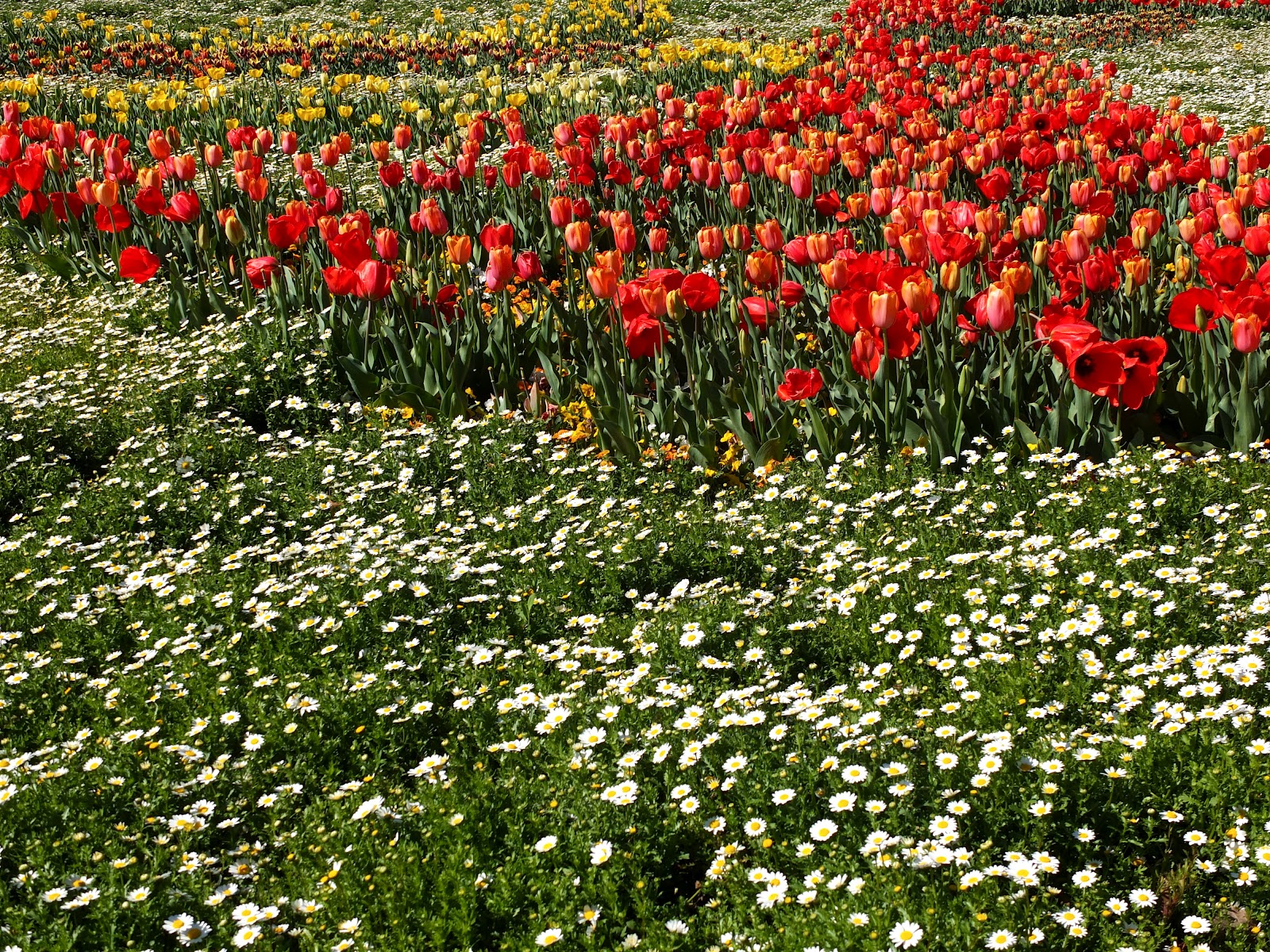
Last week I showed you some gorgeous flowers from Floriade 2012 in Canberra. This week is some more Canberra photos from the same day. It was glorious spring weather, which seems but a hazy memory now- it's snowing here in my bit of Australia today!

It wasn't just the Floriade flower beds that were full of blooms. 


Floriade isn't just about flowers though.

There's also a gnome decorating competition.

It was a beautiful spring day. 


The Captain Cook Memorial Fountain isn't always on, but I think it should be. 


Saturday Snapshot, is a wonderful weekly meme from at home with books

Friday, 12 October 2012

Nest


Some books just demand to be read when the iron is hot and Nest was one of those books for me. I had been to the fabulous On the Wing session at the Melbourne Writers Festival and was fully primed. I ignored the multiple other books that I should have been reading, and once I'd read the first few pages whilst browsing in the bookshop I was already hooked. I was in. Signed copy in my hand I was ready to go.

Janine Burke is a Melburnian, art historian, biographer and novelist, who begins Nest by proclaiming herself a "very amateur naturalist." Yet she has been observing birds since the 1980s.

We tend to take birds for granted, in the landscape of our neighbourhoods. Yet when they're gone, it's as though there's a hole in the sky, in the air, an abscence of beauty and grace, and vivid chatter or haunting cries are replaced with eerie silence. The presence of birds communicates the health of a place. They are our contact with wild nature. 

The mere word 'nest' itself "conjures fundamental notions of home, family, privacy, shelter and rest. It's a word of embrace, of origins, both visceral and tender". When Janine first experiences a striped honeyeater's nest up close and personal behind the scenes at Melbourne Museum she finds it "An elaborate piece of work, it looked like an exotic purse worthy of an empress, stitched by a Surrealist seamstress". Yes nests really are "flamboyant little miracles of design".

Janine Burke's art historian and curator self is never that far away.

How can we regard nests as 'art' when art is something we traditionally associate with museums and galleries, with quiet, ascetic environments and, most importantly, with humankind? Of course, art is far from fixed and constantly challenges its own boundaries. Particularly since the beginning of the twentieth cenury, attitudes towards what constitutes art have changed radically. 

Nest was a quick and engaging read for me, broad ranging and wonderful. I read it whilst returning from Victoria to NSW and it made the travel miles pass by without my even noticing. Nest is a beautiful book to hold. A lovely hardback edition with 12 colour plates in the middle- essential to illustrate the wonderful nests that she is describing, a picture really is worth a thousand words.

There was a particularly fascinating section on John and Elizabeth Gould. Recognisable names to be sure, but I wasn't aware that they were not only contemporaries of Charles Darwin, but they were invaluable to helping Darwin establish his theories, and find fame. When the Goulds travelled to Australia, they left their three youngest children behind in England, and brought only one of their children with them. Sadly Elizabeth was to die tragically young at 37 soon after their birth of her eighth child.

Picture source


Some random facts that I enjoyed musing over:

Despite being aware of lithographs for some time, I'd never thought about the name, and what that actually meant. Traditionally lithographs were made by drawing on lithographic limestones with grease crayons. Elizabeth Gould made her extraordinary, fine images of birds using big slabs of stone. I still don't quite understand the process to be honest. How did she get such glorious fine detail and colours?

Picture source


About 5 billion birds of 200 species leave Europe to winter in Africa each year. This is only about a tenth of the world's migratory bird population. It's a very dangerous journey, nearly half the adults and most of their young will die.

Janine Burke appears to be as fascinated by the possibility of swallows migrating as I am. She says they can travel up to 300km per day, which seems a more feasible distance than the 965km suggested by Swallow.

The outrageous behaviour of Percy Bysshe Shelley. He was already married when he met the future Mary Shelley, author of Frankenstein. They ran off to Italy, only to return with Mary pregnant. Poor Harriet Shelley drowned herself in a river giving Percy and Mary the opportunity to marry. Although even then it wasn't such a happy marriage- forced to live in exile in Italy, "Mary was despondent, owing to the death of three infants and Shelley's proclivity for flirting with women close to her".

Charles Dickens had pet ravens. His raven inspired Edgar Allen Poe to write The Raven. Turns out that Dickens had his pet raven stuffed and you can see it in Philadelphia.

Karen Blixen, whilst skeletally thin and suffering from the ravages of syphilis survived on a diet of oysters, champagne and amphetamines.

No, Nest is not just about nests.


Tuesday, 9 October 2012

Doctor Proctor's Fart Powder


It took me a while to notice Jo Nesbo. A few months ago I noticed that everyone seemed to be reading his series of Norwegian Noir crime novels. Not my typical fare it must be said. Apparently they're very good, but I'm yet to read any. Then I discovered that he had also written some kids books, the first having the alluring title of Doctor Proctor's Fart Powder. Well who could resist that? So this week I took advantage of the copy that my visiting 7 year old nephew brought with him, and read it. It was fun. So fun. And funny. 

Originally published in Norway in 2007, Doktor Proktor's Prompepulvet (isn't that a glorious title?) was a story created at the request of Jo Nesbo's daughter, and now available in English. A marvelous tale set in Oslo about a quiet suburban street called Cannon Avenue. Doctor Proctor is the local crazy inventor professor type that every street needs. He has a number of wonderful powder inventions besides his Fart Powder. He also makes fabulous jellies that are several metres long. How many more ways can you endear yourself to children?

Doctor Proctor's neighbours are two children, Lisa who is pining for her best friend who has just moved to Sarpsborg, and Nilly a small boy who has just moved in to the house across the street. Of course Lisa and Nilly think that Doctor Proctor's Fart Powder is fantastic, and are eager to help in any way they can to bring this wonderful advance to the children of Oslo and the world. 

I loved the Scandinavian feel of this book. The things the children eat are quite unusual to Australian sensibilities- bread and salami for breakfast, meatballs, fish au gratin, liverwurst, weiner schnitzel, fish cakes, and there seems to be a lot of eggnog in anticipation of Norwegian Independence Day. Not that any of this is bad, well maybe the liverwurst, but it adds to the exotic feel. 

So what is it about? Fart powder clearly. Fartonaut powder too. Twin bullies called Truls and Trym who live on the corner. Giant anacondas, and other giant creatures roaming the sewers of Oslo. Nilly's favourite book Animals You Wish Didn't ExistAkershus Fortress. What appear to be frequent snide remarks about Finland. And the musicality that may or may not be evident in school bands. 

The Dolgen School Marching Band marched and played like never before. They hit a lot of the right notes and had never been closer to playing in time. 

It's a satisfying and funny read, with a quirky Norwegian feel. 

Saturday, 6 October 2012

Road Trip! Floriade

Last week we took advantage of a Random Tuesday Off and School Holidays to take an impromptu day trip to Canberra. It was a great day. Canberra was looking her spring time best. It was our first visit to Floriade in quite a number of years. 

It was a riot of colour. 


Not all were tulips of course

The hyacinths smelt amazing

My favourite individual flower I think


Sometimes my camera struggled with the vibrancy of the colours, so I played with it a bit and made a Warholish impressionist painting. I like it. 


It would make a great jigsaw I think. 

Saturday Snapshot, is a wonderful weekly meme from at home with books

Wednesday, 3 October 2012

Hope


I've long been an admirer of Tim Costello. CEO of World Vision, Australia's largest charity, social commentator, who is always a rational, educated and humane voice on a wide range of topics. Like 400,000 Australian families we sponsor a child through World Vision and I hope that she and her community in Colombia benefit from our sponsorship.

I will always read a piece about him, or by him in a newspaper or magazine when I find one, but I wasn't aware that Tim Costello was an author until I walked into the bookshop at Melbourne Writers Festival recently. There were several huge piles of his new book Hope. A lovely hardback edition with a brown ribbon for a bookmark. I always love a book with a ribbon, I wish publishers would use them more. Autographed copies! And so naturally I walked away with one. 

And I'm very glad that I did. A broad ranging book, part memoir, part travelogue, but also delving into the theological, political, economic, conservation and social themes of our times. It is personal too, about family, marriage, love and work. Hope is a collection of what could be stand alone short essays, but together make for easy yet thought provoking and enjoyable reading.

Tim Costello grew up in Victoria. He studied law before theology, has been a pastor a Baptist Church in St Kilda, and even mayor of St Kilda in the early 90s. He became CEO of World Vision in 2004 not long before the devastating Boxing Day Tsunami. Law and religion seem somewhat conflicting bedfellows until he explains. 

For me, my calling always had to do with injustice. That is why I gravitated into law, until I worked out it did not necessarily have that much to do with justice. Most lawyers are businessmen. 

Wherever the calling started, I have always been driven by a visceral sense of righting injustice. It is the thread of calling that has led me into whatever work I have undertaken, from law to ministry, from local politics to aid and development. 

Tim has travelled widely. To wealthy countries of the world to meet with world leaders and the rich and powerful. Yet he travels economy as a matter of pinciple, and takes only carry on luggage, which seems to be a passion and predilection for men of a certain age. He attended the 2009 Climate Change Conference. He has travelled to the Democratic Republic of Congo where he contracted malaria, to Uganda in 2006 where he met a boy forced to kill his own uncle, and to Jerusalem to meet grieving parents, both Arab and Jewish who come together in The Circle of the Bereaved to talk of their children who have died in the conflict. It's not glamorous work. But these stories are so fascinating. And make for sobering reading. 

Tim Costello has a number of favourite subjects it seems. Poker machines. Modern slavery. Not things that I think about all that often, but clearly Important Things. It is startling to be told that there are more slaves alive today (21 million worldwide) than ever before- more than during the entire 450 years of the Atlantic slave trade. Apparently there are an estimated 12 million child slaves in India today, many of whom are bonded, third generation slaves, living lives of misery because of a debt incurred by their grandfathers. 

Seventy percent of the world's cocoa comes from Ghana and the Ivory Coast, and child slave labour is often used in the harvesting of pods in remote jungle cocoa trees. The ridiculous thing is that it would take 10 cents extra per chocolate to ensure proper wages for farmers. Ten cents. World Vision had a Don't Trade Lives campaign about this and have released a very interesting chocolate scorecard- most applicable to chocolate available here in Australia, but most of these companies are multinationals, so I'm sure some of it is applicable elsewhere. They must have ruffled some feathers as Tim said that for 18 months he was dogged by the chocolate lobby, following him to speaking engagements and defending the industry!

You'll have to read Hope to learn many other interesting tales, such as the link between Aretha Franklin and Martin Luther King's famous I have a dream speech, and the intriguing last words of Tim's grandmother as she invoked Henry Lawson, and urged us to water the geraniums.


Interesting to note whilst Googling images that Merridie Costello
is coauthor on some covers, but not on mine

Monday, 1 October 2012

Watership Down


Somehow I didn't read this book in the 70s. I don't know how. It was certainly famous enough. I can't even think about the book, without the song flooding my consciousness. Perhaps a book about bunnies wasn't appealing enough to my teenage self?

So I was intrigued to start reading it recently. And feeling some pressure to love it I must say. Of my 12 friends on goodreads who have read Watership Down, 9 gave it 5 stars, the other three gave it 4 stars. It seems it is  a well loved book.

I was surprised to see it start with a rather bloody quote from Aeschylus' Agamemnon. Each chapter starts with a rather suprising quote actually- Greek plays, classic poems, Napoleon quoted in French. Shakespeare. Cosi fan Tutte in Italian. No dumbing it down for the kids there.

Most chapters are a mere few pages, making it easy to sneak in an extra chapter whenever you have a free couple of minutes during the day. A great way to make quick progress on what is a rather thick book. Watership Down was originally created as stories for Richard Adams' young daughters to pass the time during long car trips. The family were driving to Stratford-upon-Avon to see Judi Dench in Twelfth Night, when his daughters clamored for a new story, and their father began telling them a story about two rabbit brothers, Hazel and Fiver.

The book starts with immediate action, young Fiver senses a distressing premonition of danger for the warren.

But it's not exactly danger that I seem to feel about the place. It's- oh, I don't know- something oppressive, like thunder: I can't tell you what but it worries me.

Fiver's sense of impending doom drives an all male band of rabbits from their home at Sandleford Warren. They risk life and limb in their search for a suitable place to establish a new warren, and then attract some does to join them. I did wonder if the two other warrens that our band come into contact with, the odd group at Cowslip's warren who appear to have sold out, and the rather regimented life at Efrafra under the tyrannical General Woundwort were allergorical for a larger socio-political view. It was the early 70s after all. But no. Richard Adams denies that outright. He was just telling a story. With goodies and baddies, who just happened to be rabbits.

I enjoyed my time with Hazel and Bigwig and Fiver. I learnt quite a bit about rabbits along the way. Much of it makes sense if you think about it. They spend half their life underground. In burrows generally dug by does. Rather astonishingly in an overcrowded warren expectant mothers may actually resorb their litter if they are too stressed.

It's changed my life to learn that rabbits pass two kinds of poo. There were multiple references to particular rabbits eating pellets, which I passed over initially, but then wondered how wild rabbits could actually be eating pellets. Turns out it wasn't the pellets I was thinking of at all. Not manufactured food pellets, after all, that can't be. Rabbits pass two kinds of poo! Which makes no sense at all, but it's true. The hard droppings that we're probably all familiar with and soft viscous pellets that they reingest almost immediately, and I've never seen or heard of before. Happily for the rabbits they swallow these pellets without chewing.

It's hard to imagine how one tube of gut can produce two different sorts of poo. Like much of life it seems it's all in the timing. Food that enters the caecum (the first part of the large bowel) in the morning, undergoes little further processing and is then covered by a special mucus. These are called soft or night pellets, or caecotrophes if you want to be fancy. Food that enters the caecum at other times of day is processed differently- most of the water is extracted and the typical hard rabbit poos form. From the diagrams I found it seems that rabbit caecums are more of a sidestreet than it is in a human intestine. A fact of anatomy for which I for one shall remain eternally grateful.

Picture source
I really enjoyed this glimpse of the bucolic English countryside- so many plants, which of course would be vitally important to rabbits, and they would know all the names (if they spoke I guess). They have such wonderful names in English. Figwort. Fleabane. Pimpernel. Speedwell. Heartsease. Persicary.

The real Berkshire setting

And maybe, just maybe, I'll name my next dog Rowsby Woof. Or Fairy Wogdog.

Read as part of my ongoing quest to read 1001 Childrens Books You Must Read Before You Grow Up.