Wednesday, 27 February 2019

Sing, Unburied, Sing


I've been meaning to read Jesmyn Ward for ages. I first heard about her with Salvage the Bones, which was published back in 2011. And I'm pretty sure that is sitting about in my physical TBR somewhere. But naturally I haven't read it. There has been a lot of hype about Sing, Unburied, Sing since it was published in 2017. It won big name prizes and Obama named it as one of his best reads of the year. I was interested initially, but then put off a bit as I'd heard a lot of people referring to it as a ghost story of sorts, and that's not really my thing. Or I thought it wasn't, but maybe it is.

Recently I was organising my TBR for a short holiday in Thailand. And of course I wanted to take lots of books with me, but my friend had booked us as carry on only! One small suitcase with a 7kg limit- not much room for books in there. I ended up taking two books (and only reading one of them), and a whole stack of audiobooks on my phone. I listened to about three quarters of Sing, Unburied, Sing on the way to Kuala Lumpur and then finished it off after I got home as I was too busy holidaying to listen to any audiobooks while I was away. As is pretty much always the way.

Sing, Unburied, Sing is a story told by three narrators. It is Jojo's 13th birthday in the opening pages of the book. He lives with his grandparents and younger sister Kayla in the rural Gulf Coast of Mississipi. His grandfather, Pop, slaughters a goat in the first few pages, it is such a memorable start, and was the sample I heard on Audible, and had me hooked, and keen to listen further as it was both grisly and beautiful at the same time. Jojo's mother Leonie is around but not particularly involved in the lives of her kids. Leonie is the second narrator, and she is self-absorbed and horrid. The third narrator is Richie, a young boy who was in prison with Jojo's grandfather when he was a young man. Richie died many years ago, and yes he's a ghost.

Jojo's father Michael is about to be released from prison after three years away, having previously worked on the BHP Deepwater Oil Rig which exploded in 2010. I can't remember that we get told why Michael has been in gaol but Leonie and her friend and colleague Misty embark on a road trip with the kids to pick him up. Apparently the multiple narrative voices and road trip across Mississipi evoke Faulkner's As I Lay Dying, a book I haven't ever been brave enough to pick up. The road trip was one of the less interesting storylines of the book for me.

While Sing, Unburied, Sing is a "ghost story", it's so much more than that. I was surprised by how much I accepted the ghostly aspects, and that they really didn't bother me at all. To me it is a book primarily about race, and also class, poverty, drugs, incarceration, violence, illness, death and dying. It is great story telling, and beautiful writing. But it's an unusual book in that I think I would have enjoyed it even more if I had read the book, rather than listened to it. Once I settle on an audiobook I'm usually grateful that I listened to it. 

I really loved the narrator of Jojo's chapter, but found the woman doing Leonie very distracting. She was all Eartha Kitt and breathy, which didn't sound like Leonie at all to me, and I heard the narration more than I heard the story. I would like to read Sing, Unburied, Sing sometime. I think I'd enjoy it even more second time through, and also as a read.

This little passage stuck with me
Some days later I understood that he was trying to say that gettin grown means learning how to work that current, learning when to hold fast, when to drop anchor, when to let it sweep you up. 
as it echos that sage advice of Kenny Rogers from so long ago ....


Jesmyn Ward answering questions about Sing, Unburied, Sing on PBS. 

Jesmyn Ward author event at Shakespeare and Company in Paris. We're I've been quite a few times, but never to an event. Well not yet. Jesmyn calls Sing, Unburied, Sing a book about death, and that is one of the reasons why she opened with a death. 

Tuesday, 19 February 2019

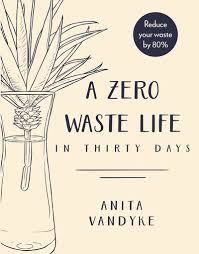
A Zero Waste Life


I'd seen A Zero Waste Life around the shops for a while, but didn't realise that it was Australian until I saw Anita Vandyke on SugarMamma.TV a few months ago.


Soon after watching I was requesting the book from my library- which seemed a more Zero Waste thing to do. And it saved me 20 bucks too. Which I transferred to my mortgage. Which would make Sugar Mamma proud. 

Anita Vandyke is an interesting woman. She initially trained in Aeronautical Engineering, and is now a medical student. Clearly no slouch in the brains department. In the Introduction Anita describes her "aha moment", an "Is this all there is?", "Is this who I will become?" existential crisis sitting in a meeting in her mid 20s. So she quit her high paying job, and her initial motivator for change was financial when she was no longer working, and then became broader to encompass the environment, and life more generally. Anita doesn't want us to waste our time, our money, or our future. 

Plastic is Mother Nature's non-renewable resource, and time is ours. 
Anita lays out a 30 day programme for change, with four key steps- think, do, reflect and review. Apparently we can aim to reduce our waste by 80% over 30 days. That's a big call.
Living a zero waste life is not only actually really easy, it is also completely necessary
It's always frightening to see statements like this one:
Every piece of plastic created since the 1950s still exists.  
Yes, all the little plastic toys I played with as a kid, the straws I used (well they were paper initially), every tub of yoghurt I have ever bought- it's all still out there somewhere. I just don't know where. In landfill? In the  Great Pacific Garbage Patch?

A lot of this stuff I knew already. I've had environmental leanings since I was a teenager. I have already made some changes over the past few years. I was a great fan of both series of The War on Waste over the past few years, and have taken up soft plastic recycling as a hobby. But I can do more. We all need to do more.


I was already most of the way to making a Zero Waste Kit to have in my handbag. I've been taking my own (reusable) cutlery to work for years. I've been refusing plastic bags for at least 5-10 years. I reuse drink bottles. I try really hard to remember to refuse straws. I'll formalise things though, and make an actual kit as Anita suggests. I did just buy myself a pretty pink, sparkly water bottle. It sparks joy every time I look at it... oh wait, that's another book altogether.


I took my kit to Thailand last week,
it was great, very handy
Early on (Day 5) Anita suggests that we put ourselves onto a buying ban for the rest of the month. But I'm not ready to commit to a buying ban just now. Not that it wouldn't help me, but I recently bought a new house. I'm buying huge, expensive things at the moment, like solar panels, and a fireplace. I am trying to cut down - it just doesn't look like it right now ...

A lot of the content overlaps with other reads I've done recently. Decluttering. Minimalism. Gratitude. Food waste. Environment. Politics. Philosophy. Mindful consumption. 

It was a Sunday afternoon, I had just come home with a bag full of clothes after spending a few hours at the local shopping centre. I was sipping my takeaway iced chocolate while checking my Instagram and Facebook feeds. After an hour of mindless scrolling, I sat down for an evening of TV, watching housewives yell at each other. This was a regular Sunday for me. Looking back now, all I can think about are the hours I lost in wasteful consumption- blindly shopping for more stuff, consuming empty calories and indulging in the vortex of social media and televised trash. 
Reading A Zero Waste Life has given me the impetus and the wherewithal to try some things I'd been meaning to do for ages. I'm now using a shampoo bar, and a conditioning bar on my hair- and I really like them. I'm going to buy a shampoo bar for the dog next time too.

I'm keen to try some of Anita's recipes for DIY products- both beauty products and cleaning products for the house. I'm not ready for baking soda toothpaste, but would happily try a Sugar Scrub or an All Purpose Cleaner. I'm impressed that Anita freely shares these recipes online- on her blog, or instagram. These really are changes we can all make. A Zero Waste Life is a great place to start. 


http://australianwomenwriters.com

Thursday, 24 January 2019

Star Jumps


Hmm, is it wrong to read a book about drought whilst sitting in a bath? I suspect it is. Morally reprehensible at the very least, if not full on wrong. It wasn't a dry bath, there was water in it. I didn't realise that was what I was going to be doing tonight it must be said. I decided to have a bath, I had Star Jumps out from the library and it looked like a perfect bath sized snack. And it was.

I've become very fond of verse novels over the past few years, I really can't fully explain it as I'm so terrible at reading poetry. Of course, the reading speed is great, it's not that often that I can knock over a book in a day- I've been known to fall asleep reading a picture book...

I'd been meaning to read Star Jumps for years, probably since it won the Prime Ministers Literary Award for Children's Fiction in 2010 (the first time that a Children's category was included).

Star Jumps is the story of a dairy farming family told in first person by the youngest of the three children, Ruby. Ruby is young enough to not remember a day of rain, she has grown up in drought and knows nothing else.
There is something we don't understand,
 as if we were just kids,
grubby in old clothes,
playing in weeds,
with a dog that doesn't scare strangers 
and cows that want to die 
instead 
of making milk. 
The cows, the farm and the family are all doing it tough because of the drought. Star Jumps is about the ties that bind, making your own fun, and coming together in the hard times. Themes that would be familiar to any rural family, and many urban families, but with less cows. 

Lorraine Marwood is an Australian poet and author, and was a dairy farmer herself for many years, and this definitely shows in her depth of understanding of farming, of the practicalities and the hardships. But she kept saying that the newborn calves were baaing.
The gentle baaing from the five new calves
I'm confused. Do calves baa?

I am probably more annoyed than I should be that the kid on the cover is doing a handstand and not a star jump. Otherwise I do like the image of the cover.


Teacher's Notes for Star Jumps


http://australianwomenwriters.com

Wednesday, 23 January 2019

A Year in Books 2018

I'm very late even starting to look back at 2018, which is quite apt really. I had a bad reading year, and a slow blogging year in 2018. Which is not to say that I didn't enjoy things, I just didn't get all that much done. I did delve (possibly too much) into the fabulous world of Booktube, which made me excited about lots of books and audiobooks but didn't leave me with much time to get them read or listened to. I need to temper that this year. 

Goodreads tells me that I read 55 books and 10,650 pages in 2018, although I suspect this doesn't include the 600ish pages I read of Les Mis as I failed to finish it. That is perhaps my biggest disappointment of 2018- that I didn't finish the Les Mis Chapter A Day Readalong. I will still finish Les Mis some day, I'm still just not sure when. I love it every time I pick it up again, I just don't pick it up all that often at the moment, and certainly not every day. I need to try to get back to that habit again, and get it finished. Then I'm tempted to listen to the audiobook...

Also, many of the books I read were audiobooks. I slipped easily into the arms of audiobooks as my actual reading dwindled. A lovely way to keep "reading". 

I also had a bad year of rating my reads, so this is year in review is made all the trickier. I like to wait until I do my review to rate, but then if I don't do the review, the rating doesn't happen and then it all falls away like grains of sand. So what were the books that I gave 5 stars to? Or those that I think I should have given 5 stars to if I had bothered to rate them at all?

The Pigeon. Patrick Suskind


Les Misérables. Victor Hugo


The Latecomer. Dimitri Verhulst


Claris: The Chicest Mouse in Paris. Megan Hess


Big Little Lies. Liane Moriarty. Audio


The (audio)book, the TV series, the soundtrack. I love it all. 

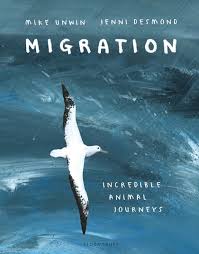
Migration. Mike Unwin. Jenni Desmond


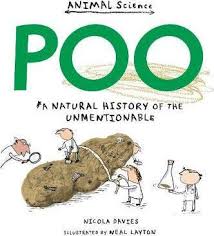
Poo: A Natural History of the Unmentionable. Nicola Davies. Neal Layton (illustrator)


The Art of Frugal Hedonism. Annie Raser-Rowland. Adam Grubb


Life After Life. Kate Atkinson. Audio


5 stars for the audiobook performance. 4-4.5 stars for the book. 

The Art of Living Alone and Loving It. Jane Mathews


Any Ordinary Day. Leigh Sales. Audio (the tea slurping edition)


Born a Crime. Trevor Noah. Audio


Do I have a book of the year? I'm not so sure. I really liked all these books, but I'm not sure that any particular one shines more than the others. 

11 (12 including Les Mis) of my 54 reads were, or should have been, 5 stars! Not bad for a bad reading year. 

5 Aussie books

9 Adult reads

3 Picture books

0 Verse Novels

4 Audio Books

5 Nonfiction Books

8 Female Authors/Illustrators

7 Male Authors

11 New to Me Authors

I appear to have let another year slip by without reading any Jackie French. How can this be? What an egregious oversight. It must not happen again this year. 

Wednesday, 9 January 2019

The Dry


Oh I'm so glad that I finally got around to The Dry, and so glad that it lives up to the hype. That is of course the major risk of leaving a phenomenally successful book a few years, yes the buzz has died down, but then there's years of accumulated expectations, not many books can survive that- but The Dry certainly did.

I was hooked from the very start, the prologue is haunting, and daily reality for many Australian farmers. 
It wasn't as though the farm hadn't seen death before, and the blowflies didn't discriminate. To them there was little difference between a carcass and a corpse.
Bam!
The drought had left the flies spoiled for choice that summer. They sought out unblinking eyes and sticky wounds as the farmers of Kiewarra levelled their rifles at skinny livestock. No rain meant no feed. And no feed made for difficult decisions, as the tiny town shimmered under day after day of burning blue sky. 
Thirty six year old Aaron Falk returns to his hometown in country Victoria for the funeral of his childhood best friend, Luke Hadler. Luke it seems has killed his wife and young son, and then turned the gun on himself. A type of murder-suicide that is all too common. But a few things don't add up from the start. How did the infant daughter survive for one?

Aaron  is a financial detective with the Australian Federal Police, who has lived in Melbourne since he and his father suddenly left Kiewarra under a cloud twenty years ago. He hates returning due to the echoes from twenty years ago, and can't wait to leave town again, he is counting down the hours til he can quietly leave. 

Jane Harper writes a great story, and one that kept me guessing (wrongly to a large extent, although I did get some minor things right) until the end. Although I was quite confused by some of the twenty year old scenario, and had to dip into sections of the print copy that I have after I finished the audiobook to straighten it out in my head. But she really used emotion very well. We get perspective from many characters, with many different points of view. It's not just a police procedural kind of thriller, there's a great emotional depth to the characters. She was a finance journalist for over a decade and it shows in her understanding of the different characters. And there's lots of great characters here. The town, the pub, the town bullies, the town drunks, the small minds, they all feel real. 
'No-one tells you this is how it's going to be, do they? Oh yes, they're all so sorry for your loss, all so keen to pop round and get the gossip when it happens, but no-one mentions having to go through your dead son's drawers and return their library books, do they? No-one tells you how to cope with that.'
I enjoyed the story from the start, but from about half way through I was totally hooked, and I listened to second half of the book on a single day, "reading" well past my bed time, and into the wee small hours- at which time I fell asleep with 15 minutes to go. Just. Couldn't. Stay. Awake... Luckily I could finish it off the next morning. 

Steve Shanahan does a really great job of narrating the audio book, his laconic Australian drawl was a perfect choice, but I really wish that audiobook editors (that must be a job, yes?) would put a tiny extra pause to give the listener a clue as to when the narrative changes back and forth in time. Readers of The Dry get a change from roman to italic fonts, listeners to the otherwise excellent audiobook don't get any kind of indication that we're jumping back and forth by 20 years. 

The Dry has won many, many awards starting from before it was even published when it won the Victorian Premier's Literary Award for an Unpublished Manuscript in 2015

Jane Harper has now published three books and you can be sure that the next two have pushed their way up towards the top of my TBR. I've already downloaded her second (audio)book, Force of Nature, another Aaron Falk story, but I believe not directly related to The Dry. 

A movie version of The Dry is in production, and will start filming next month in Victoria. Which is great timing on my part, by the time the movie comes out I should have forgotten enough details to make it even more enjoyable. Eric Bana has been cast to play Aaron Falk. It should be great. I can't wait. 

Jane Harper did a TEDTalk about creativity late last year.


http://australianwomenwriters.com


Friday, 28 December 2018

Les Misérables A Few Pages of History/ Quelques Pages d'histoire V4B1


Well this is a tough book to get through when you're trying to sprint to the end of the volume. A  Few Pages of History, yes. More like Five Chapters of History. Dense, intellectual history that I wish I knew enough to truly appreciate and understand. 


In (very fast) French
but with subtitles


The first five chapters of this book are a history lesson about the two years following the July Revolution of 1830. Much quieter than the well known French Revolution of 1789, the July revolution saw Louis-Philippe installed as King of the French. It seems Victor Hugo was quite the Louis-Philippe fan, even though he said that "the hour has not yet struck when history speaks in its venerable and impartial voice" to pass the "final verdict on this king". Yet he is "one of the best princes who ever sat  on a throne". "He was born a prince and believed that he had been elected king."

Louis-Philippe was a king of total transparency. While he reigned there was press freedom, parliamentary freedom, freedom of conscience and freedom of speech.
Louis-Philippe sounds a rather fascinating man. 
He was a bit of a builder, a bit of a gardener, a bit of a doctor. He bled a postilion who fell off his horse. Louis-Philippe went nowhere without his surgical knife, any more  than Henri III without his dagger. The royalists jeered at this ridiculous king, the first ever to shed blood as a cure. 
We now know of course that the last thing a horse rider needs after a fall, and presumably decent trauma is further blood loss, and we would do the exact opposite and transfuse them if required, but the 19th century was interesting times. 

There is just so much detail and knowledge jam packed into every sentence of this book. I have a particular fascination with Joan of Arc, and so I was most interested to read:

One of Louis-Philippe's daughters, Marie d'Orléans, won for her distinguished family's name a place among artists, as Charles d'Orléans had won for it a place among poets. She carved a statue of her soul and named it 'Joan of Arc'.
Fascinating! This statue still exists and is on display at Versailles. I've visited Versailles many times. I don't remember seeing this statue in particular, but will have to trawl through my photos sometime, as I always take a picture of any Joan statue that I see. I'd thought that I'd visited Versailles enough but perhaps I will need to return. It seems the original is marble and there are several bronze replicas about the place (New York, Orleans and DomrĂ©my at least), and there is even a painting by Auguste Vinchon of Louis-Philippe visiting the statue that I now need to see. 


The royal family in front of the statue of Joan of Arc
Auguste Vinchon, 1848

Aaaah, If only I could get to Versailles before February 3 I could see the current exhibition Louis-Philippe and Versailles! Louis-Philippe turned Versailles into a museum, and now 32 rooms not normally open to the public will be open for this exhibition. (There is a magnificent 76 page Press Kit to download from that page for those of us stuck in the Southern Hemisphere, or otherwise not near Versailles)


This book is really quite philosophical as well. 

Some people have wanted wrongly to identify the bourgeoisie as a class. The bourgeoisie is simply the contented section of the people. The bourgeois is the man who now has time to sit down. A chair is not a caste. 
And I think gives us an insight into Victor Hugo's own vision of the future. 
Solve the two problems, encourage the rich and protect the poor, eliminate destitution, put an end to the unjust exploitation of the weak by the strong; curb the iniquitous envy, in the one who is making his way up, of the one who has arrived; set the wages for a job fairly and in the spirit of fellowship, foster the development of childhood with free compulsory education and make knowledge the foundation of manliness, develop minds while keeping hands busy; democratise property not by abolishing it but by making it universal, so that every citizen without exception may be a property owner, something easier to achieve than people think. In short, lean how to produce wealth and how to distribute it, and you will have both material greatness and moral greatness. And you will be worthy of calling yourself France. 
In chapter 6 Enjolras and His Lieutenants we once again get back to the narrative. Enjolras is assessing the strength of numbers.
How many are we?... Revolutionaries should always feel a sense of urgency, progress has no time to lose.
All quotes are from the 2013 Penguin Classics Deluxe Edition, translated by Christine Donougher. 

Thursday, 27 December 2018

Les Misérables V3 Marius


Oh dear. I've had such a bad reading (and blogging) year. I've been becalmed for months, and not just in Les Mis. I was so excited about the #LesMisReadalong at the start of the year. I really thought I could keep up with it. It seemed doable. Manageable. Even though I am notoriously bad at books over 500 pages I thought that tackling a chapter a day might help me get over the line on time. Well, nope.


I was stalled in May for a long time, and then managed to get caught up to August. Although sadly in the Real Life World it's December, and not August. It's not like I don't like Victor Hugo's writing- I really do. There is something quotable or profound on pretty much every page. I do still very much want to finish it, I don't want to DNF Les Mis. I'm always more optimistic about my reading capabilities than I will ever achieve in this life time (which goes much of the way to explaining my TBR) , so much so that it was only yesterday that I realised that I really wouldn't finish Les Mis in the allocated 2018 reading time. 


But last night I finished Volume 3, Marius, and now I'm going to make a last ditch effort and try to read V4 The Rue Plumet Idyll and The Rue St-Denis Epic before the end of the year. This is optimistic I know. Especially as I go back to work on Sunday, and have multiple social engagements to fit in too. 


Marius is of course very much the subject of his own volume. Despite qualifying as a lawyer Marius falls onto very hard times after his estrangement from his grandfather. 

Life became hard for Marius. Using his clothes and his watch for food was nothing. There was much worse he had to stomach. Terrible hardship, consisting of days without bread, nights without sleep, no candle in the evening, no fire in the hearth, weeks without work, a future without hope, a coat worn through at the elbows, an old hat that makes young girls laugh, a door found locked a night because the rent was not paid, the insolence of the doorman and the eating-house keeper, the sneering of neighbours, humiliations, dignity trampled underfoot, having to accept any kind of work, demoralisation, bitterness, despondency. 
We learn that "Marius was now a handsome young man of medium height, with thick jet-black hair, an intelligent high forehead, flared, sensuous nostrils, an air of sincerity and calm", and when he first sees a young girl sitting with an old man in the Luxembourg Gardens, she is "a slip of a thing of thirteen or fourteen years of age, so thin as to be almost ugly, awkward, unremarkable, but with some promise perhaps of having quite attractive eyes."

Having all my prior Les Mis knowledge based on the stage and movie versions I was quite surprised at this first description of teenage Cosette (not that Marius knows her name yet, and doesn't throughout this whole volume). Still, six months passes without Marius seeing the girl on the bench, and she has become quite changed when next he sees her. 

Only, when he came close, it was certainly the same man but it seemed too him it was no longer the same girl. The person he now saw was a tall and beautiful creature with all the loveliest of womanly curves at that very moment when they are still combined with all the most artless of childish graces. A fleeting and innocent moment that can only be conveyed by these three words: fifteen years old. 
Which almost sounds a bit creepy to the modern reader. Although Marius is a young man and he soon falls in love with Cosette merely by sight. I was delighted that there was some hanky dropping as in The Three Musketeers. 

Most of the rest of the volume is Marius trying to find Cosette again after having become too obvious and drawing her father's attention, and the rather dramatic events in the Gorbeau tenement when  Jondrette lures his benefactor into an ambush. There is much beauty in Hugo's prose about poverty and the misery of the 19th century French human condition. 

Cities, like forests, have their dens, and inside them lurks whatever they have that is most savage and fearsome. Only, in cities, what lurks there is ferocious, foul and small, that is to say, ugly. In forests, what lurks there is ferocious, wild and big, that is to say, beautiful. Den for den, that of the beasts, is preferable to that of man. Caves are better than slums. 
The contrast between rich and poor. 
"Villain! Yes, I know that's what you call us, you rich folk! Well, it's true my business went bust, I'm in hiding, I've no food, I've no money, I'm a villain! I've not eaten for three days, I'm a villain! Ah! you lot keep your feet warm, you have shoes made by Sakoski, you have padded overcoats like archbishophs, you live on the first floor in houses with caretaker, you eat truffles, you eat asparagus at forty francs a bunch in the month of January, and green peas, you gorge yourselves, and when you want to know whether it's cold you look in the newspaper to see what Engineer Chevallier's thermometer says. We're our won thermometers, we are! We don't need to go down to the embankment and look on the corner of the Tour de l'Horloge to find out how many degrees below zero it is. We feel the blood freezing in our veins and the ice reaching into our hearts, and we say: "There is no God!" And you come into our dens, yes, our dens, and call us villains!"
I was surprised at one of the villains of the Patron-Minette gang was called Montparnasse, and wondered if the famous left bank region was named after a fictitious criminal, or indeed a real criminal. Although I can't find anything out there to suggest that this is the case. Wikipedia suggests that Montparnasse has been part of Paris since the 17th century, obviously long predating Victor Hugo. 

Also fascinating to see a direct reference to the les misérables of our title:

They seemed very depraved, very corrupt, very debased- heinous, even - but rare are those who fall without sinking into vice. In any case, there is a point where the poor and the wicked become mixed up and lumped together in the one fateful word: les misérables- the wretched.


And now onward and upward to Volume 4...


All quotes are from the 2013 Penguin Classics Deluxe Edition, translated by Christine Donougher.